
Last updated October 15, 2026
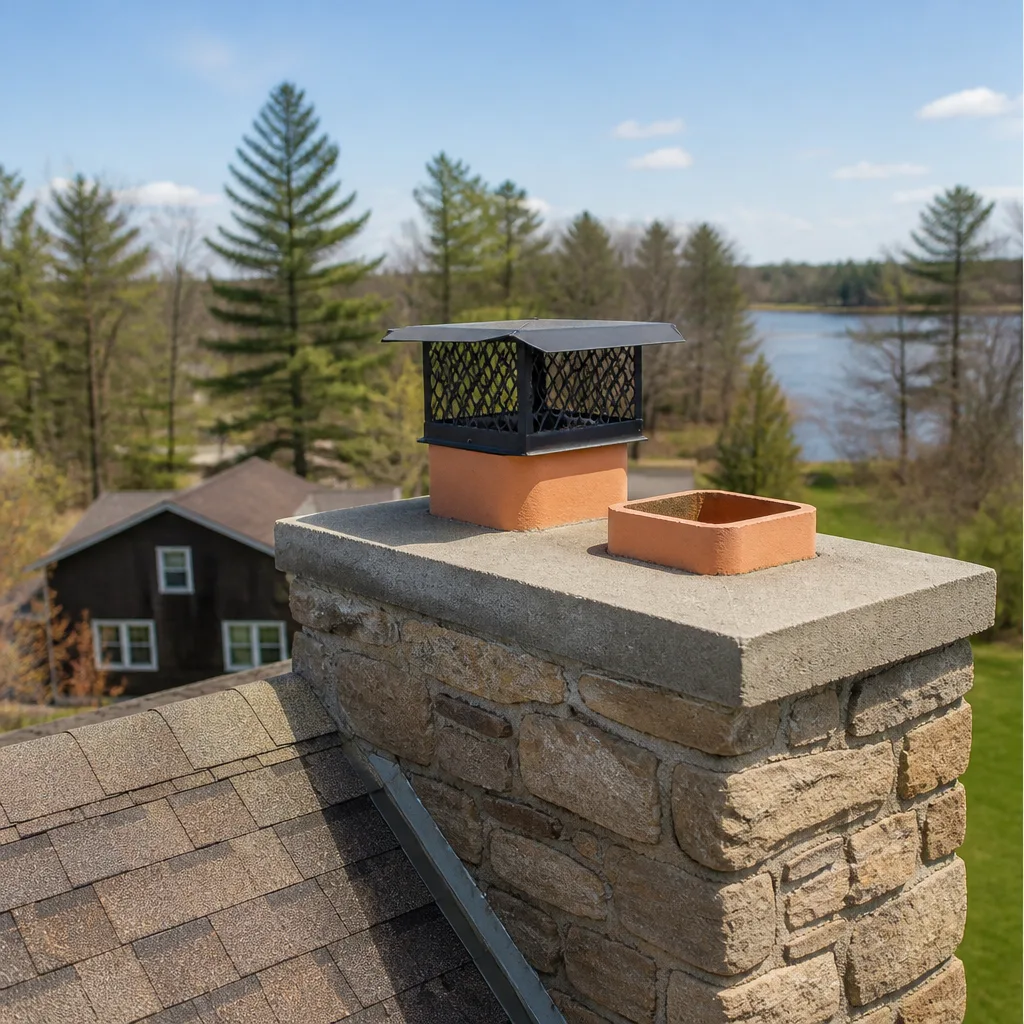 Sweep & inspection
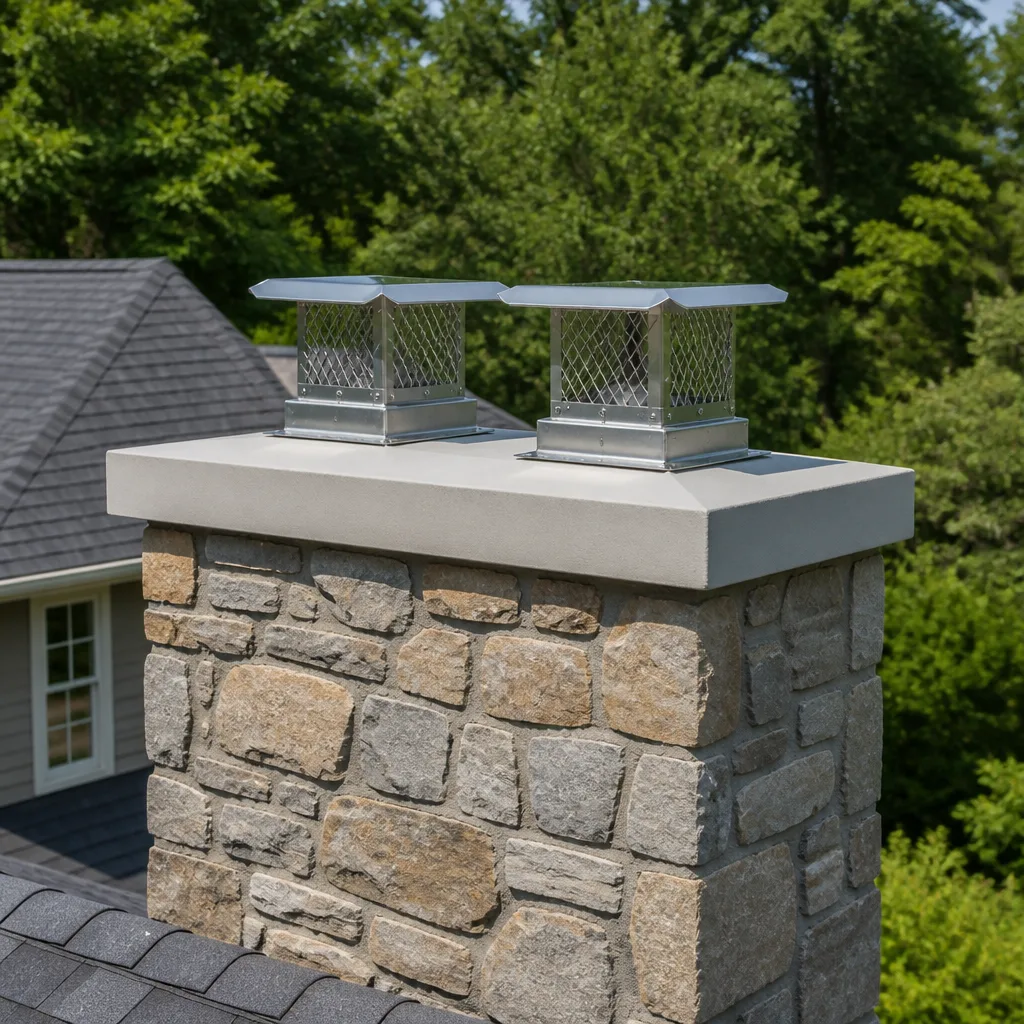 Caps & crowns
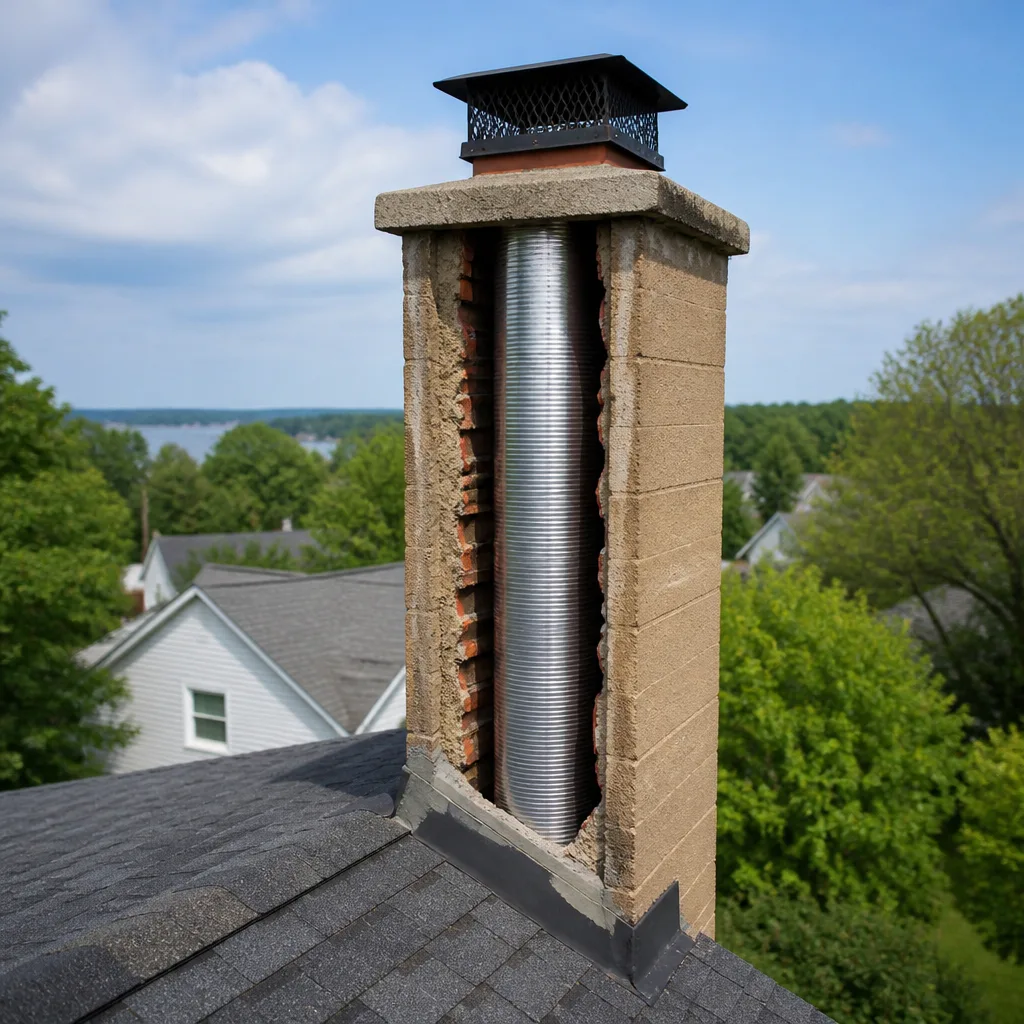 Flue relining
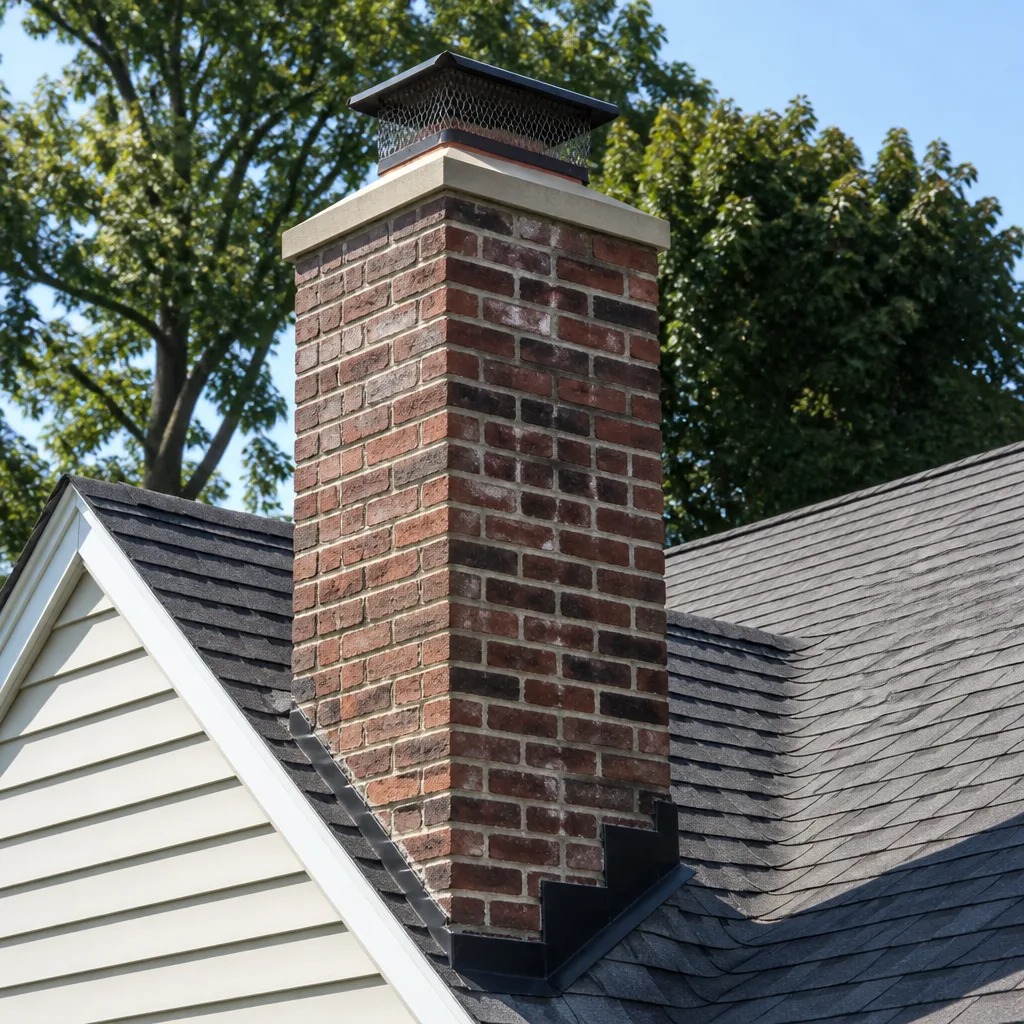 Masonry repair
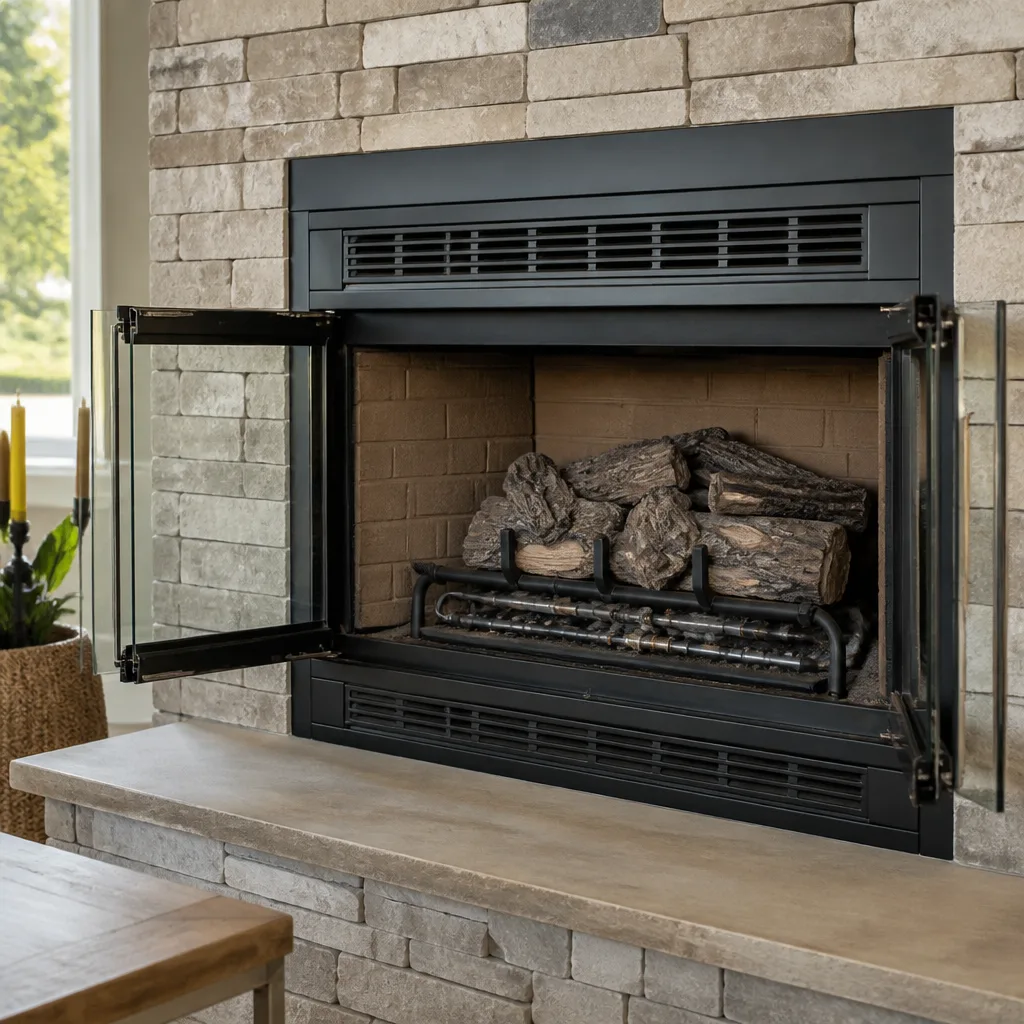 Gas fireplace service
Level 1 sweep and inspection to the NFPA 211 annual standard - flue, crown, cap, and flashing checked and photographed
Chimney sweep logs do not sweep chimneys. They loosen some creosote - which then falls where a brush and vacuum still have to collect it.
Chimney Cleaning Warning Signs: A Houston Homeowner’s Reference Guide
In Houston, we tend to think of our fireplaces the way we think of a guest room: nice to have, used a handful of times a year, out of sight and out of mind the rest of the time. But a chimney that sits unused for nine months is not a chimney that’s resting. It’s a chimney that’s collecting moisture, inviting pests, and quietly deteriorating in ways you won’t notice until the first cold snap of late fall, when you light a fire and the smoke rolls back into the living room instead of up the flue. This guide walks through the warning signs that matter for Houston homes, what each one actually means, and which ones you can watch for a season and which ones mean the fireplace stays cold until a professional takes a look. For a deeper dive, see our Complete Guide to Chimney Cleaning in Houston.
Quick Answer
The most common chimney warning signs in Houston are a smoke smell in the house when no fire is lit, white staining on the exterior brick (efflorescence), flaking mortar or brick faces, animal sounds from inside the chimney, and water in the firebox after rain. A strong smoke odor or visible soot falling into the room generally means a blockage or serious draft problem and calls for an inspection before you light another fire. Most of Houston’s chimney trouble comes from humidity and disuse, not cold weather, which means homeowners here often miss the warning signs entirely because they’re not using the fireplace enough to notice something’s wrong.
Styles & brands we work with
Table of Contents
- The Smoke Smell That Shows Up in July
- White Stains on the Brick (Efflorescence) and What Houston Humidity Does
- Flaking Brick, Crumbling Mortar, and the Cosmetic-vs-Structural Trap
- Animal Sounds, Droppings, and the Houston Attic Connection
- Draft Changes After Storms: What a Shifted Chimney Feels Like
- Water in the Firebox and the Crown Crack Most People Never See
- How to Describe What You’re Seeing So a Contractor Can’t Blur the Diagnosis
- Immediate Fire Risk vs. “Fix Before Next Season”: A Decision Guide
The Smoke Smell That Shows Up in July
A smoke smell in your Houston living room in the middle of summer, with no fire lit and the damper closed, is not a ventilation quirk. It is the single most reliable indicator that creosote has built up inside the flue and is off-gassing in the heat. Creosote is the tarry residue left behind when wood burns; it coats the inside of the flue liner and, in a humid climate like Houston’s, it absorbs moisture from the air and releases odor in return. Think of it as a sponge that’s been sitting in smoke.
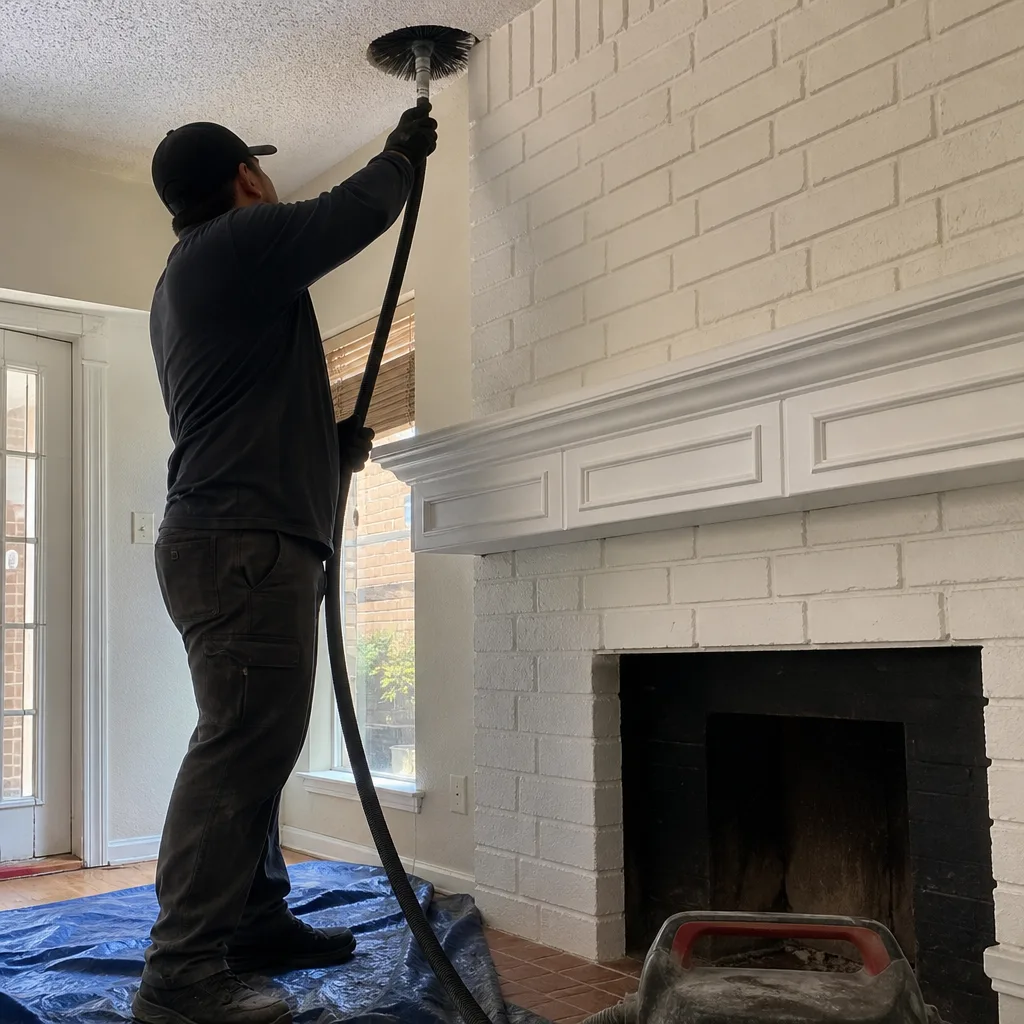
The mechanics are straightforward. Hot, humid air outside the chimney pushes down into the flue. That air picks up the creosote smell and carries it into your house, even with the damper closed, because most dampers are metal plates with gaps, not airtight seals. The stronger the smell, the thicker the creosote layer, and the more likely it’s time for a chimney sweep in Houston to come out with a rotary brush and get the flue clean again.
Here’s how to read the smell by severity:
- Faint smoke odor, only on very humid days: Generally means a light coating of creosote. Worth scheduling a cleaning, but not an emergency. The fireplace can be used if you’re planning a fire in the next week or so, but the smell will get worse every season it’s ignored.
- Noticeable smoke smell whenever the AC cycles: The smoke particles from a dirty flue are being pulled through the house by negative air pressure. This is common in Houston homes where the air conditioner runs constantly and the chimney is on an interior wall. A cleaning is overdue, and you should think twice before lighting a fire until it’s done.
- Strong, acrid, campfire-in-the-house odor: This usually indicates a substantial creosote buildup or, worse, creosote that has hardened into a glossy, tar-like glaze. Glazed creosote is the most combustible form and is the kind most often involved in chimney fires. Treat this as a “don’t use the fireplace until it’s been inspected” situation.
One thing Houston homeowners routinely misread: the smoke smell often fades on dry days and comes back after a rain. That’s not the chimney cleaning itself. That’s the creosote absorbing ambient moisture every time the humidity spikes and off-gassing again when the house warms.
White Stains on the Brick (Efflorescence) and What Houston Humidity Does
If you’ve noticed white, chalky streaks running down the outside of your chimney, you’re looking at efflorescence. It’s not mold, and it’s not paint failure. It’s mineral salt being carried out of the brickwork by water. Houston’s climate makes this far more common here than in drier parts of Texas: our average annual humidity hovers around 75%, and the freeze-thaw cycles that drive efflorescence in northern cities are replaced here by something more insidious: constant, low-grade moisture penetration that never fully dries out.
Efflorescence itself is not dangerous. It’s a cosmetic byproduct. But it is a tell. The water that carried those salts to the surface went through the masonry, and that same water is working its way into your chimney structure. In the Houston area, we typically see efflorescence in three patterns:
- Streaks from the top of the chimney downward: This almost always points to a cracked or separated chimney crown, the concrete slab that caps the top of the chimney. Water gets in through the crack, runs down the interior of the brick, and leaches out the salts.
- Patchy white discoloration on one side of the chimney: Often means the brick itself has become porous over time and is absorbing rain directly. Houston’s combination of humidity and heavy spring rains means brick that’s 20 years old or older has often lost the water resistance newer brick has.
- Blooming around the mortar joints only: Typically indicates the mortar itself is failing and channeling water into the wall. The joints are the path of least resistance, and the salts come out where the wet mortar meets the dry surface.
The pragmatic read: efflorescence on its own is a “watch it for a season” issue, not a “don’t use the fireplace tonight” issue. But in Houston, where humidity accelerates masonry decay, the window between “white stains” and “crumbling brick” is shorter than in Denver or Dallas. If you can wipe the stain off and it comes back within a few weeks after rain, the water source is active and should be addressed before it becomes spalling.
Flaking Brick, Crumbling Mortar, and the Cosmetic-vs-Structural Trap
Spalling is what happens when trapped water inside brick expands and contracts with temperature changes, causing the brick face to flake, crack, or pop off entirely. In severe cases, you’ll find pieces of brick on the ground around the chimney base. Spalling is common in Houston for the same reason efflorescence is: water gets in and doesn’t leave. The difference is that spalling is a structural failure, not a surface blemish.
This is where things get murky for homeowners, because contractors sometimes blur the line between cosmetic and structural issues to push a bigger job than necessary. Here’s how to tell the difference yourself:
Cosmetic issues:
- Surface staining that doesn’t change the shape of the brick
- Hairline cracks in the mortar that don’t widen over time
- Minor efflorescence as described above
- Discoloration from soot or weather exposure
Structural issues:
- Brick faces that have flaked off, leaving a softer, more porous core exposed
- Cracks in the mortar that run horizontally through multiple bricks, not just vertically
- A leaning chimney or visible gap between the chimney and the house
- Spalling severe enough that you can see deep into the brick or the chimney interior
Here’s the honest truth: if the brick is flaking, it needs to be addressed. The question is how much. A mason can repoint bad mortar and replace individual damaged bricks. A chimney liner specialist can address a failing flue liner. A repair company that tells you a bit of spalling means a full rebuild is inflating the scope. On the other hand, if multiple courses of brick are spalling and the chimney has visibly shifted, a rebuild or partial rebuild may genuinely be the only sound fix. The way to know is to ask for the evidence: “Show me the cracked liner on the camera,” or “Point to the mortar joint you’re worried about.” If they can’t or won’t, get a second opinion.
In the Houston market, spalling repair typically runs between $700 and $2,500 depending on the extent, with a full chimney teardown and rebuild running far higher. The honest contractor gives you a written price before the work starts. If they won’t put the number on paper before the first brick comes out, that’s not a contractor whose word you should take.
Animal Sounds, Droppings, and the Houston Attic Connection
If you hear scratching, chittering, or thumping coming from the chimney area, the most common culprits in Houston are squirrels, raccoons, and chimney swifts. Chimney swifts are federally protected birds that roost in chimneys during migration, and you can’t legally remove them or their nests while they’re actively nesting. Squirrels and raccoons, meanwhile, are looking for a dry, warm den, and a Houston chimney with a missing or damaged cap is a five-star hotel.
The telltale signs:
- Scratching during the day: Usually squirrels. They’re diurnal and active in the morning.
- Heavy thumping at night: Usually raccoons. They’re nocturnal and far louder than squirrels.
- High-pitched chirping or fluttering: Likely chimney swifts. Listen for it in spring and early summer, which is nesting season.
- Droppings in the firebox: Whatever the animal, droppings mean an active den or roost, and the chimney should not be used until the animal is removed and the flue has been cleaned. Animal waste in a flue is a health hazard, not just a nuisance.
What Houston homeowners routinely miss is the connection to the attic. Raccoons often enter through the chimney and then work their way into the attic through the chase that surrounds the flue. If you’ve heard noises in the attic and chalked it up to “something in the wall,” have the chimney checked too. A proper chimney inspection in Houston includes a look at the chase and the cap, because that’s where the animals get in.
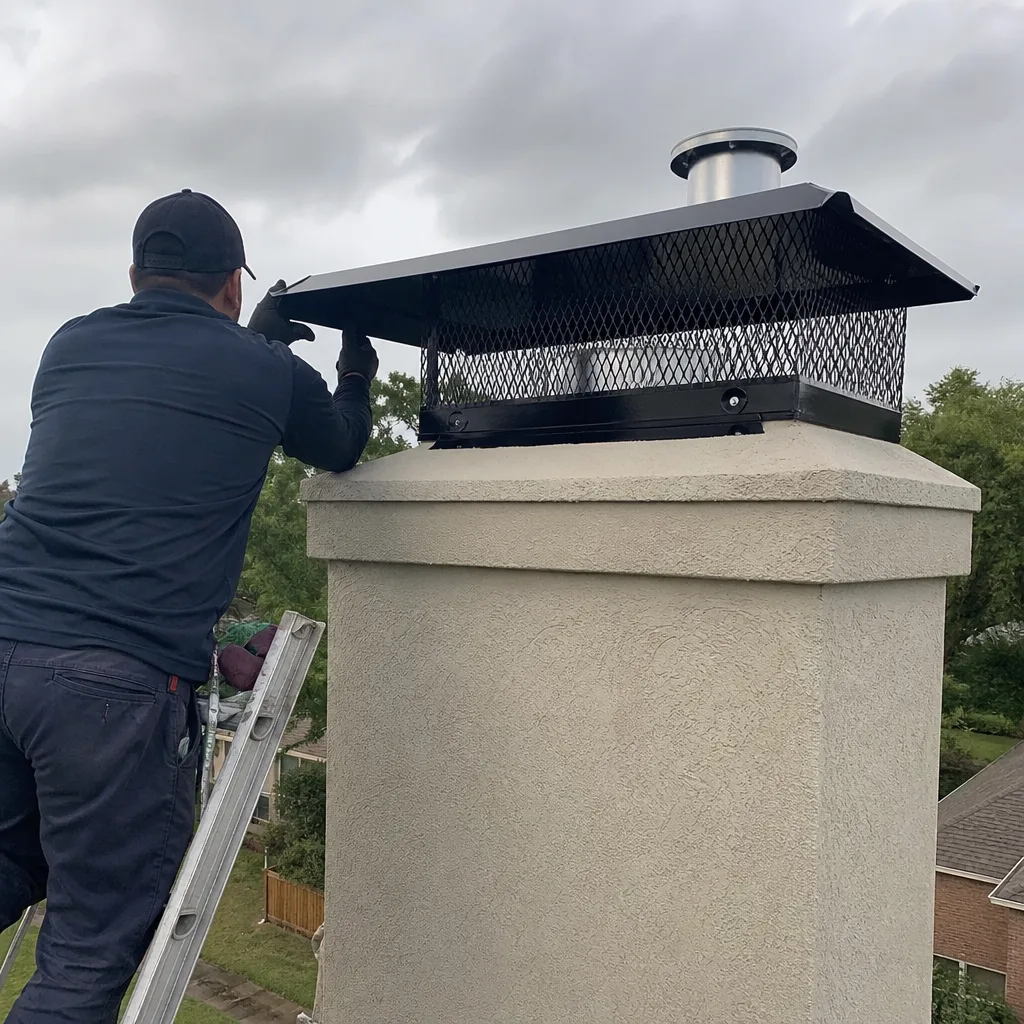
The fix is a properly fitted chimney cap with a spark arrestor. It keeps animals out, keeps debris out, and prevents sparks from landing on your roof. If you already have a cap and animals are still getting in, the cap is either damaged, the wrong size, or not secured correctly. In our experience, a lot of “animal-proof” caps installed by handyman services are just wire mesh stretched across the flue opening, which works until the first raccoon decides it’s in the way.
Draft Changes After Storms: What a Shifted Chimney Feels Like
Houston gets its share of severe weather. Hurricane-force winds, derecho events, and the occasional tornado all put lateral pressure on chimneys that were built to handle vertical load, not sideways force. After a major storm, a chimney can shift slightly off its footing, and the first sign is often a change in how the fireplace draws.
Here’s what a shifted chimney feels like in practice:
- Fires that used to draw well now puff smoke back: This is the most common complaint we hear after a bad storm season. The flue is no longer perfectly vertical, and smoke hits a slight bend that slows its rise.
- A draft even when the damper is closed: If you feel air moving across the top of the fireplace when the damper is shut, the chimney or the damper assembly may have shifted enough to create a gap.
- A new whistle or howl on windy days: Wind moving across a shifted chimney cap or a slightly open damper creates noise that wasn’t there before.
- Visible cracks in the drywall around the chimney chase inside the house: When the chimney moves, it often pulls on the framing around it, and the drywall is the first thing to show the stress.
If you notice any of these after a storm, call for an inspection before you use the fireplace again. A shifted chimney is a structural problem, not a draft problem, and it gets worse over time. The good news is that most post-storm shifts in Houston are caught early with a Level 2 inspection, which includes a camera run up the flue to see what moved and where.
Water in the Firebox and the Crown Crack Most People Never See
Finding water in your firebox after a Houston rainstorm is a warning sign that almost never resolves itself. Water coming down the flue means one of three things: a cracked crown, a damaged cap, or a flue liner that has separated and is channeling water into the chimney rather than venting smoke out. None of these improve with age.
The crown crack is the one most people never see, because it’s on top of the chimney and most homeowners have no reason to get up there. A crown is the concrete slab that caps the entire chimney structure. It should slope gently away from the flue so water runs off. When it cracks, often due to the same Houston humidity and heat cycles that cause spalling below, water gets in and starts working on the masonry. The first visible sign is often efflorescence on the exterior, but the structural damage is happening inside the chimney where it’s invisible until it’s expensive.
There’s a straightforward hierarchy here:
- Water only after hard, driving rain: Likely a cracked or insufficient cap. A properly fitted cap with a solid top and mesh sides should keep out all but wind-driven rain. If it doesn’t, the cap needs to be replaced or upgraded.
- Water after any rain, including light showers: Almost always a crown crack. The crown needs repair, and if the crack is wide enough, a crown rebuild may be in order.
- Water plus a visible stain on the ceiling or wall near the chimney: This means water has breached the chimney interior and is now working into the house structure. This is no longer a chimney problem; it’s a water-damage problem that starts with the chimney.
Here’s the part most guides skip: water in the firebox rarely means the liner itself is clean. Water traveling down a flue that hasn’t been swept in years picks up creosote and soot and deposits both in the firebox, leaving a greasy black residue. If you see that residue, it means the water has been coming down for a while, and the creosote in the flue was thick enough to wash off. The fix ordering is: find and seal the water entry point first, then sweep the chimney to remove what the water left behind.
How to Describe What You’re Seeing So a Contractor Can’t Blur the Diagnosis
If you’ve ever had a contractor quote you a repair, you know how easy it is to get talked into work you didn’t originally call about. The way to protect yourself is to describe the problem precisely, on your terms, and to insist that any diagnosis be tied back to what you’re actually seeing. This is the same advice we give to homeowners in Houston who call us after a bad experience with another company: if the contractor’s story doesn’t match your description, slow down.
Here’s a simple framework:
- Start with the symptom, not the suspected fix. Instead of saying “I think my crown is cracked,” say “I found water in the firebox after Tuesday’s rain and there’s white staining on the outside of the chimney near the top.” The diagnosis is the contractor’s job, and if you supply your own, a less honest contractor will just agree with you and sell what you’ve already bought.
- Ask for the evidence. A camera inspection of the flue takes 20 minutes and produces photos or video. If you’re told the liner needs to be replaced, ask to see the cracked or failed sections on the camera. If you’re told the crown is shot, ask for a photo from the roof.
- Put it in writing. Any reputable chimney company in Houston gives a written price before the work starts. The number on the invoice should match the number you agreed to. If it doesn’t, that’s a contract problem, not a chimney problem.
- Ask about the tiers. “Do I need this fixed before I use the fireplace, or can it wait until next season?” A straight answer to that question tells you whether you’re talking to someone who’s solving your problem or selling you a package.
The Houston market has enough legitimate chimney companies that you never need to accept a vague diagnosis or a price that changes at the door. Ashby Chimney Houston gives a written price before any work starts and a written guarantee when it’s done, because we know the homeowner who’s been burned once is looking for exactly that: a written promise, not a verbal one.
Immediate Fire Risk vs. “Fix Before Next Season”: A Decision Guide
Not all chimney warning signs carry the same urgency. Some mean the fireplace should stay cold until a professional has looked at it. Others mean you should plan to address it before the next burning season but can use the fireplace in the meantime with reasonable care. Here’s the filter we use:
Don’t use the fireplace until it’s been inspected:
- Strong smoke odor that persists even when the fireplace hasn’t been used in months – could indicate a significant creosote buildup or a partial blockage.
- Debris falling into the firebox from above – a flue blockage is in progress, and burning with a blocked flue forces carbon monoxide and smoke back into the house.
- Water in the firebox plus a visible crack in the interior firebrick – water and structural cracks together suggest the chimney has accepted significant water intrusion, and the liner or mortar joints may have failed.
- Animal sounds or droppings in the firebox – burning with an animal nest in the flue is how chimney fires start.
Can wait until before next season, but shouldn’t be ignored:
- Light efflorescence with no flaking brick – mostly cosmetic, but worth having the crown checked at the next visit.
- Minor spalling on one or two bricks – worth repairing, but not an active fire hazard by itself.
- A faint smoke smell that only appears on extremely humid days – indicates a light creosote coating and a cleaning is due, but not an emergency.
- A damper that sticks or is hard to operate – an inconvenience and a draft concern, but not an immediate fire risk.
The rule of thumb: if the warning sign involves combustion byproducts (creosote, soot, smoke), animals, or water, it’s worth a professional look sooner rather than later. Fireplaces are designed to contain fire, and they do that well when they’re maintained. The Houston homes we see with serious chimney damage are almost always the ones where a small warning sign was noticed and set aside for a few seasons, then another few, until the “small” repair became a liner replacement or a partial rebuild. If you’re weighing whether to tackle maintenance yourself or call a pro, our DIY vs Professional Chimney Cleaning guide can help you decide.
Common Mistakes to Avoid
- Assuming no fireplace use means no chimney problems. Houston’s humidity does more damage to unused chimneys than burning does. A chimney that sits dormant all year still collects moisture, hosts animals, and slowly deteriorates. Annual inspection matters regardless of use.
- Wiping away efflorescence and calling it resolved. The stain comes back because the water source is still there. Efflorescence is a symptom, not the problem.
- Burning pine or other soft wood because it’s cheap. Soft woods produce more creosote per cord and accelerate buildup. Houston has plenty of oak available, and oak burns cleaner and slower.
- Closing the damper tight and assuming that seals off the smoke smell. Dampered or not, a dirty flue off-gasses. The only fix is cleaning the flue, not tightening the damper.
- Trusting a verbal quote. In Houston, the legitimate chimney companies put the price in writing before work starts. If a contractor won’t, walk away.
- Ignoring a draft change after a storm. A chimney that shifted is a chimney that’s now oversized for its liner, missing a proper connection, or pulling away from the house. Post-storm draft changes are structural alerts in disguise.
See the difference
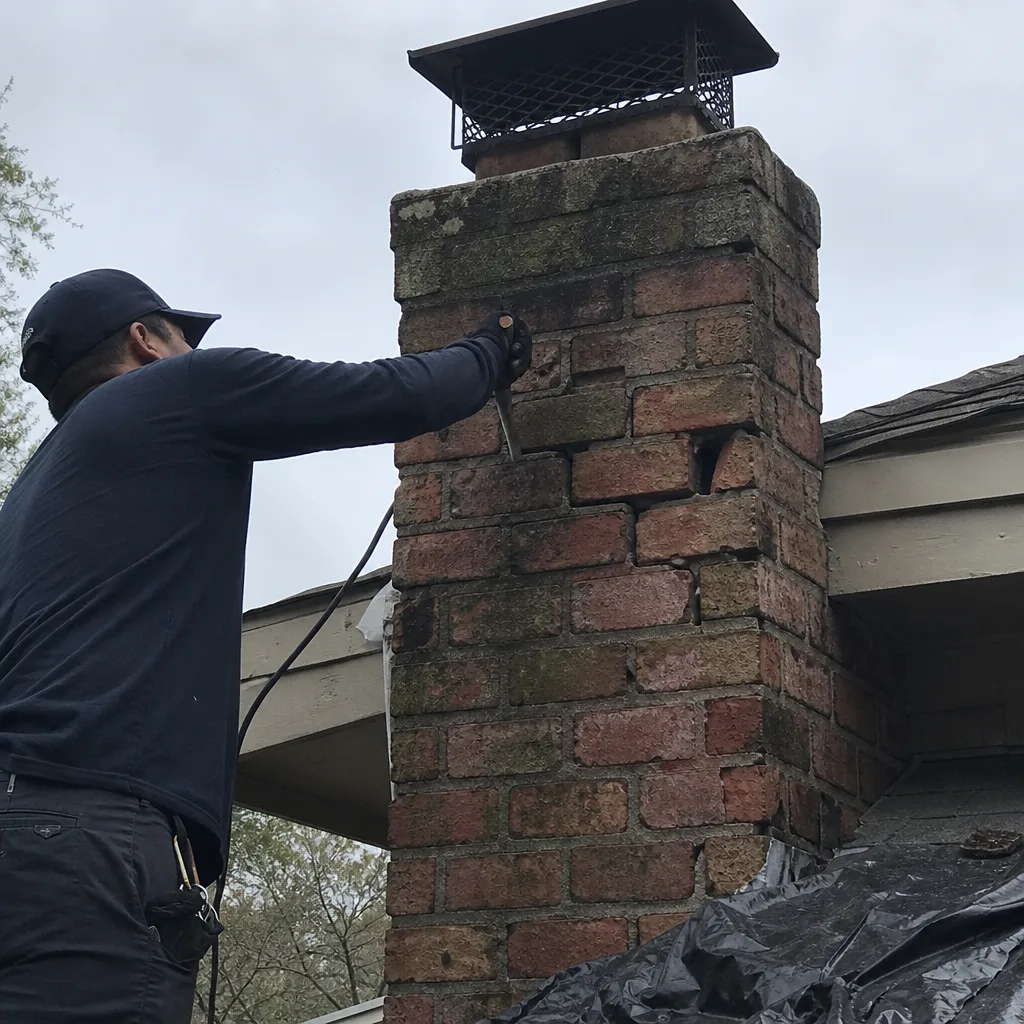 Before
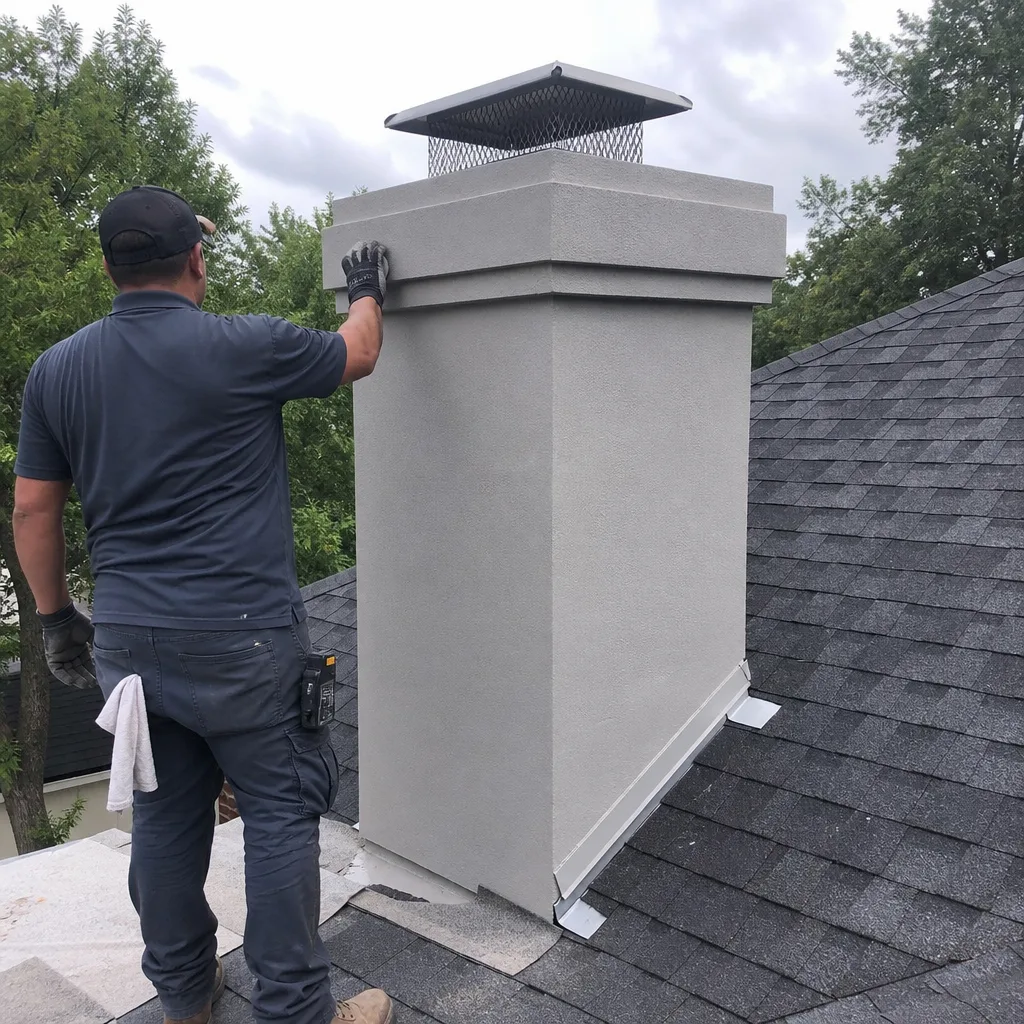 After
After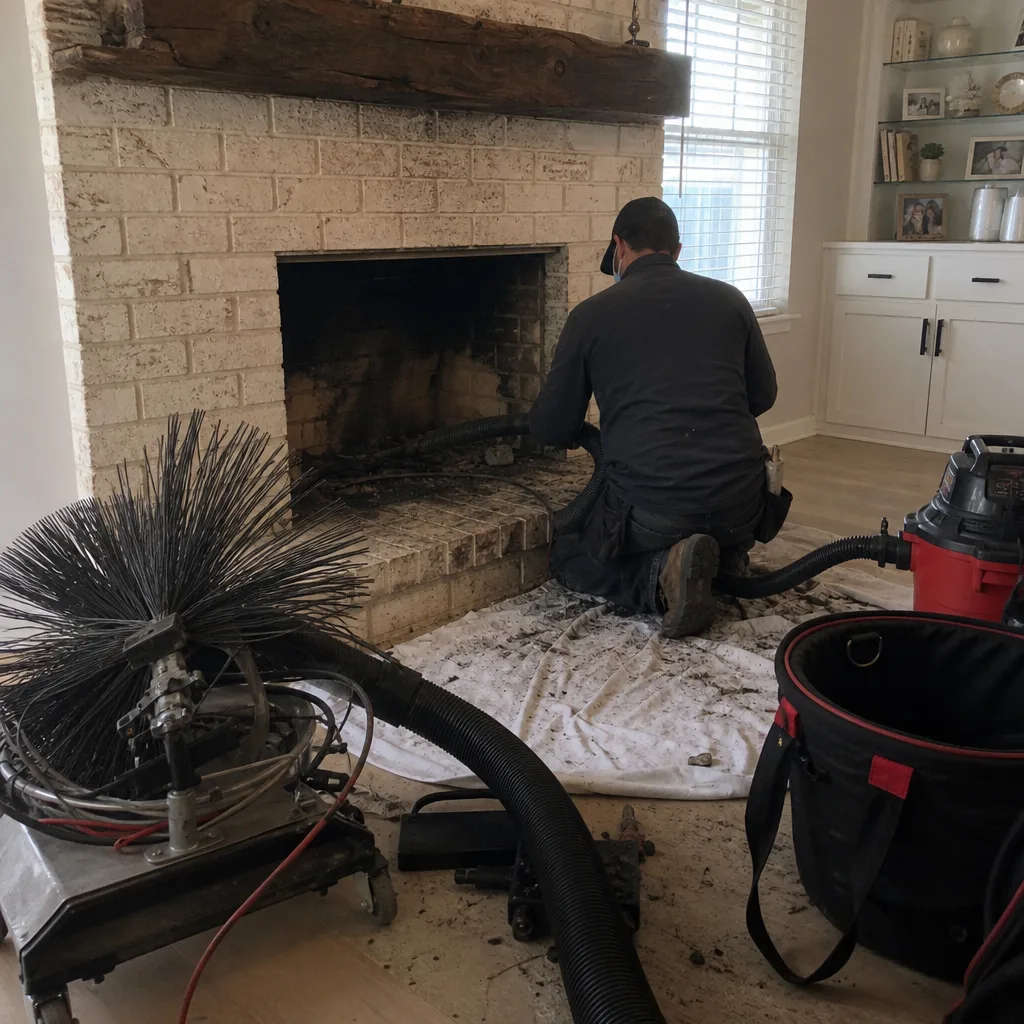 Before
 After
After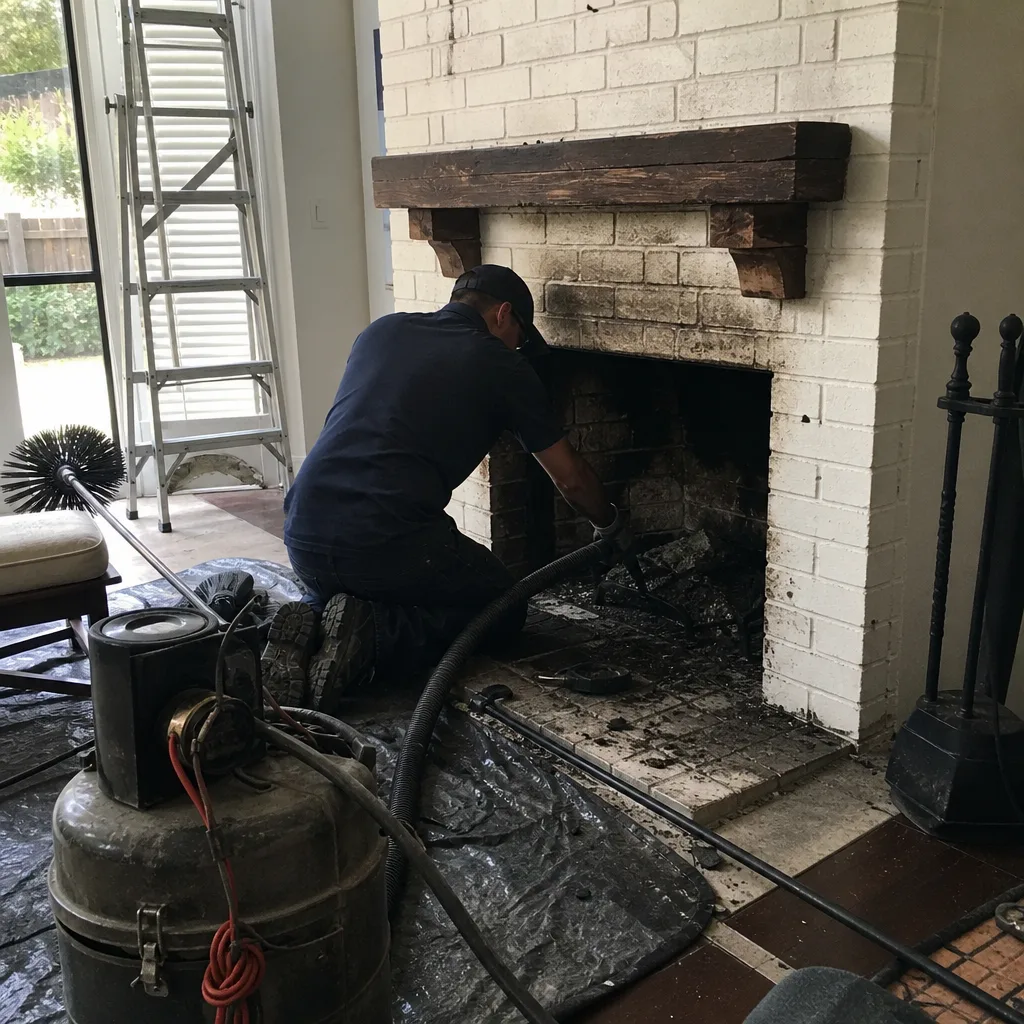 Before
 After
AfterWhen to Call a Professional
You should call a chimney professional in Houston when you notice any of the following: a smoke smell that persists without a fire, water in the firebox after rain, flaking brick or crumbling mortar, animal sounds from the chimney, or a draft change after a major storm. Any of these warrants a camera inspection, which is the only way to see what’s happening inside the flue where the problem actually lives. If you’re not sure whether what you’re seeing is serious, call and describe it. A good company will tell you over the phone whether it sounds urgent or can wait, without charging for that conversation. Ashby Chimney Houston offers free estimates in Houston. Call (903) 961-6496 and describe what you’re seeing. If it can wait, we’ll say so.
Frequently Asked Questions
Once a year, regardless of how often you use your fireplace. Houston’s humidity means creosote absorbs moisture and degrades faster here than in dry climates, and chimneys that sit unused still accumulate dust, debris, and the occasional animal nest. The National Fire Protection Association recommends an annual inspection and cleaning as needed, and in our Houston climate, “as needed” is usually every 12 to 18 months for active fireplaces.
A standard chimney sweep in Houston typically runs between $180 and $320, depending on the height of the chimney, the amount of creosote buildup, and whether the technician has to work from the roof or can do everything from inside the firebox. If you add an inspection, expect $100 to $180 more. Ashby Chimney Houston gives you a written price before the work starts, so the number on the invoice matches what you agreed to at the door.
Only if a camera inspection shows cracks, gaps, or a liner that has separated from the chimney structure. A cracked clay liner is a fire risk because it allows heat and combustion gases to reach the surrounding wood framing. But you should never accept a liner replacement recommendation without seeing the camera evidence. If the technician can’t show you the crack, get a second opinion before you spend $3,000 to $6,000 on a new liner.
Creosote builds up in layers. The first layer is dusty and easy to remove. Over time it hardens into a glaze that requires rotary tools and more labor. That glaze is highly combustible, and a hot fire can ignite it, which is how chimney fires start. Even if you never have a fire, the creosote absorbs moisture in Houston’s humid air and begins to degrade the flue liner from the inside.
You can inspect the visible parts: the firebox, the damper, the visible brick from the ground, and the chimney cap if you can safely see it from the ground. But the flue interior, which is where the problems live, requires a camera and training to read. A homeowner looking up a dark chimney can’t see cracked tiles, separated liner joints, or creosote glaze. That’s why the annual professional inspection matters, and why it’s the one thing we tell Houston homeowners not to skip.
Rainwater enters the chimney through a cracked crown or a missing cap, mixes with creosote, and releases the odor into the house as the humidity rises. The smell is strongest after rain because the water has just reactivated the creosote. The fix is to seal the water entry point, then have the flue cleaned to remove what the water left behind.
The Bottom Line
Chimney warning signs in Houston skew toward what you smell and feel rather than what you see, because our biggest culprits are humidity, disuse, and animals, not the heavy winter burning cycles that cause problems up north. A smoke smell in July, water in the firebox after a light rain, or a draft change after a storm are all signals that deserve attention. The good news is that most Houston chimney problems are catchable early, and the fix is usually far cheaper than the repair you’d need if the warning sign had been ignored for another season. If you’ve noticed something that doesn’t seem right, call us, describe what you’re seeing, and we’ll tell you straight whether it’s urgent or can wait. You can also browse more guides & resources on keeping your Houston chimney safe. That’s the whole job: look, report, be honest.
Call Ashby Chimney Houston for a Free Estimate
If you’ve spotted a chimney warning sign in your Houston home, or you’re not sure whether what you’re seeing is serious, call (903) 961-6496. A live person answers, 24 hours a day, seven days a week. We’ll talk through what you’re noticing, tell you our honest read on urgency, and if it needs a closer look, Ashby Chimney Houston will give you a written price before any work starts. No price switches at the door. No verbal estimates that evaporate. Just a straight answer and a written guarantee on the work we do. You can also browse our fireplace repair services in Houston if you know the repair is already beyond a cleaning. Call when you’re ready.
Written by Nathan Corliss, Owner at Ashby Chimney Houston, serving Houston since 2002.