
Last updated October 15, 2026
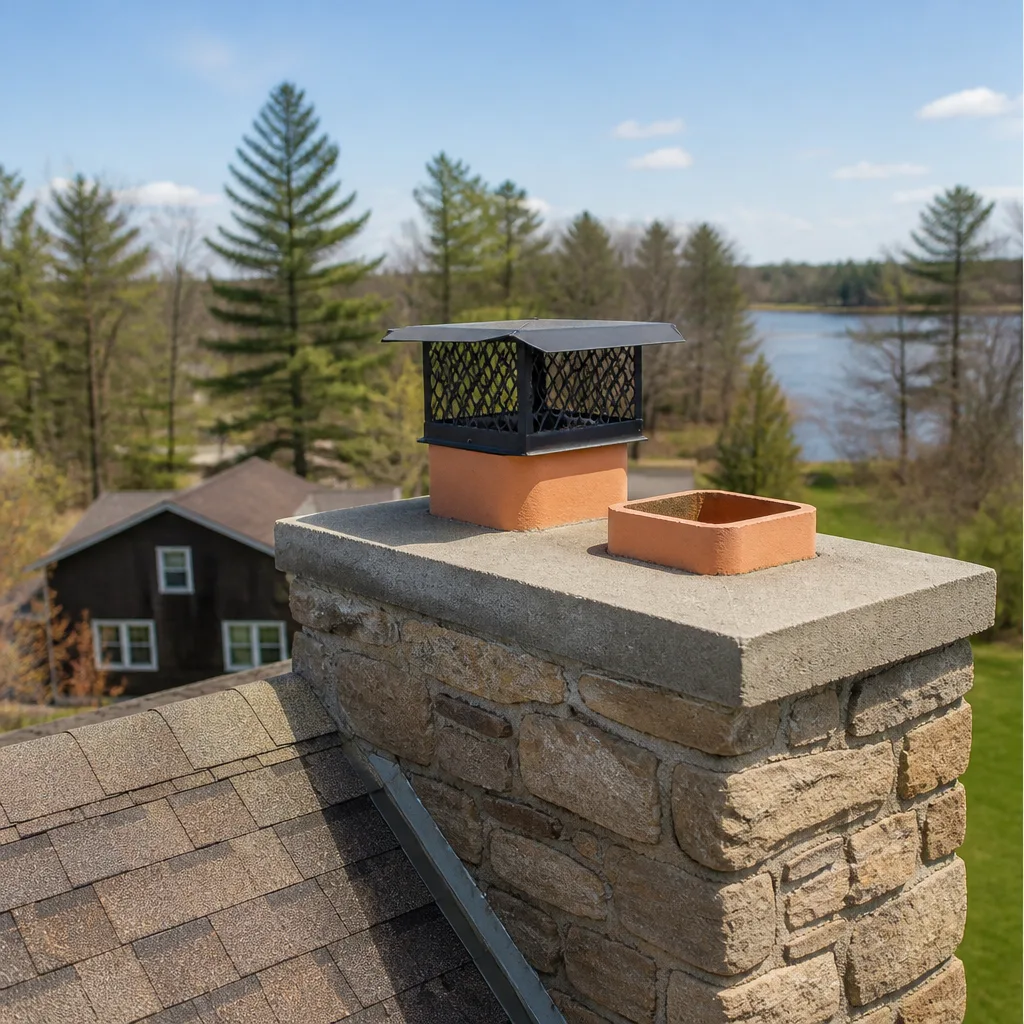 Sweep & inspection
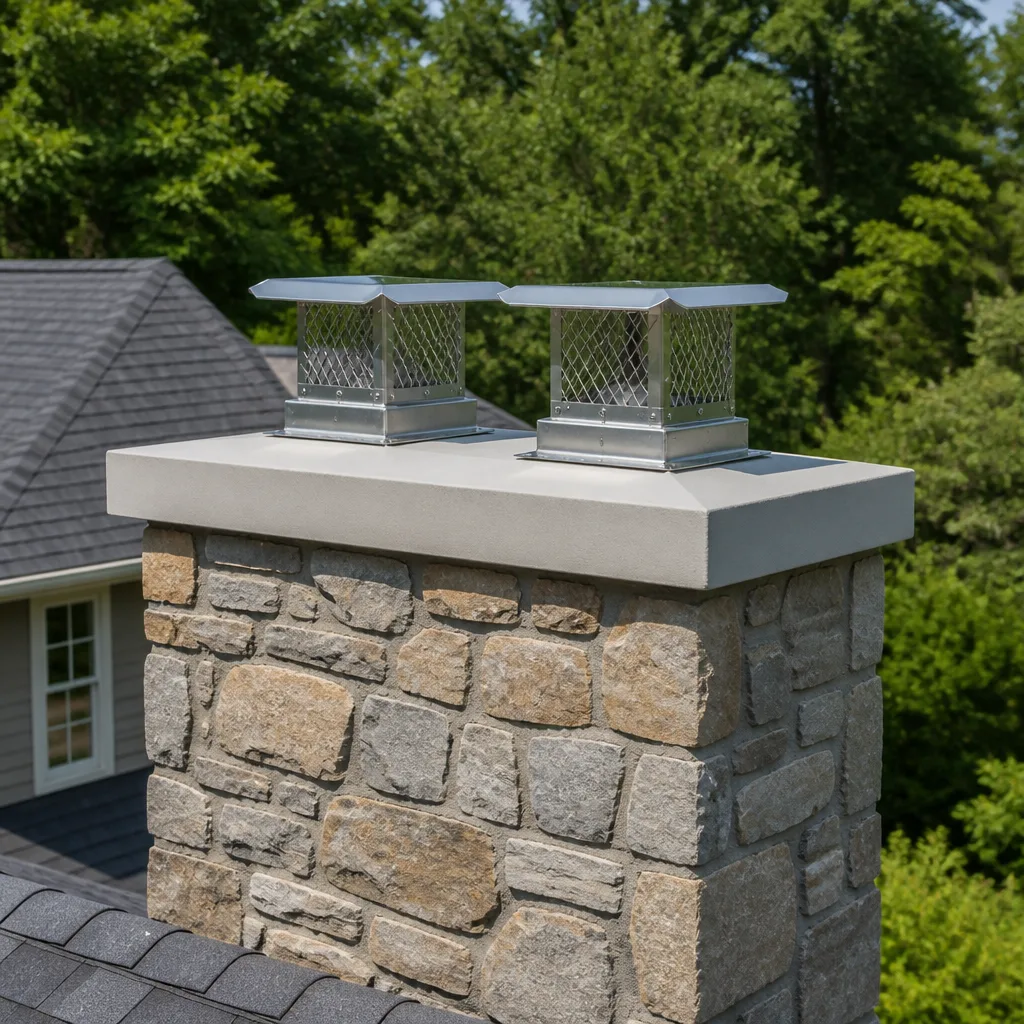 Caps & crowns
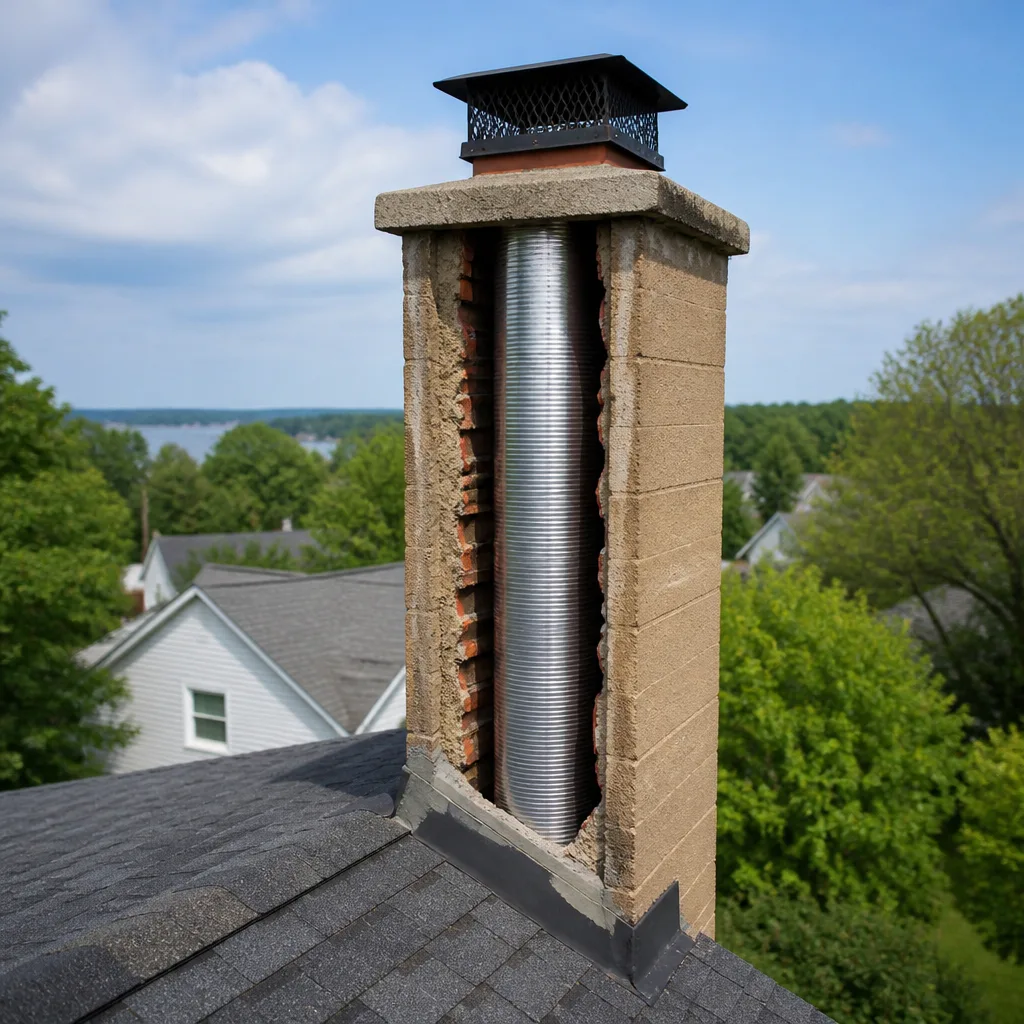 Flue relining
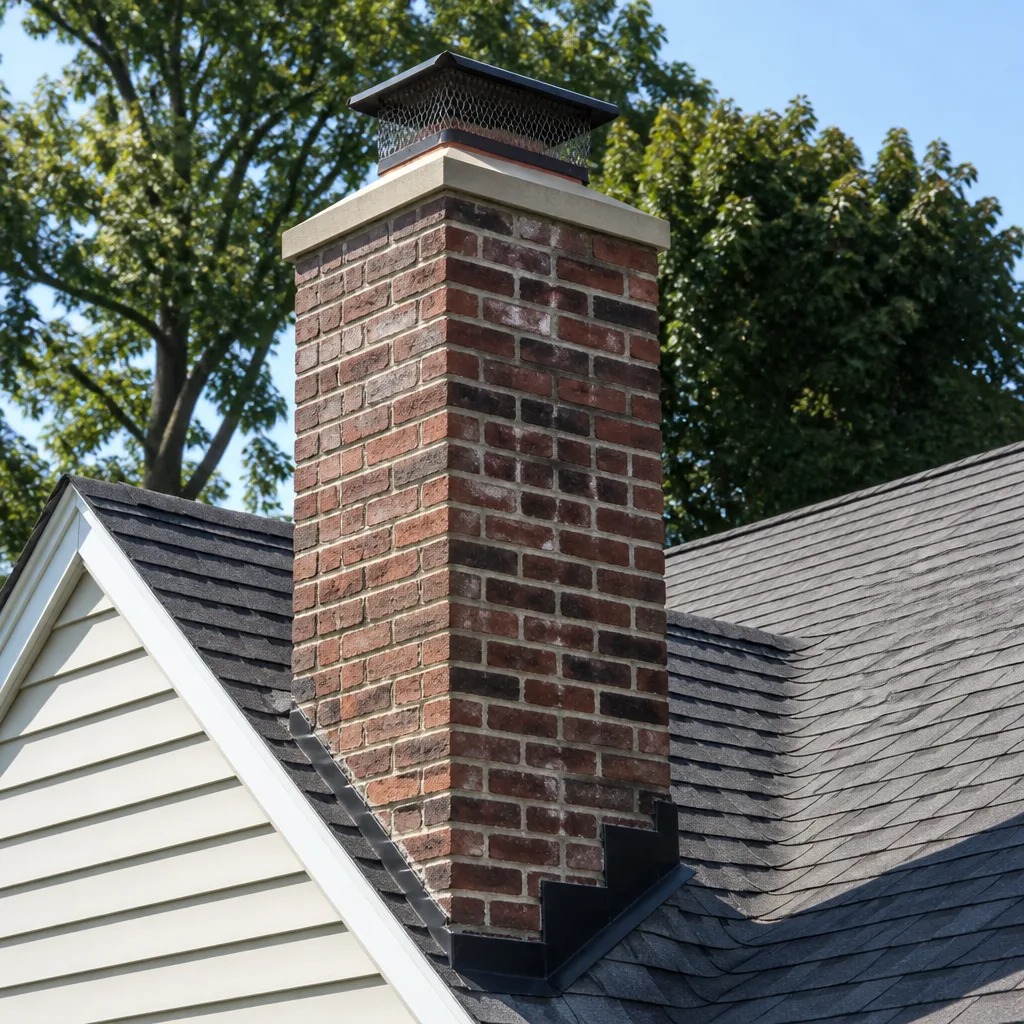 Masonry repair
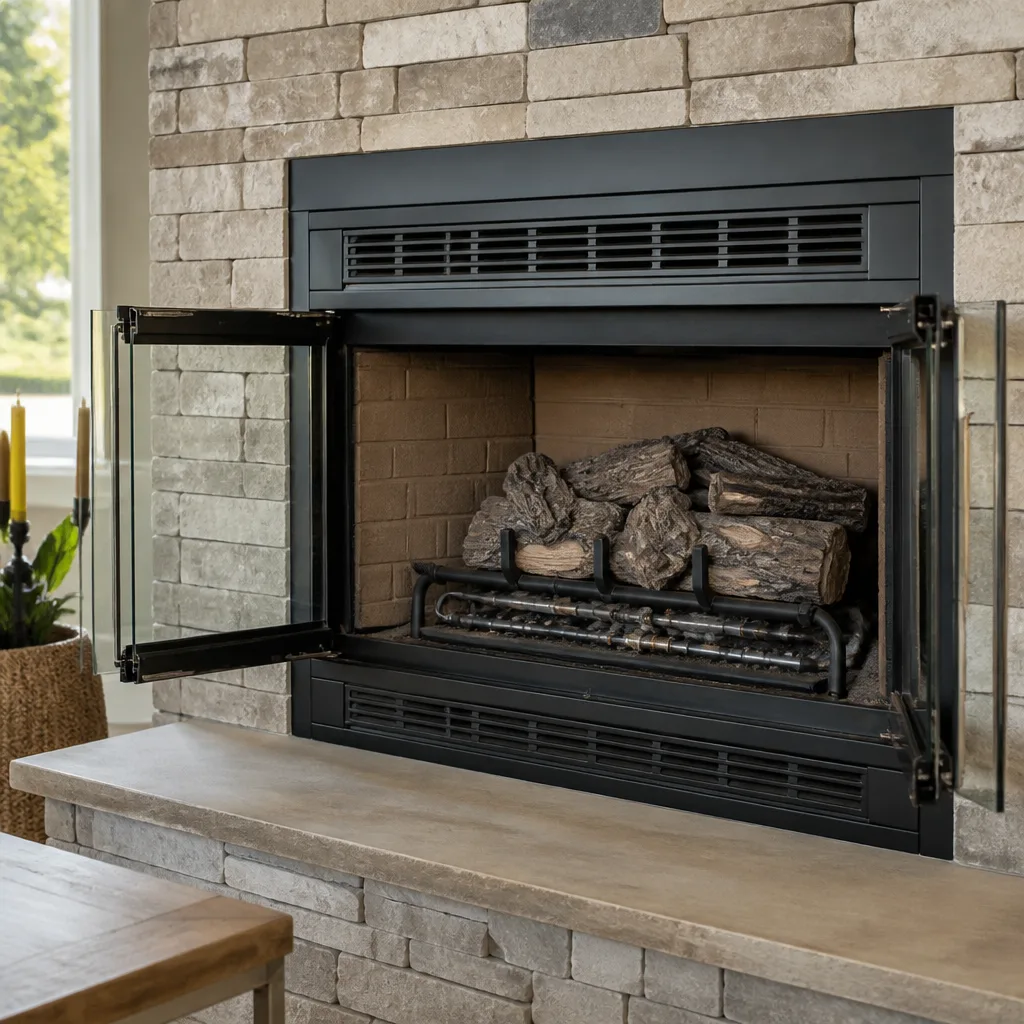 Gas fireplace service
Level 1 sweep and inspection to the NFPA 211 annual standard - flue, crown, cap, and flashing checked and photographed
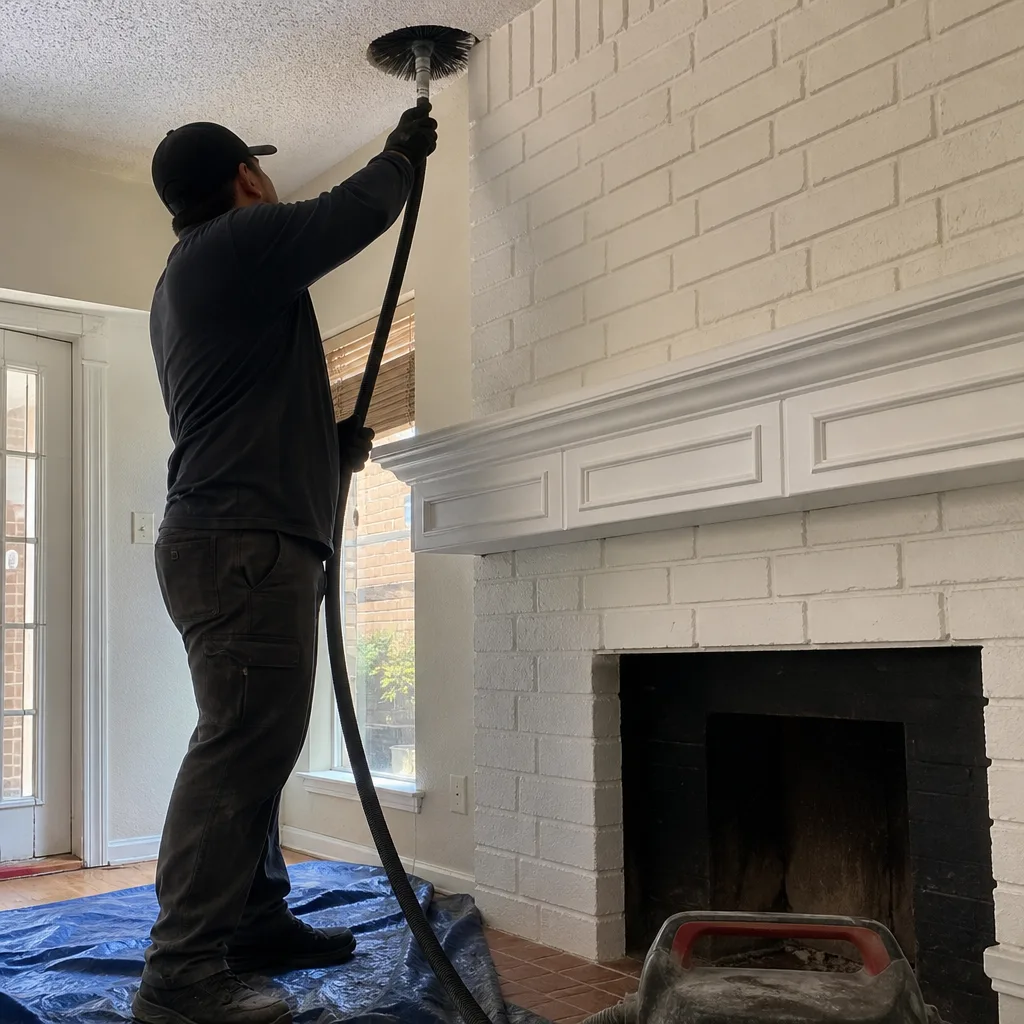
Chimney sweep logs do not sweep chimneys. They loosen some creosote - which then falls where a brush and vacuum still have to collect it.
Seasonal Chimney Cleaning Care for Houston: Year-Round Homeowner’s Guide
Here’s the counterintuitive truth about owning a fireplace in Houston: your chimney’s biggest threat isn’t the fire you light in December. It’s the seven months of 90-degree heat and 90% humidity it sits through between March and November, slowly working on mortar joints, rusting a steel liner from the inside, and giving mold a foothold in creosote left over from last winter. This guide walks through what actually needs attention each season in the Houston climate, how to time cleaning and inspections so they matter, and what you can safely check from the ground without climbing a ladder.
Styles & brands we work with
Quick Answer
In Houston, annual chimney care works best split into two touchpoints: a professional sweep and inspection in early to mid-October, before the first fire of the season, and a simple off-season check around April or May when you close the fireplace down for summer. The risk through Houston’s long hot season is moisture, not soot, so a capped flue, an intact crown, and a damper that seals are the three things that keep a chimney healthy all 12 months.
Table of Contents
- Why Houston Is Different From Every Other Chimney Market
- The Two-Season Calendar: What to Do and When
- What Actually Happens Inside a Capped Versus Uncapped Flue During the Off-Season
- Pre-Season Checklist: 30 Days Before First Fire
- Post-Season Checklist: Closing the Fireplace for Summer
- Hurricane Season and Your Chimney: Caps, Flashing, and Crowns
- The August Smell Test: What a Chimney Smells Like When Something Is Wrong
- Timing Your Sweep: Why October Beats January in Houston
- What a Houston Chimney Sweep and Inspection Actually Costs
- Common Mistakes to Avoid
- When to Call a Professional
- Frequently Asked Questions
- The Bottom Line
Why Houston Is Different From Every Other Chimney Market
Most chimney advice online is written for New England or the Midwest, where chimneys work hard from October through April and then get a dry, mild summer to recover. Houston doesn’t work that way. Our burn season is short, maybe ten to twelve weeks between late November and early February, and even then a fireplace is as much about ambiance as heat. But the off-season here is brutal on masonry and metal in ways a Pennsylvania chimney never experiences.
Houston’s average relative humidity runs around 75% year-round, spiking above 90% on summer mornings. When that moist air moves through an uncapped flue, it condenses on the interior walls. Clay flue tiles, which are porous, absorb the moisture. Over years, the repeated wetting and heating cycle causes spalling, where the surface of the tile flakes off in thin sheets. A steel liner fares worse: moisture plus the acids left behind by burning wood creates a corrosive environment that eats through thin-wall stainless in as little as a decade if the chimney is never inspected.
Then there’s the soil. Houston sits on expansive clay, the kind that swells when wet and shrinks in a dry spell. Houses shift. Chimneys, which are essentially freestanding masonry columns attached to the side of a house, shift differently than the house itself. Hairline cracks open in mortar joints, and when a chimney leans a fraction of a degree, the flashing where roof meets chimney pulls away. That’s how water gets behind the brick, and that’s why a Chimney Inspection in Houston matters just as much in April as it does in October.
We say this from experience: Ashby Chimney Sweep has been working on Houston chimneys since 2002, and the repair calls we get in September are rarely about last winter’s fires. They’re about what the summer did to the top six feet of the chimney.
The Two-Season Calendar: What to Do and When
Forget the four-season chimney advice. Houston homeowners need a two-season plan built around the burn window and the long humid lull. Here’s the rhythm we recommend, based on working in Houston for more than two decades.
Season One: Pre-Burn (September through mid-November)
- Schedule a professional sweep and inspection in October. This is the single most important appointment of the year. A Chimney Sweep in Houston removes creosote built up the previous winter and clears any debris or animal nests from the off-season. The inspection that accompanies the sweep catches water damage from summer before you put fire behind it.
- Check the damper operation. Open and close it a few times. If it sticks, rust has likely set in over the summer. A damper that won’t fully close lets conditioned air escape all winter and humid air in all summer.
- Look at the chimney from the ground with binoculars. Check the cap, the crown, and the flashing for anything that looks shifted or cracked. More on this below.
- Test the smoke path before the first fire. Light a rolled newspaper and hold it up in the firebox. If smoke drifts into the room instead of up the flue, the chimney may have a blockage or a downdraft problem that needs addressing before you burn.
Season Two: Post-Burn (March through May)
- Have the firebox and flue cleaned of the winter’s creosote. Yes, you read that correctly. We recommend a post-season cleaning in Houston, not just a pre-season one. Here’s why: creosote is hygroscopic, meaning it absorbs moisture from the air. Leaving the winter’s creosote in the flue through a Houston summer means that creosote is actively pulling humidity against the flue liner for seven months. That accelerates the acidic breakdown of mortar and metal. It’s why chimneys in the South often need liner repair sooner than chimneys in drier climates, even with fewer fires.
- Close the damper tightly and verify the seal. A damper that remains slightly open all summer becomes a humidity pipe into your living room. If your damper has warped or doesn’t seat properly, this is the time to address it, before the humidity arrives in force.
- Inspect the exterior brick and mortar visually. Walk around the chimney side of the house. Look for white, chalky stains on the brick, called efflorescence, which signals water moving through the masonry. Look for cracked or missing mortar joints. Water damage noticed in March is a $300 repointing job; the same damage found in November after a wet summer can be a $3,000 rebuild.
- Schedule any needed Fireplace Repair in Houston work now. Repairs done in spring have months of mild weather to cure properly. Repairs done in November have to fight cold brick and unpredictable weather, and repair companies are busiest when the first cold snap hits.
What Actually Happens Inside a Capped Versus Uncapped Flue During the Off-Season
The difference between a chimney with a proper rain cap and one without is the difference between a tool stored in a garage and a tool left out in a Houston backyard. Both exist in the same climate, but one lasts decades longer.
An Uncapped Flue in Houston
An uncapped flue is an open pipe to the sky. Rain falls directly into it. But the bigger issue in Houston is everyday condensation. Warm, humid air rises into the flue and meets cooler masonry from the night before. Water condenses on the walls. A 12-inch clay flue tile can absorb several ounces of water a day through condensation alone in July and August, and that’s before a single drop of rain.
That moisture does three things over time. First, it attacks creosote, turning it from a flaky solid into a sticky, acidic tar that bonds to the flue wall and eats into mortar. Second, it rusts metal components: the damper, the smoke shelf, any steel in the chimney’s upper courses. Third, it seeps into the masonry, where the freeze-thaw cycle (yes, Houston does occasionally drop below freezing in January) pops the face off bricks and widens hairline cracks.
An uncapped flue is also an open doorway for Houston’s wildlife. Squirrels, raccoons, and chimney swifts all see an uncapped chimney as premium real estate. A raccoon in a flue is not just an annoyance; it’s nesting material blocking the smoke path and a fire hazard waiting for the first burn of the season. We’ve removed a fully furnished squirrel nest from a chimney in Meyerland in October, complete with several pounds of leaves, acorns, and shredded attic insulation.
A Capped Flue in Houston
A properly installed cap with a screened perimeter keeps rain and animals out while still allowing the chimney to breathe. But here’s what most people don’t realize: a cap does not eliminate condensation. Houston air is so humid that moisture will still form on the inside walls of the flue on the worst summer days, cap or no cap.
What a cap does is massively slow the damage. It stops direct rain intrusion, which is the biggest source of bulk water. It stops animal nesting, which is the biggest source of surprise blockages. And it keeps leaves and other organic debris from landing in the flue, where they hold moisture against the liner for months at a time.
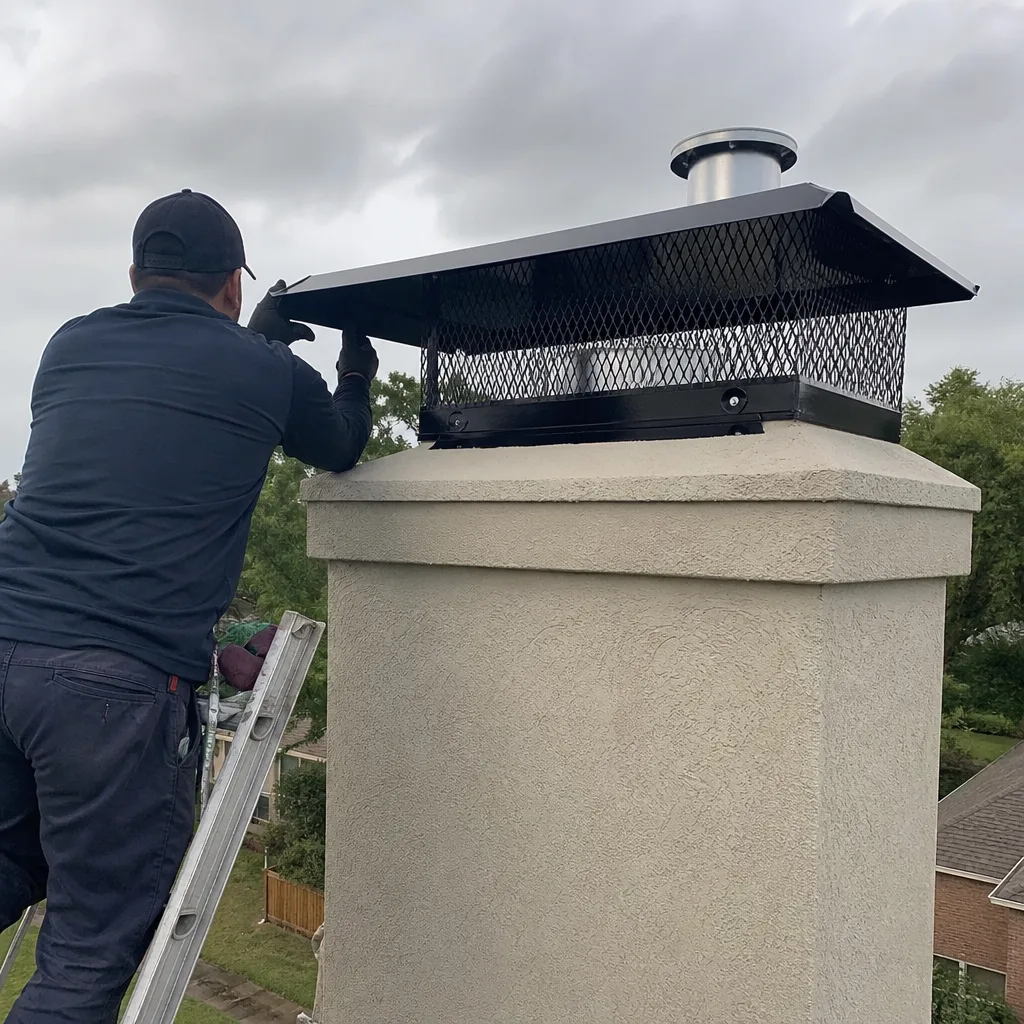
If your cap is missing or damaged, replace it now. It’s one of the least expensive pieces of chimney protection we install, and it returns its cost in avoided repairs faster than any other chimney improvement a Houston homeowner can make.
Pre-Season Checklist: 30 Days Before First Fire
About a month before you plan to light the first fire of the season, usually right around when Houston sees its first cool front in October, work through this list from the ground up.
- Look for missing or damaged cap. Use binoculars from the yard. If the cap is gone, tilted, or rusted through, schedule a replacement. Do not burn until it’s fixed; rain, animals, and debris all enter an uncapped flue.
- Check for cracked chimney crown. The crown is the concrete slab at the very top of the chimney that seals the masonry from water. A hairline crack in a crown lets water seep into the brick structure below. In Houston, these cracks widen every summer as the chimney heats and cools. If you can see a crack from the ground, it’s already time to seal it.
- Look for gaps or lifting in the flashing. The flashing is the metal transition where the chimney meets the roofline. It’s the most leak-prone point of the entire chimney system. Look for separated seams, rust streaks, or shifted metal.
- Check the firebox for cracked bricks or loose mortar. Inside the fireplace, the firebox takes the direct heat of every fire. Loose bricks or eroded mortar expose the structure behind to heat that it wasn’t designed to handle.
- Open the damper fully and inspect with a flashlight. Look up the throat of the chimney. You’re checking for obstructions: bird nests, sticks, insect nests, or a heavy buildup of shiny black creosote. If you see a significant buildup, it’s time for a sweep before any burning.
- Test the draft. With the damper open, light a rolled-up newspaper and hold it in the firebox opening. Smoke should be pulled up and out. If it rolls back into the room, there’s a draft problem. Don’t use the fireplace until it’s diagnosed.
- Verify carbon monoxide detectors are working. Any home with a fireplace or any fuel-burning appliance needs working CO detectors on every floor and outside sleeping areas. Replace batteries in October as part of your pre-burn routine.
Post-Season Checklist: Closing the Fireplace for Summer
How you close the fireplace in spring directly affects how well it performs the following winter, and how much repair work it needs in between. This is the part of chimney care most Houston homeowners skip, and it’s the one that costs them the most over the life of the house.
- Schedule a post-season sweep. Even if you swept in October, the fires you burned December through February left fresh creosote. Removing it before the humid season starts prevents that creosote from sitting in the flue absorbing Houston humidity for seven months. It’s the single highest-value chimney maintenance step a Houston homeowner can take.
- Close the damper and verify a tight seal. If you can feel a draft or hear wind moving through the fireplace when the damper is closed, the seal is failing. A damper that seals poorly is a direct conduit for humid summer air into your home, and it’s also pumping conditioned air out of the house all summer, costing you on utilities every month.
- Clean the firebox. Remove ashes thoroughly. Ash is hygroscopic just like creosote; it holds moisture. A thick bed of ash sitting in the firebox all summer keeps the firebox bricks damp and can create a musty odor throughout the house.
- Inspect the exterior brick and mortar. Spring is the ideal time to spot water damage from winter rains. Look for efflorescence, spalling, or cracked joints. Repointing a section of chimney in April is straightforward. Rebuilding a section of chimney in November is not.
- Consider a top-sealing damper. If you have a traditional throat damper, it’s a metal plate that sits in the chimney and relies on a metal-to-metal seal to close. These never seal perfectly, and in a Houston summer that matters. A top-sealing damper installs at the chimney top like a cap and seals with a rubber gasket, keeping humid air completely out of the flue during the off-season. It’s one of the best off-season improvements we recommend for Houston homes.
- Schedule any needed repairs now, not in the fall. Repair crews book up the moment the first cold snap hits in Houston. If you know your crown needs sealing or your flashing needs replacing, spring is the time to call. You’ll get better scheduling, better weather for masonry work, and often better pricing.
Hurricane Season and Your Chimney: Caps, Flashing, and Crowns
Houston’s hurricane season runs from June 1 through November 30, which overlaps with both the burn and non-burn seasons. High winds, driving rain, and occasional hail all work on the top of the chimney, which is the most exposed part of the entire house.
Here’s what wind does to a chimney. A 60 mph gust pushes against the cap, the crown, and the upper courses of brick. Caps can loosen or blow off entirely. Crowns, which are already cracked from years of thermal expansion, widen under the stress. Flashing, which is the thin metal seam at the roofline, can lift or separate when wind gets underneath the shingles around the chimney chase.
After any major storm, do a ground-level assessment. Use binoculars. You’re looking for the same things you check in October, but now you’re looking for change: a cap that was straight is now tilted, flashing that was flat is now peeled back, brick that was intact now shows fresh cracks or missing pieces. Check the interior ceiling near the chimney for water stains, too, which can appear days before exterior damage becomes obvious.
One point we make to every Houston homeowner: do not climb onto a wet or steep roof to inspect a chimney, and do not attempt to straighten or reseat a cap yourself. Houston roofs after a storm are slippery with moss and algae, and the fall risk is real. A ground-level check with binoculars is enough to identify whether a professional evaluation is needed. If something looks different, call a chimney company and mention that you’ve seen change after the storm. We triage those calls quickly, because a loose cap or separated flashing left through the next rain event will cause more damage than the storm itself did.
The August Smell Test: What a Chimney Smells Like When Something Is Wrong
In August, when Houston is at its hottest and most humid, you’ll sometimes smell your chimney. Not smoke and not wood, but something else: a musty, damp, sometimes slightly sour smell that comes and goes with the breeze. Most people dismiss it as “old house smell.” Don’t.
That smell is the off-season doing visible work. Creosote and ash inside the flue are pulling moisture from the humid air, creating a damp environment that hosts mold and bacteria. The odor travels down the flue and into the living space, especially when the air conditioner cycles on and changes the house’s pressure dynamics. Every time you run the AC, the house goes slightly negative, and air from the chimney gets drawn in.
An August chimney smell tells you three things. First, there’s moisture inside the flue; a dry chimney doesn’t have this odor. Second, there’s organic material holding that moisture: creosote, ash, a bird nest, or leaves that fell in before a cap was installed. Third, the damper is probably not sealing tightly, because a perfectly sealed chimney doesn’t leak air into the house even if the flue is dirty.
We hear this call every year in August and September: “My fireplace smells, but I haven’t used it since February.” The smell is the warning sign July couldn’t give you. It’s often the first indication that a sweep is overdue or that water is getting past the crown or cap. An August smell is worth a September inspection, and it’s a lot cheaper to fix in September than it will be in January when the flue is full of Christmas Eve’s fire.
Timing Your Sweep: Why October Beats January in Houston
In most of the country, the chimney sweep calendar fills up in early fall and again in early winter, and the pros say “sweep before you burn.” In Houston, the rhythm is slightly different, because our burn season starts later and is shorter. Here’s how to think about it.
Most Houston homeowners light their first fire around Thanksgiving, sometimes later. Nighttime temperatures don’t reliably drop below 50 until mid-November, and the first real “fire weather” is often the week of Thanksgiving. That puts the natural sweep window in October and early November, which is exactly when you want it: after the summer’s humidity has done its work, but before the first fire goes in.
Waiting until January means you’ve already burned through the holidays, and you’ve been burning on top of whatever the summer left behind: animal debris, moisture-damaged creosote, maybe a cracked flue tile. A chimney fire doesn’t care what month it is. Burning before sweeping is how small problems become chimney fires or carbon monoxide events.
October sweeps also give you time to act if the sweep finds something. If we discover a cracked flue tile or a failing liner in October, there’s still time to schedule a repair before the weather turns for real. If we find the same thing in January, you’re looking at either an open fireplace through the coldest month of the year or a repair scheduled on top of other emergency calls. Sweep early. Burn late. That’s the Houston way.
What a Houston Chimney Sweep and Inspection Actually Costs
Chimney pricing in Houston is more transparent than in most markets, because we’ve had more than two decades of independent shops competing on honest pricing rather than seasonal demand. Here’s where typical Houston prices land.
- Standard chimney sweep with firebox cleanup: $149 to $279, depending on the flue size and the amount of creosote present. Most single-flue residential chimneys in Houston fall near the middle of that range.
- Level 1 chimney inspection: Often $99 to $199 when booked with a sweep. A standalone inspection typically runs $149 to $249.
- Level 2 inspection with camera: $299 to $449. This is what we recommend after any home purchase, after a chimney fire, after a major storm, or anytime a structural issue is suspected. The camera shows the inside of the flue in detail, including cracks, gaps, and hidden blockages.
- Chimney cap replacement or installation: $150 to $450 installed, depending on flue size and cap type. Stainless steel with a lifetime warranty sits at the top of that range.
- Crown repair or reseal: $400 to $1,200 depending on the extent of the cracking and the crown’s accessibility.
- Flashing repair or replacement: $350 to $900 depending on roof pitch and the condition of the surrounding shingles.
- Flue liner repair or replacement: $2,800 to $7,000 depending on liner diameter, chimney height, and whether the old liner can be removed cleanly. This is the big-ticket repair, and it’s the one most often caused by years of skipped inspections in a humid climate.
Every job at Ashby Chimney Houston gets a written price before any work starts, so the number on the invoice is the number you approved. No surprise add-ons at the door. That’s the Kingswell Way: say the price, show up in the window, leave it cleaner, put the guarantee in writing, and come back if it fails. Every repair we complete, whether it’s a crown seal, a flashing replacement, or a HeatShield or Gelco liner repair, carries a written guarantee. If the covered repair fails inside the guarantee period, we return and make it right at no charge. That’s the 365-Day Done Right Promise, and it applies to every job we write.
Common Mistakes to Avoid
- Skipping the post-season sweep because “we already swept in October.” Houston’s humidity makes fresh creosote an active problem during the summer months. Removing it in spring doubles the life of your liner in most cases.
- Checking the chimney only when you plan to use it. The damage that matters most in Houston happens when the fireplace is dormant. A visual ground check every season catches issues before they become structural.
- Ignoring the August smell. A musty odor from the fireplace in late summer is a sign of moisture and organic buildup. It’s the earliest warning sign of problems that a November inspection will find anyway, but with more damage and a busier repair schedule.
- Assuming a chimney cap is optional. In Houston, a cap is the difference between a liner that lasts 20 years and one that fails in 10. It’s the highest-value chimney accessory on the market.
- Treating the damper as “good enough.” A damper that doesn’t seal tightly is a year-round energy leak and a humidity source. In a Houston summer, a poorly sealed damper pours moisture into the flue and the house.
- Climbing onto a roof to inspect the chimney. Houston’s roof moss and algae make post-storm roofs slippery. Inspect from the ground with binoculars and let a professional do the close-up work.
- Burning before looking. The first fire of the season without a pre-burn inspection is how small problems become chimney fires. Sweep in October, burn in December.
When to Call a Professional
Some chimney tasks are safe for a homeowner with a flashlight and a pair of binoculars. Others require a professional’s tools, training, and access. Call a chimney professional if you see cracks in the crown, separated or lifted flashing, missing or damaged cap, spalling brick, efflorescence, or any sign of water staining near the chimney on interior ceilings or walls. Call if you smell a persistent musty odor from the fireplace in summer. Call if smoke enters the room during a fire or if you see shiny black creosote buildup in the flue. And call after any major storm if the cap or flashing looks shifted from the ground. Ashby Chimney Houston home has served Houston since 2002. We offer free estimates on all chimney work in Houston. Call (903) 961-6496 to schedule a sweep, inspection, or repair.
Frequently Asked Questions
In Houston, we recommend a professional chimney sweep at least once per year, and for most homes twice: once in October before burn season and once in March or April after the final fire. The second sweep removes creosote that would otherwise sit in the flue through Houston’s humid summer, where it absorbs moisture and accelerates liner corrosion. Every chimney is different, and a Level 1 inspection will tell you exactly what your chimney needs. Call (903) 961-6496 to schedule an appointment, or book a Chimney Sweep in Houston online.
Yes. Even a dozen fires per season produces enough creosote to create a fire hazard and enough organic material to hold moisture through the summer. In Houston, the issue is compounded because the long off-season means whatever is in the flue stays there for months in humid conditions. A light-use fireplace still needs an annual inspection and cleaning.
A musty odor from the fireplace in late summer means moisture is present inside the flue and organic material, usually creosote or debris, is holding that moisture. A failing damper seal allows the damp air to enter the living space. The typical fix is a professional sweep to remove the organic material, followed by a damper repair or replacement to stop the air movement. Don’t wait until winter to address it; the underlying damage worsens every month.
A standard chimney sweep in Houston typically runs between $149 and $279 depending on flue size and creosote accumulation. A Level 1 inspection generally adds $99 to $199 when booked with a sweep. Every job at Ashby Chimney Houston includes a written price before any work starts. Call (903) 961-6496 for a precise quote on your chimney.
A Level 1 inspection covers the readily accessible portions of the chimney: the firebox, damper, smoke chamber, flue (from the top and bottom), cap, crown, flashing, and exterior masonry. A Level 2 inspection includes everything in Level 1 plus a camera scan of the full flue interior and any accessible attic or crawlspace areas near the chimney. We recommend Level 2 inspections after a home sale, a chimney fire, a major storm, or any change in the chimney system. Chimney inspection in Houston is available year-round.
You can defer interior repairs if the fireplace is fully closed and dampered, but exterior issues don’t take a break. A cracked crown, lifted flashing, or missing cap continues to let water into the chimney structure whether you burn or not. In Houston, those “deferred” repairs often become bigger repairs after a single wet season. If a repair can safely wait, we’ll tell you that plainly, and we’ll put it in writing so you know what we saw and what we recommend. Our Fireplace Repair in Houston team carries written guarantees on every job, backed by the 365-Day Done Right Promise. If a covered repair fails inside the guarantee period, we come back and fix it at no charge.
The Bottom Line
Houston’s chimney calendar runs on two seasons: a short burn window from Thanksgiving through February, and a long, humid off-season that does more damage than any fire. The homeowner who sweeps in October, sweeps again in March, keeps a sealed damper and a solid cap, and checks the crown and flashing in every season will get decades from a chimney that would otherwise need major repairs in 15 years. It’s not complicated, but it is consistent. Sweep before you burn, sweep after the last fire, and let the damp months do as little work on the flue as possible. That’s year-round care for a Houston chimney.
Written by Nathan Corliss, Owner at Ashby Chimney Houston, serving Houston since 2002.
See the difference
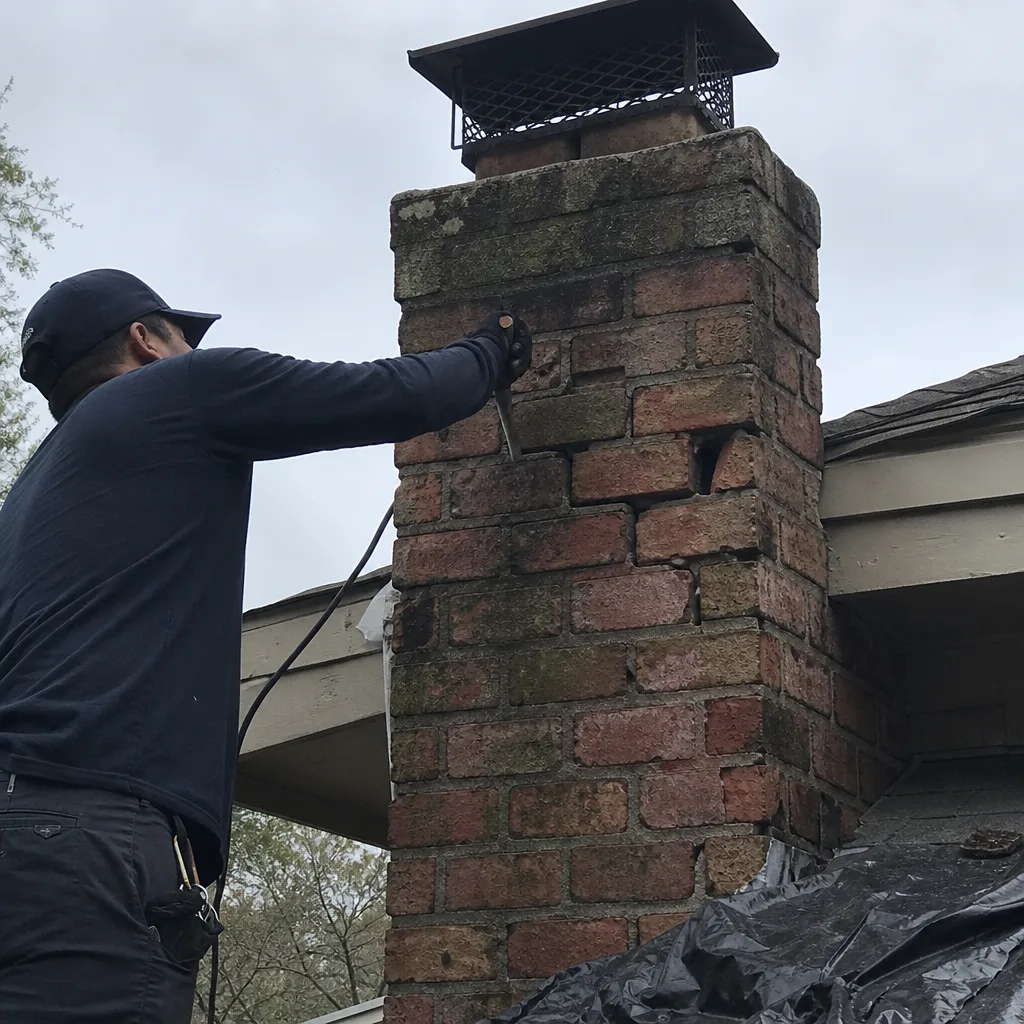 Before
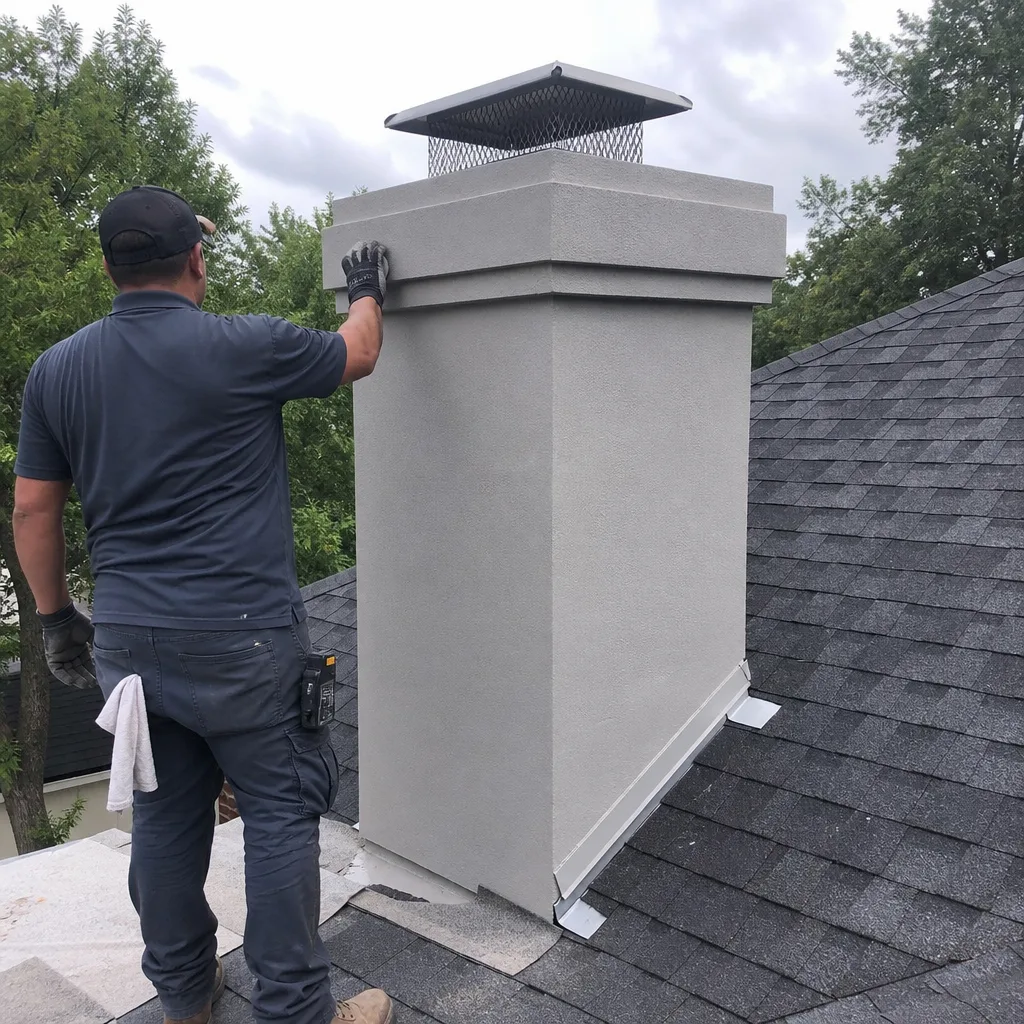 After
After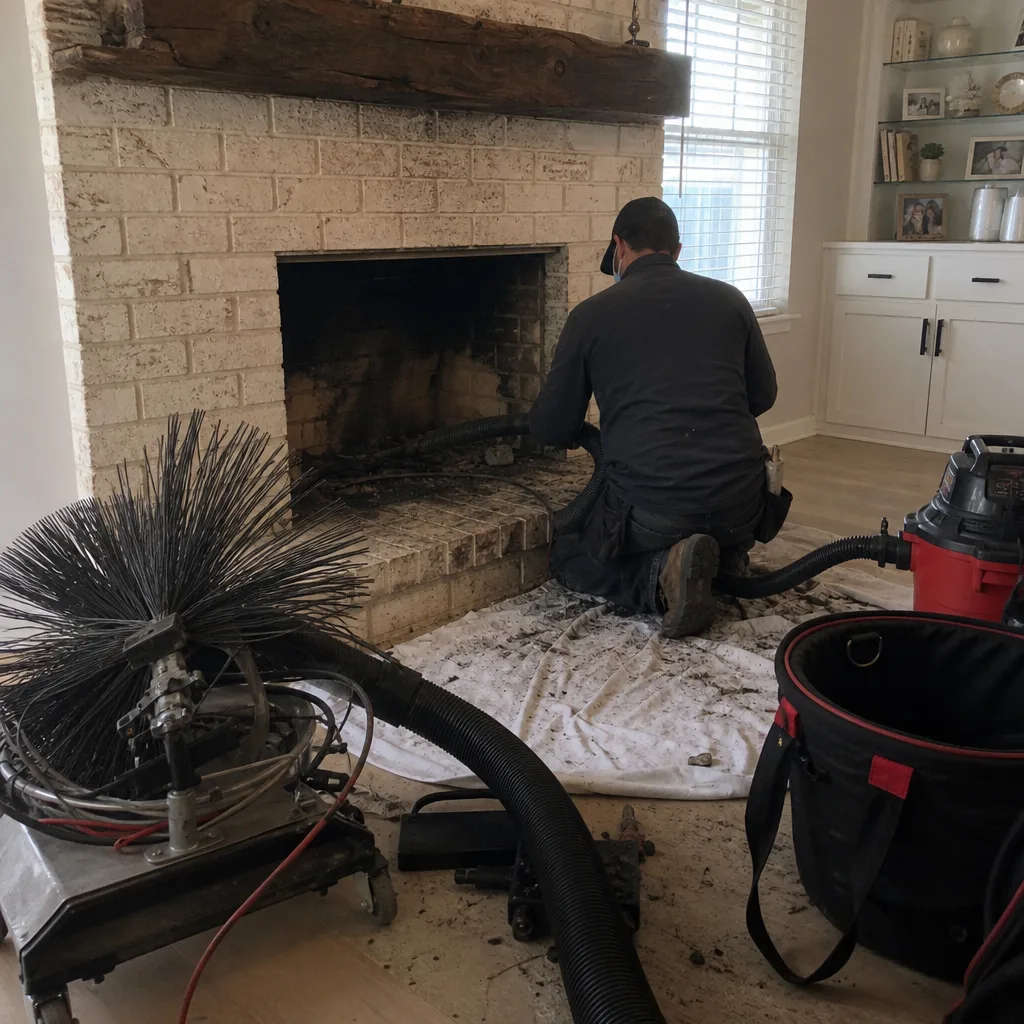 Before
 After
After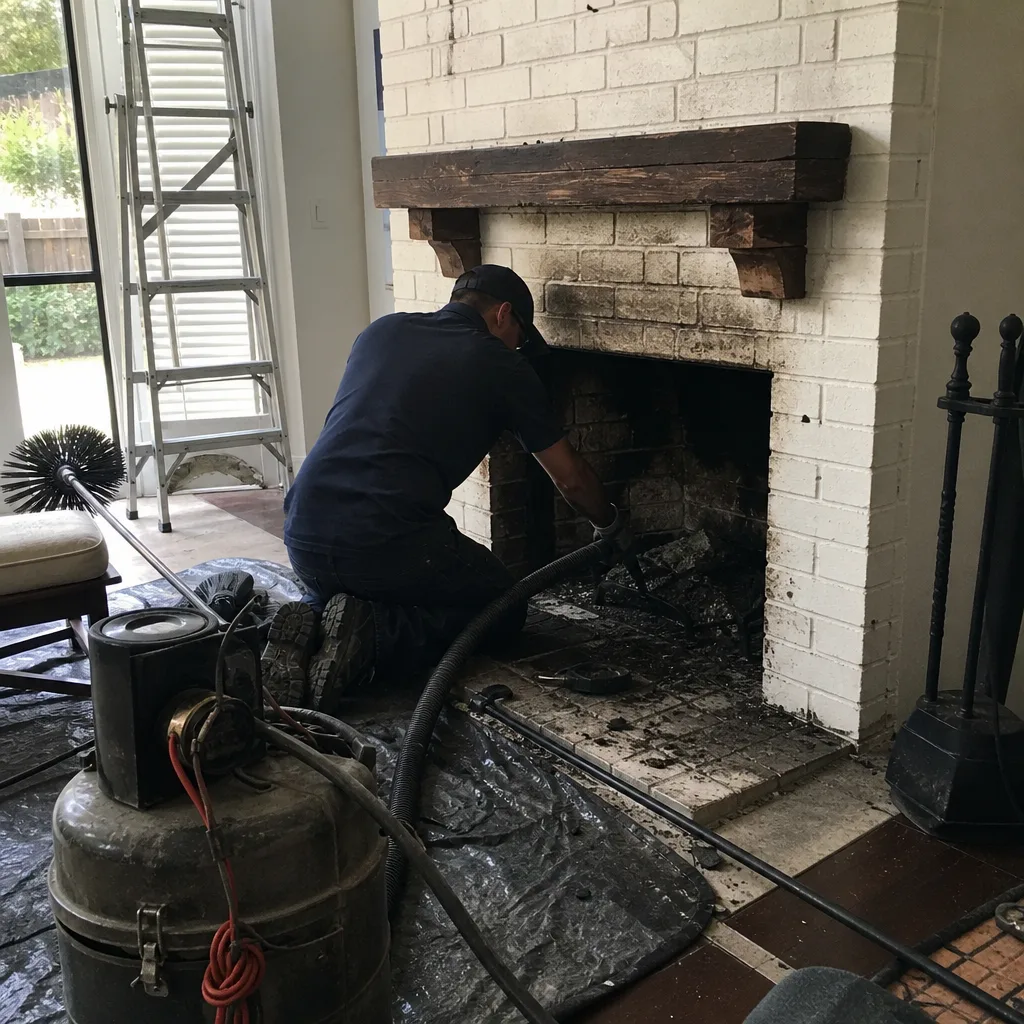 Before
 After
After