
Last updated October 15, 2026
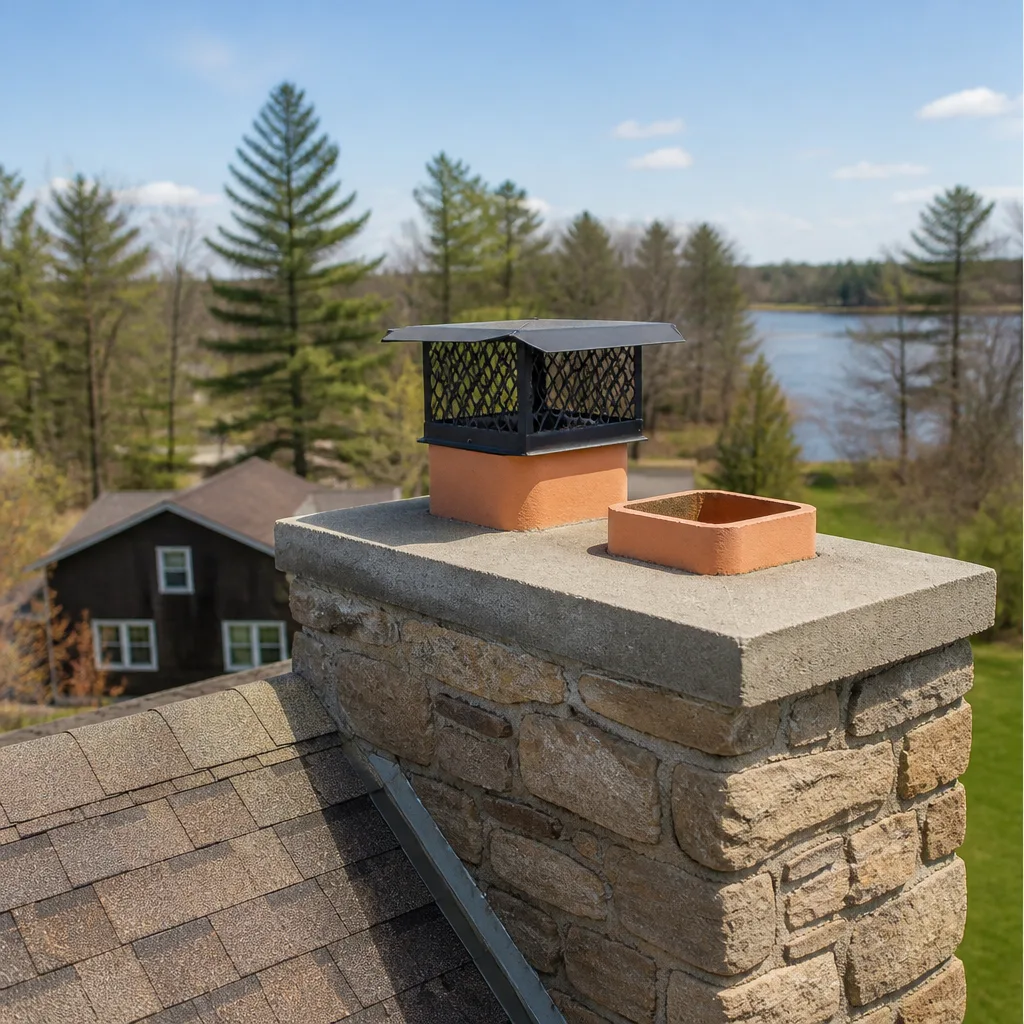 Sweep & inspection
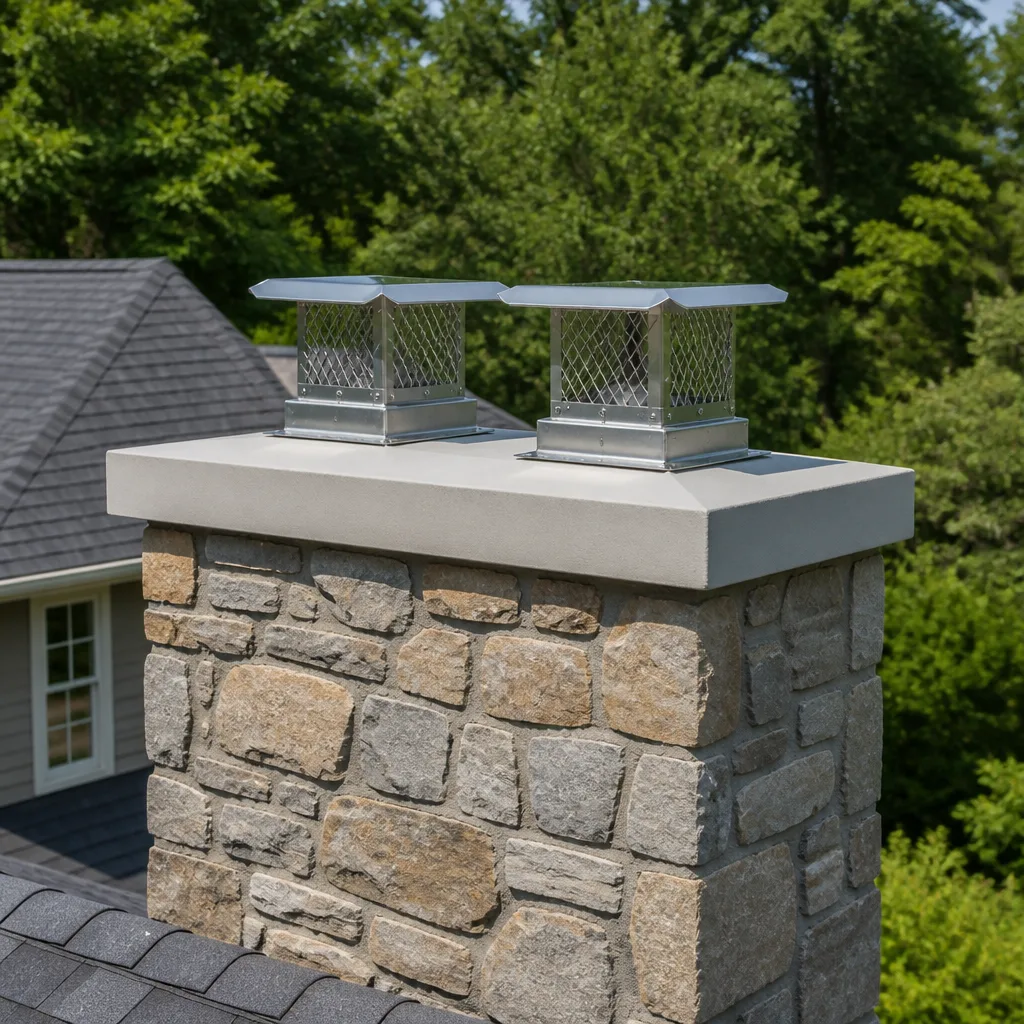 Caps & crowns
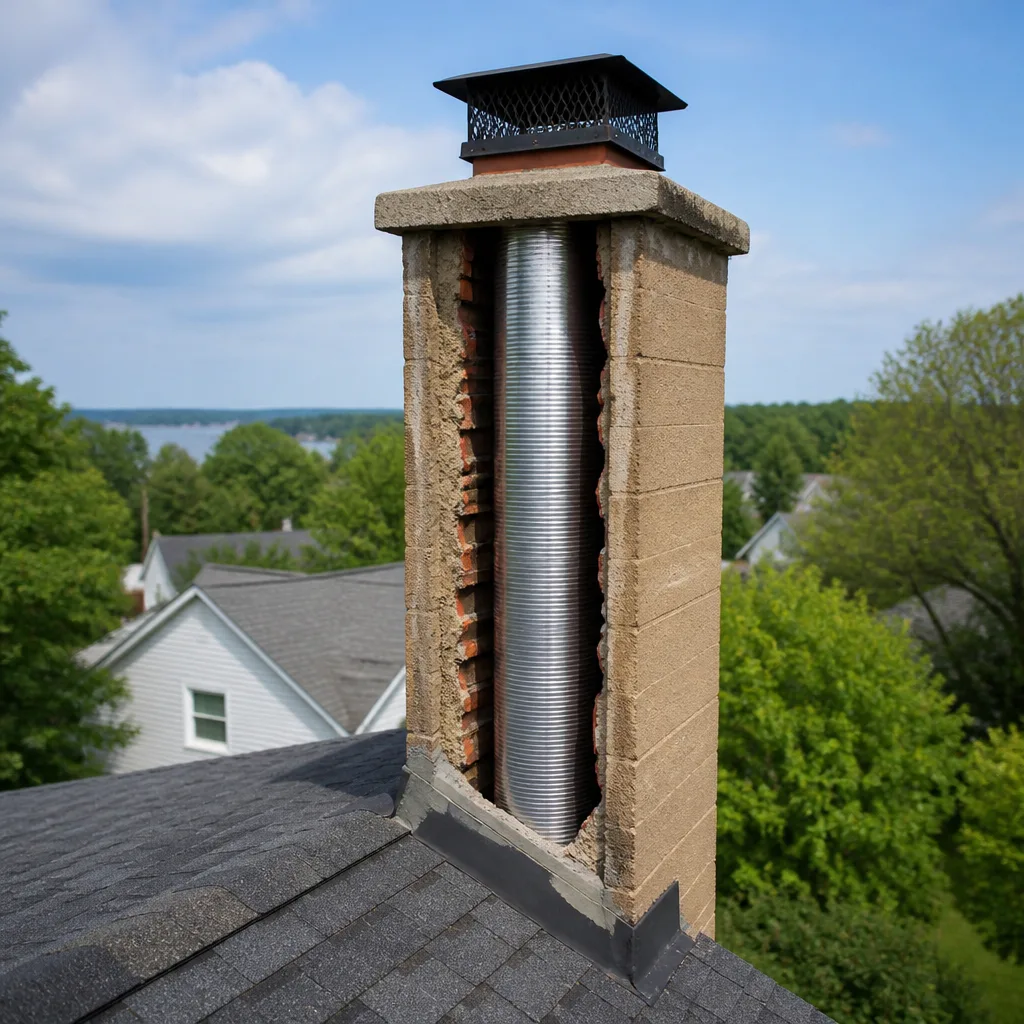 Flue relining
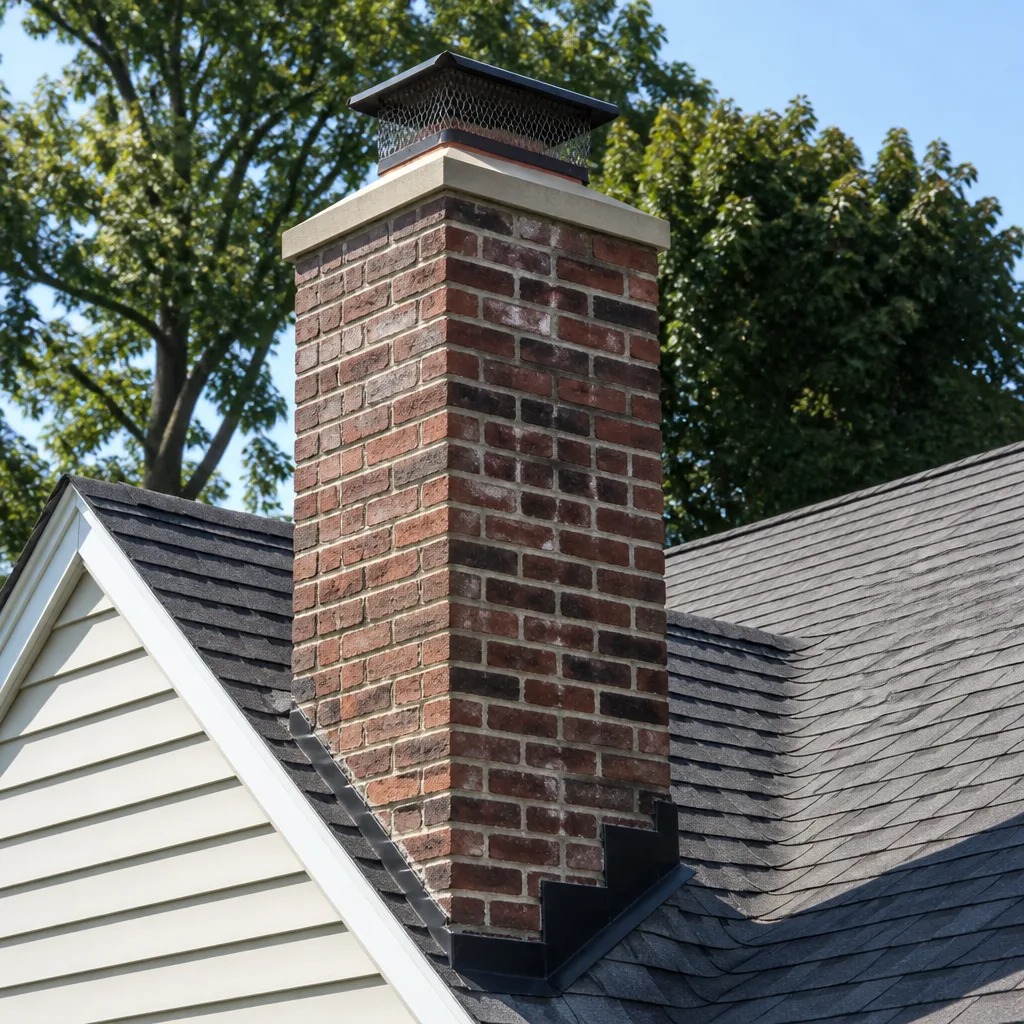 Masonry repair
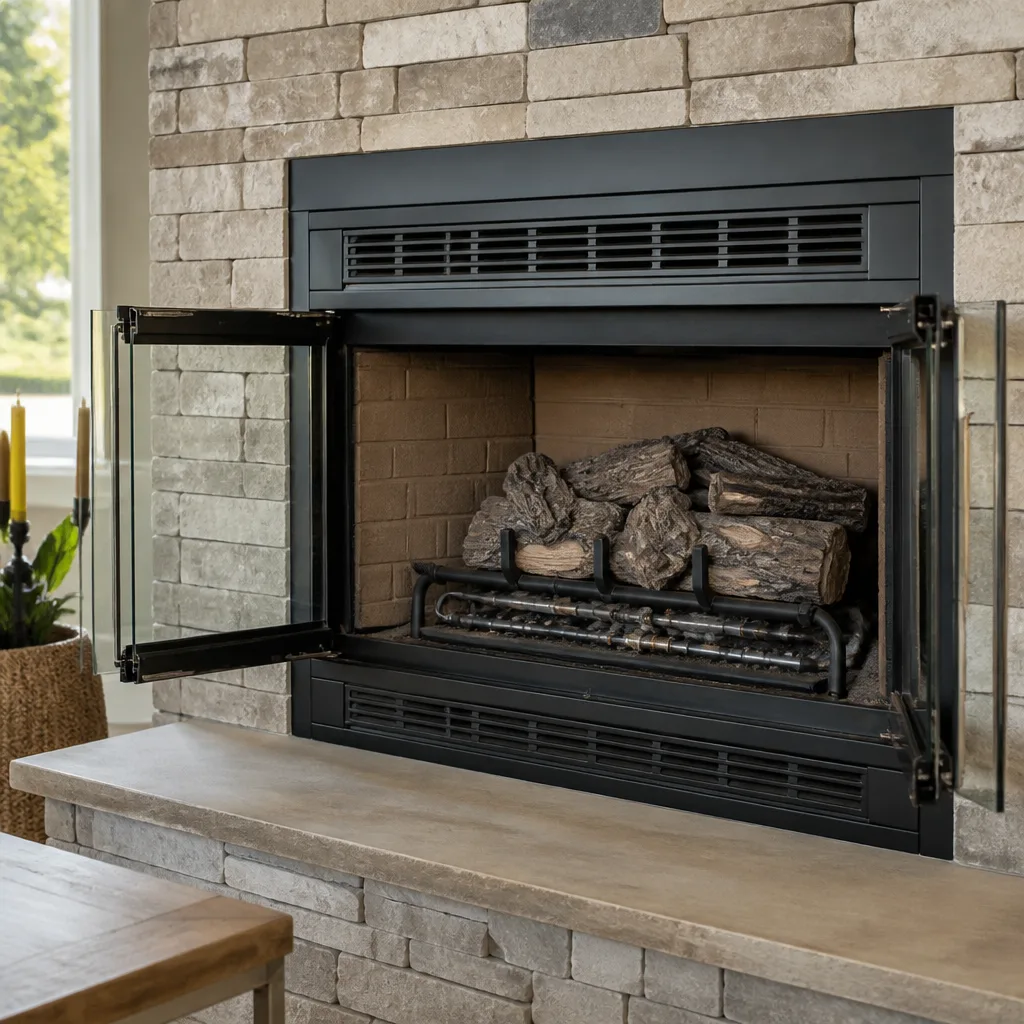 Gas fireplace service
Level 1 sweep and inspection to the NFPA 211 annual standard - flue, crown, cap, and flashing checked and photographed
Chimney sweep logs do not sweep chimneys. They loosen some creosote - which then falls where a brush and vacuum still have to collect it.
DIY vs Professional Chimney Cleaning: The Houston Homeowner’s Decision Guide
The numbers look simple on the surface. A chimney brush kit runs $40 to $80 at any Houston hardware store. A professional sweep runs $150 to $220 in most Harris County homes. The $100 difference feels like an easy win until you understand what you’re actually paying for, and what you’re not seeing when you run a brush up a flue from your living room floor. This guide walks through the real math, the Houston-specific risks, and the decision framework we’ve developed after 20+ years of looking at local fireplaces from the inside. For more guides & resources on keeping your chimney safe, visit our blog. You’ll leave knowing exactly what DIY can accomplish, what it can’t, and how to make the call for your specific chimney.
Quick Answer
DIY chimney cleaning can remove loose creosote from the accessible flue in a Houston home, but it cannot inspect the liner sections behind the firebox or the crown condition without professional camera equipment. Most homeowners who clean their own chimney save $150 to $200 on the sweep but miss the exact defects that Houston humidity and storm cycles create. The smart DIY approach is to clean regularly with brushes, maintain documentation, and still schedule a professional Chimney Inspection in Houston every 1 to 3 years depending on usage.
Styles & brands we work with
Table of Contents
- What a DIY Chimney Cleaning Can Actually Accomplish
- What a DIY Cleaning Cannot Do, No Matter the Brush
- Why Houston Is Different: Humidity, Storms, and Critters
- The Real Cost Comparison: Sweep vs. Fire
- The Insurance and Liability Question You Haven’t Considered
- A Decision Framework: Should You DIY or Call a Pro?
- If You Do It Yourself: The Right Way to DIY
- When to Call a Professional
- Frequently Asked Questions
What a DIY Chimney Cleaning Can Actually Accomplish
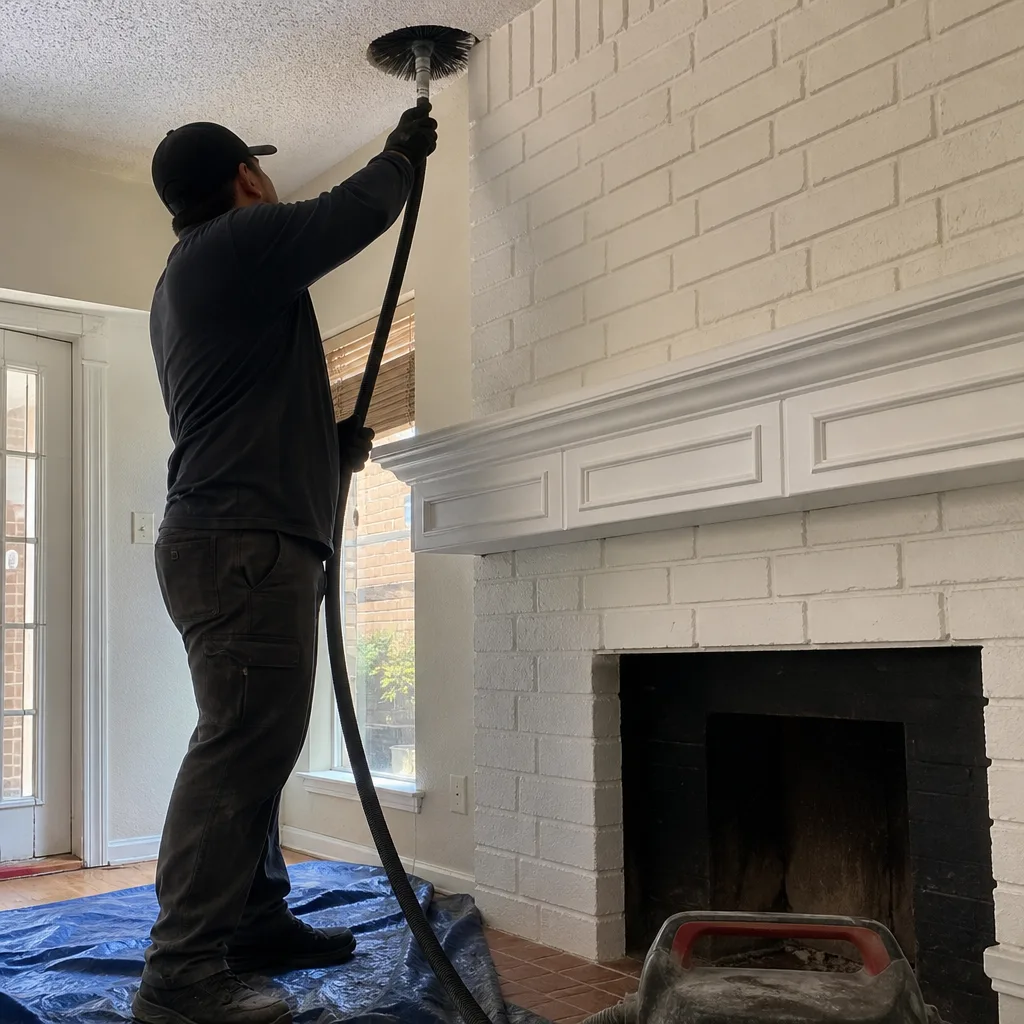
Let’s be honest about what consumer-grade brushes do well, because the worst DIY advice pretends they do nothing. A chimney brush from a Houston hardware store, used with an extension rod kit, will remove loose, flaky creosote from the walls of a straight flue. If you have a standard masonry chimney with a single straight run, you can clear the bulk of the stage-one creosote that builds up from occasional wood fires. You can also clean a significant portion of the firebox, remove ash, and clear the damper area where soot accumulations tend to collect.
What DIY equipment does well:
- Stage-one creosote removal: The soft, flaky, dusty creosote that comes off with a few passes of a standard wire brush. This is the most common type in Houston fireplaces used lightly during the short winter season.
- Ash and debris clearing: A shop vacuum and basic brush will remove loose ash from the firebox and the first few feet of the flue.
- Visual check of the first few feet: With a bright flashlight and a mirror, you can see the initial section of the flue above the firebox and spot obvious blockages.
- Damper surface cleaning: The damper plate catches soot quickly, and DIY brushes will clear enough to keep it operating.
The honest ceiling on DIY work: you will remove what you can see and reach with a straight rod. In our experience across Houston, that means roughly the first 12 to 15 feet of flue in most single-story homes. If your chimney runs two or three stories, you’re doing less than half the job and won’t know the difference.
What a DIY Cleaning Cannot Do, No Matter the Brush
The brush removes material. It does not document what’s happening behind the inaccessible portions of your system. And that’s where the real problems in Houston chimneys live.
Here’s what professional equipment does that consumer gear cannot:
- Camera inspection of the full liner length. A professional runs a video scope from the top of the flue to the firebox, recording the condition of every liner section. You cannot do this from the ground with a flashlight and mirror. In Houston, this matters more than in drier climates because liner cracks develop slowly behind moisture intrusion and are invisible until the flue fails.
- Thickness testing of the flue liner. Ultrasound or magnetic thickness gauges measure how much of the clay tile or steel liner remains. Hairline cracks and spalling look fine to the naked eye but have already started leaking gases into the chimney structure.
- Stage-three creosote removal. The hard, glossy, tar-like creosote that forms from low-temperature fires or unseasoned wood will not come off with a brush. It requires rotary loop tools or chemical treatments, and it remains a fire hazard until removed. If your brush bounces off a shiny black surface, you’re hitting stage-three and need a professional.
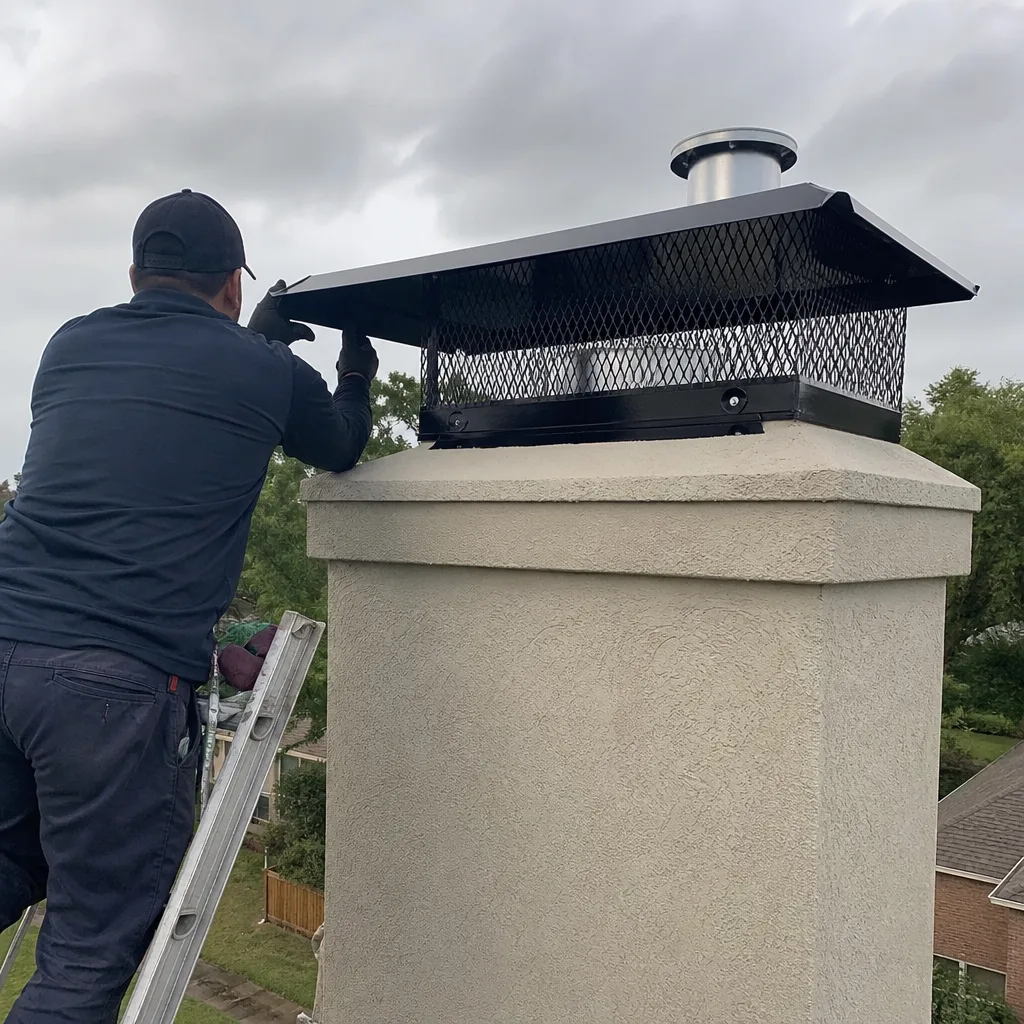
- Chase and crown inspection from the roof. The chimney crown (the concrete cap that seals the top of the masonry) and the chase cover (the metal cap on factory-built units) require roof access. In Houston, crown cracks are the single most common entry point for water into the fireplace structure, and they’re invisible from the ground.
- Smoke chamber inspection. The area between the firebox and the flue where smoke condenses back through the damper is notoriously difficult to see and clean. Soot deposits here are thick, sticky, and flammable.
None of this is a knock on DIY effort. It’s a technical limitation of the equipment. A brush reaches what it reaches, and everything else requires tools most homeowners will never have a reason to own.
Why Houston Is Different: Humidity, Storms, and Critters
Most chimney cleaning advice online is written for cold, dry climates, and it doesn’t translate well to the Gulf Coast. Houston’s climate shapes chimney problems in three specific ways that change the DIY calculus.
Humidity-driven liner corrosion. Houston’s average humidity runs 70 to 80 percent most of the year. Moisture in the air works its way into chimney masonry, especially in neighborhoods like The Heights, Montrose, and West University where many homes are 60 to 80 years old and built with clay tile liners that have been absorbing moisture for decades. When creosote combines with Houston humidity, it creates an acidic slurry that eats at mortar joints and clay tiles from the inside. A DIY visual check from the firebox will not show this because the damage starts higher in the flue, where humid air condenses against the cooler upper liner walls.
Storm-driven crown damage. Houston’s hurricane and severe thunderstorm seasons create a damage pattern you won’t find in most chimney guides. Wind-driven rain hits the top of the chimney at force, finding its way into hairline cracks in the crown. Those cracks open and close with the city’s summer heat and winter cold swings, eventually letting water pour into the flue during the next storm. After Hurricane Harvey in 2017, the Houston chimney contractors we work alongside saw a measurable spike in crown failures across Cypress, Katy, and Sugar Land. DIY cleaning after a storm will clear debris. It will not tell you whether your crown has a crack that’s now letting water into your walls every time it rains.
Animal nesting debris. Houston’s mild winters mean squirrels, raccoons, and birds stay active year-round. Chimneys without a properly fitted cap become nesting spots between February and April, when local wildlife is looking for warm, protected spaces. Squirrel nests, bird droppings, and insect colonies create blockages that a brush may partially disturb but rarely fully clear. The bigger problem is what nests leave behind: organic material that becomes a fire accelerant when it dries against the chimney walls. In our experience, homes in wooded areas like Memorial and Spring Branch see significantly more nesting debris than homes in denser urban areas.
The Real Cost Comparison: Sweep vs. Fire
A chimney sweep in Houston runs between $150 and $220 for a standard cleaning of a single-flue masonry chimney-see our Chimney Cleaning Cost Breakdown: The Houston Homeowner’s Reference for 2026 for full pricing details. Factory-built fireplace systems run slightly less, typically $120 to $180. Adding a camera inspection runs another $50 to $100 depending on the system and its condition. Most professional sweeps in Houston include a basic visual inspection with the cleaning, which is why the professional number covers more than just “cleaning.”
The DIY route costs:
- Brush and rod kit: $40 to $80 at most Houston hardware stores
- Drop cloths and shop vacuum filter: $20 to $40
- Safety gear (goggles, mask, gloves): $20 to $40
- Time: 2 to 4 hours for the first attempt, including setup and cleanup
Total DIY outlay: $80 to $160. So the savings over a professional sweep is often under $100 the first year. But the real cost comparison isn’t sweep versus sweep. It’s sweep versus what happens when a defect goes undetected.
A chimney fire in Houston, according to figures from the National Fire Protection Association, causes an average of $6,000 in structural damage when it stays contained to the chimney. If it spreads, that number goes significantly higher. A cracked liner that allows combustion gases into the home creates carbon monoxide exposure, which doesn’t have a dollar figure attached to it because the stakes are your family’s health. This is the math that changes the DIY conversation.
What you’re paying for with the professional number is not just the brushing. It’s the detection of what the brushing can’t reach. That’s the insurance policy built into the price.
The Insurance and Liability Question You Haven’t Considered
Here’s a scenario most chimney guides never address: you clean your own chimney, document it carefully, and a chimney fire occurs six months later. What happens next?
Your homeowner’s insurance policy, in most Houston cases, covers chimney fire damage. But the claims process will ask for documentation. If you can show a receipt for your brush kit and a log of the cleaning date, you’ve met your basic duty of care under most policies. The problem arises when the adjuster asks the follow-up question: when was the last professional inspection performed?
Most standard Texas homeowner’s policies have language around “reasonable maintenance” and “failure to mitigate known risks.” If a professional inspection two years earlier would have caught the liner crack that caused the fire, your claim could be reduced or denied. Insurance adjusters know what Houston humidity does to clay liners, and they know that visual-only DIY cleaning doesn’t provide documentation of liner integrity.
The documentation gap cuts the other way too: a written report from a professional inspection is your evidence that you addressed the risks you could reasonably address. That report becomes your protection in a claim dispute. It’s one of the reasons we put every inspection finding in writing at Ashby Chimney Houston home, and why we include a written report with every Chimney Sweep in Houston service.
This is not about scaring you into spending money. It’s about understanding that your insurance coverage assumes a level of professional maintenance that DIY cleaning, by itself, doesn’t provide.
A Decision Framework: Should You DIY or Call a Pro?
Here’s the practical framework we recommend to Houston homeowners. It turns the DIY decision into a set of questions you can answer honestly, and it accounts for the local conditions that change the math.
Question 1: How often do you use your fireplace?
If you burn more than two cords of wood per year, or you use your fireplace more than three nights a week during the Houston winter months, you’re putting enough creosote into the flue to justify professional attention at least annually. Light users (occasional fires in December and January) can extend intervals.
Question 2: How old is your chimney system?
Homes built before 1990 in Houston almost certainly have clay tile liners, and those liners have had 30 to 70 years of Gulf Coast humidity exposure. If your home is in an older neighborhood like The Heights, Montrose, or Bellaire, and you don’t know the last time the liner was inspected, that professional inspection should happen before you consider DIY as your routine maintenance strategy.
Question 3: What did your last professional inspection find?
If the last inspection report from a certified sweep shows a clean bill of health, you have more room to DIY between professional visits. If it noted stage-two creosote, a crown crack, or liner spalling (flaking of the clay tile surface), DIY brushing won’t address those issues, and continuing to DIY is leaving known problems unattended.
Question 4: How comfortable are you working from a roof?
Professional chimney cleaning in Houston involves roof access in most cases. The brush can be run from inside in some systems, but the crown, chase cover, and top of the flue are only inspectable from above. If you’re not comfortable with roof work in Houston’s rain-slicked conditions, the DIY sweep you do from inside is a partial job.
Question 5: What’s your tolerance for the unknown?
If you read that section above about what DIY can’t see and felt fine about it, then a regular DIY brushing schedule paired with a professional inspection every 2 to 3 years is a reasonable approach. If the unknown bothers you, the professional sweep is the simpler route.
If You Do It Yourself: The Right Way to DIY
DIY chimney cleaning is legal, widely practiced, and for some Houston homeowners it’s the right call between professional visits. If you’re going to do it, here’s how to do it correctly and what documentation to keep.
- Buy the right brush for your flue size. Measure the inside diameter of your flue before buying. A brush that’s too small doesn’t clean effectively; a brush that’s too large gets stuck, which creates a much bigger problem than the creosote you were trying to remove. Most Houston masonry chimneys use 8×8 or 13×13 clay tile flues; factory-built systems usually use 6-inch or 8-inch round flues.
- Close off the firebox with plastic sheeting. Run a box fan blowing out a nearby window to create negative pressure in the room. This keeps soot from drifting into your living space during the cleaning.
- Clean from the top. Roof access gives you a true top-down push, which is more effective than clearing from inside. Use a spotter to hold the ladder. Houston roofs are steeply pitched on many older homes, and the wet season makes them slick even on sunny days.
- Keep a written log. Date, number of brush passes, amount and type of creosote removed, any visible blockages, and anything that looked unusual. This log is your insurance documentation.
- Photograph everything. Take pictures from the top of the flue and from the firebox when you’re done. Save them with your log. If you ever need to make an insurance claim or sell your home, this documentation matters.
- Schedule a professional inspection anyway. At minimum, have a professional camera inspection every 2 to 3 years, and more often if you burn frequently or your home is older. The DIY cleaning removes material; the professional inspection tells you whether the system is still safe.
One more caution: if your chimney has flexible steel liner sections (common in Houston homes retrofitted after liner damage), consumer brushes can catch on the liner’s seams and tear it. Use a brush with plastic tines, not metal wire, on flexible liners. If you’re not sure what type of liner you have, that’s your first clue that a professional inspection should come before your DIY attempt.
Common Mistakes to Avoid
- Assuming a clean-looking firebox means a clean flue. The visible bottom of your fireplace tells you almost nothing about the condition higher up, where Houston humidity damage and creosote accumulation concentrate. This is the single most dangerous assumption we see in local DIY attempts.
- Using the wrong brush size. A stuck brush isn’t an inconvenience, it’s a costly extraction that can damage your liner and get you quoted a repair bill far bigger than the sweep you were trying to avoid. Measure your flue before buying.
- Skipping the roof inspection. Many DIY guides imply you can clean effectively from inside. You cannot inspect the crown, and in Houston the crown is where most water intrusion starts. A partial job gives partial protection.
- Treating DIY as a replacement for professional inspection. Brushing removes creosote. It does not assess liner integrity, crown condition, or clearance-to-combustibles. These are the safety-critical inspections that prevent chimney fires and carbon monoxide exposure.
- Ignoring animal activity. Houston’s mild climate means nesting happens year-round. If you see twigs or nesting material in your flue during a DIY cleaning, you’re dealing with a blockage that may go higher than you can see, and the nest may still be occupied.
- Waiting until December for your first cleaning. Houston’s fire and chimney professionals book out weeks ahead during the short winter burn season. If you’re going to DIY, do it in September or October, before burning season, and still get your professional inspection on the calendar early.
- Documenting nothing. DIY cleaning without a written log and photographs offers no protection in an insurance claim. You did the work, but you can’t prove it. That gap matters when an adjuster asks questions.
When to Call a Professional
Some situations move chimney cleaning from DIY territory to professional work, and waiting too long makes a small problem into an expensive one. Call a professional if you see white, chalky patches on your chimney exterior (that’s moisture working through the masonry), if you smell smoke in the house after the fireplace has cooled, if your brush hits a hard, shiny black layer that won’t flake off, if you find evidence of animals in the flue, or if your home is older than 30 years and you don’t know when the liner was last inspected. Trust your read of the brush. If it feels resistant or sounds different as you work it up the flue, you’re hitting something that deserves a trained eye. Ashby Chimney Houston offers Fireplace Repair in Houston and free estimates to Houston homeowners. Call (903) 961-6496 to talk through what you’re seeing before deciding next steps.
Frequently Asked Questions
DIY chimney cleaning is safe if you have the right brush, the right safety gear, and the physical ability to work from the roof. The health and safety risks come from soot inhalation, ladder falls, and assuming the flue is clean when it isn’t. If you have any doubt about roof access or the condition of your liner, call a professional sweep first.
A standard chimney sweep in Houston runs between $150 and $220 for a single-flue masonry chimney, and $120 to $180 for factory-built systems. Camera inspection is often included in the sweep price or adds $50 to $100, depending on the company. Ashby Chimney Houston always gives a written price before starting, so the quote at the door matches the invoice.
For homes used once or twice a week during winter, the National Fire Protection Association recommends cleaning when creosote reaches 1/8 inch thick, which typically translates to annual cleaning for active users. Houston’s short burn season means light users can often go 2 to 3 years between professional sweep visits, provided they still get an annual visual check or camera inspection. For year-round maintenance tips, see our Seasonal Chimney Cleaning Care for Houston: Year-Round Homeowner’s Guide.
Creosote accumulates, and if it reaches stage-three thickness, it becomes a fuel source for chimney fire. Even without a fire, Houston humidity combines with creosote to create acidic deposits that eat into your liner over time. Skipped cleanings mean you’re not just risking a fire, you’re accelerating liner deterioration silently.
Chemical logs can soften stage-one creosote and make brushing easier, but they do not replace mechanical cleaning or inspection. They don’t address blockages, liner damage, or crown conditions, and in some Houston flues they can loosen creosote that then falls and creates a blockage further down. Use them as a supplement, not a substitute.
Flaking or spalling clay tile means the liner has begun to fail, and in most cases it is candidate for repair or replacement rather than continued use. The decision depends on the severity and location of the spalling. Some Houston homeowners choose HeatShield resurfacing when the liner is damaged but partially intact, while others move to a new DuraFlex steel liner. Only a camera inspection can tell you which applies to your chimney.
A proper inspection looks at the firebox, damper, smoke chamber, flue liner, crown, and chase top from the roof, plus exterior masonry condition from the ground. It documents findings in writing, identifies any creosote level present, and recommends cleaning or repairs based on what the camera shows. That written documentation is your insurance protection and your proof of maintenance.
The Bottom Line
DIY chimney cleaning is not a waste of time. It removes accessible creosote, keeps your firebox cleaner, and builds your understanding of how your fireplace works. What it doesn’t do is document the condition of the parts you can’t see, and in Houston those invisible parts are the ones most likely to fail first. The smartest approach for most Houston homeowners is a hybrid: brush what you can reach between professional visits, keep a written log, and schedule a professional camera inspection every 1 to 3 years based on your usage and your home’s age. That’s the approach we recommend at Ashby Chimney Houston, not because it steers you toward us every time, but because it reflects what we actually see in the field. Houston chimneys don’t fail from lack of brushing. They fail from lack of inspection. The brush is helpful; the camera is what keeps you safe.
Written by Nathan Corliss, Owner at Ashby Chimney Houston, serving Houston since 2002.
See the difference
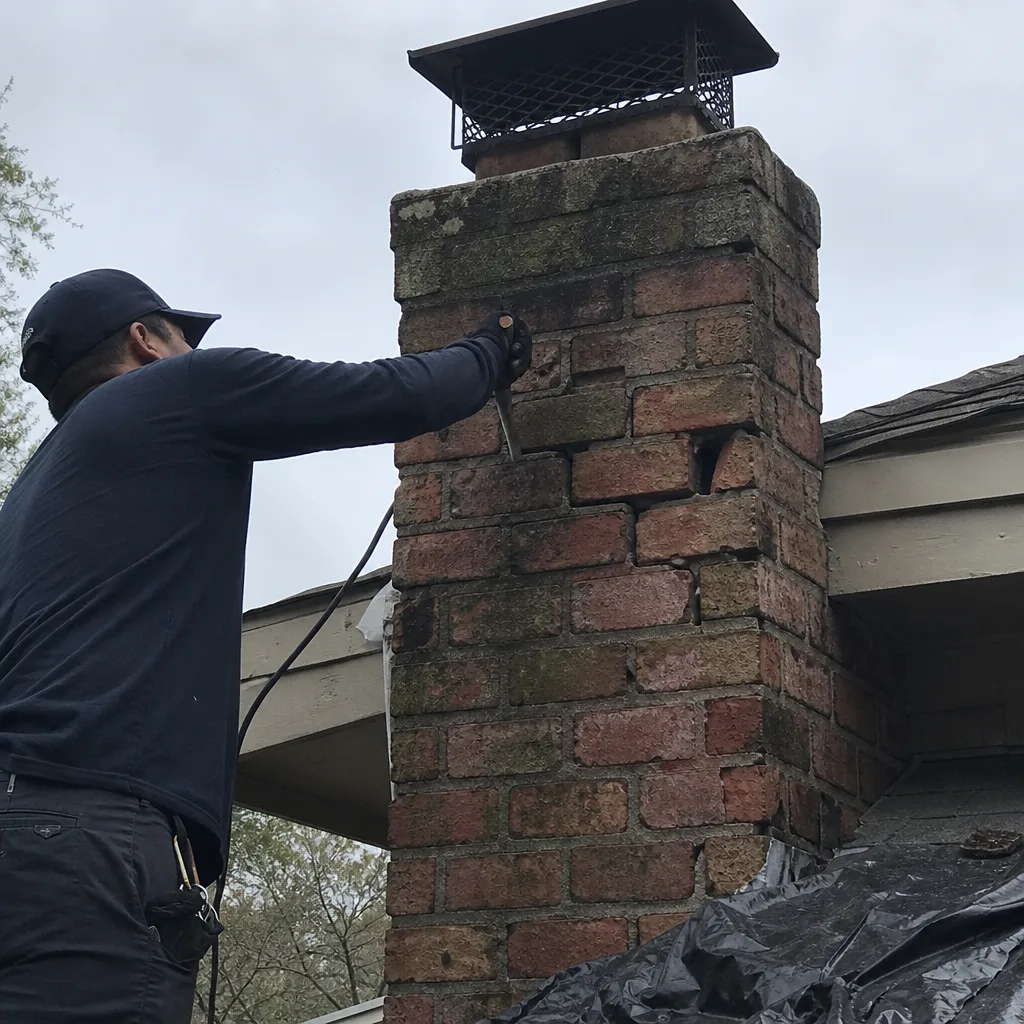 Before
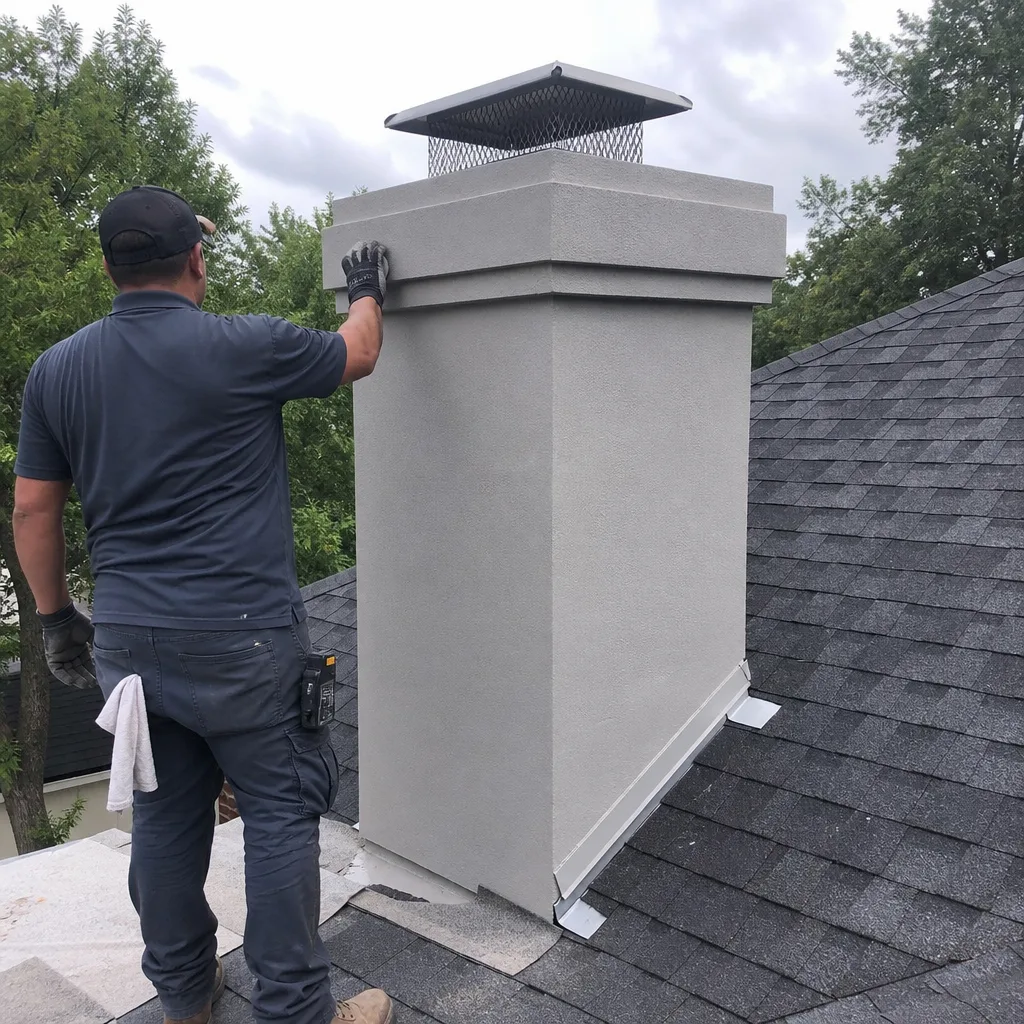 After
After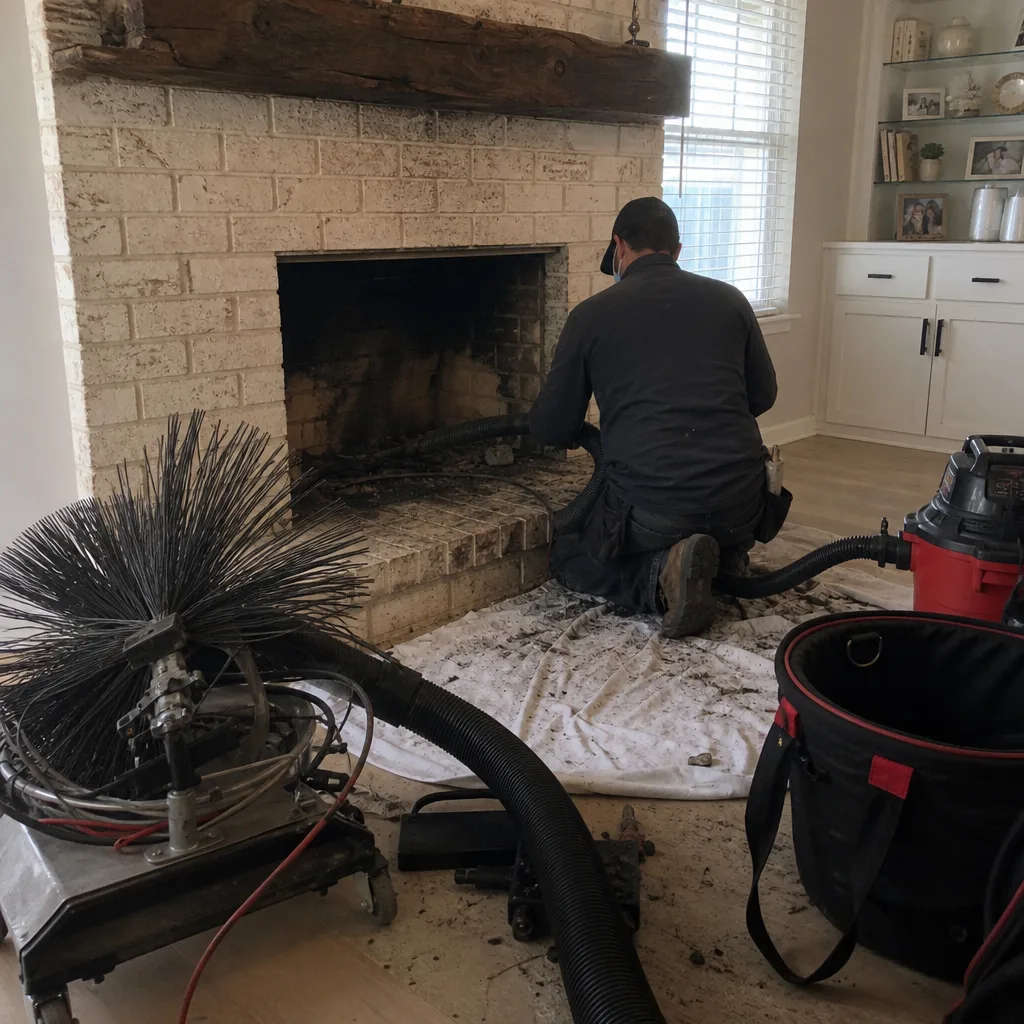 Before
 After
After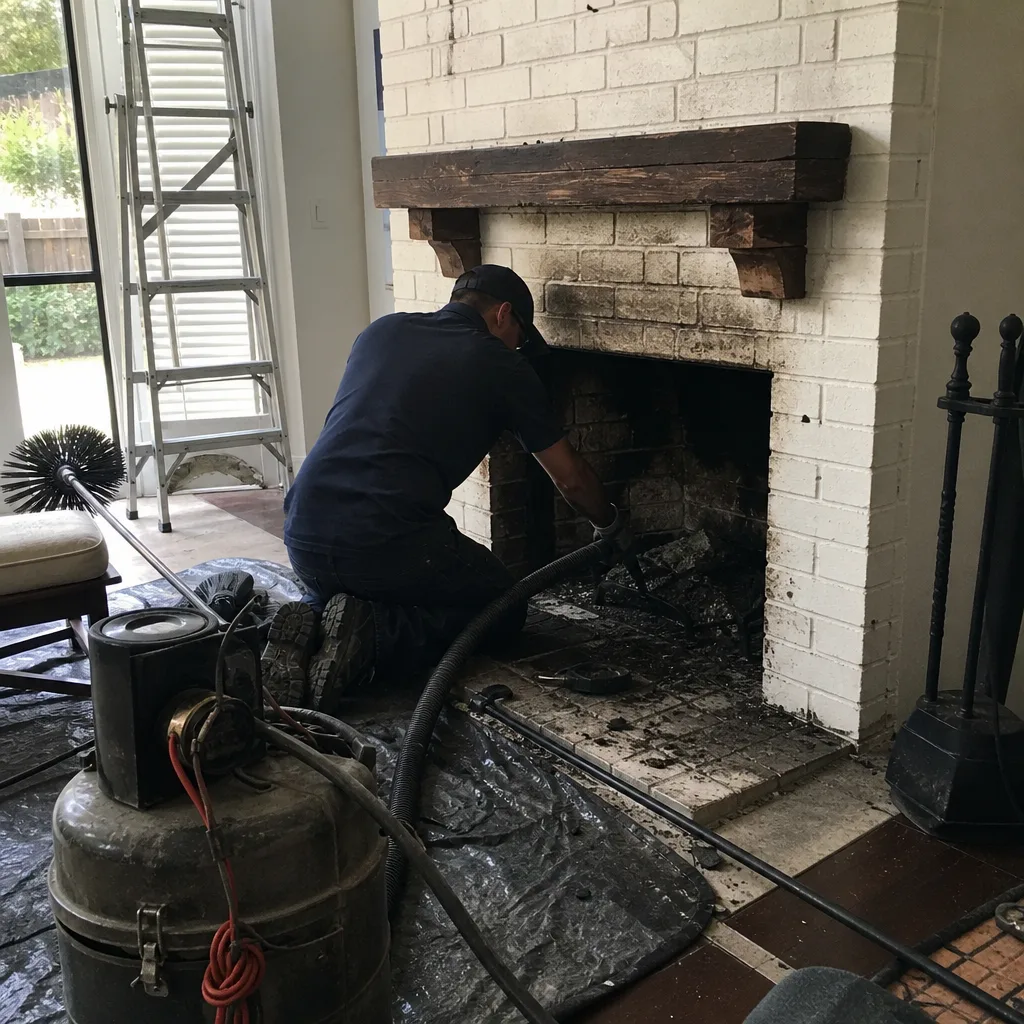 Before
 After
After