
Last updated October 15, 2026
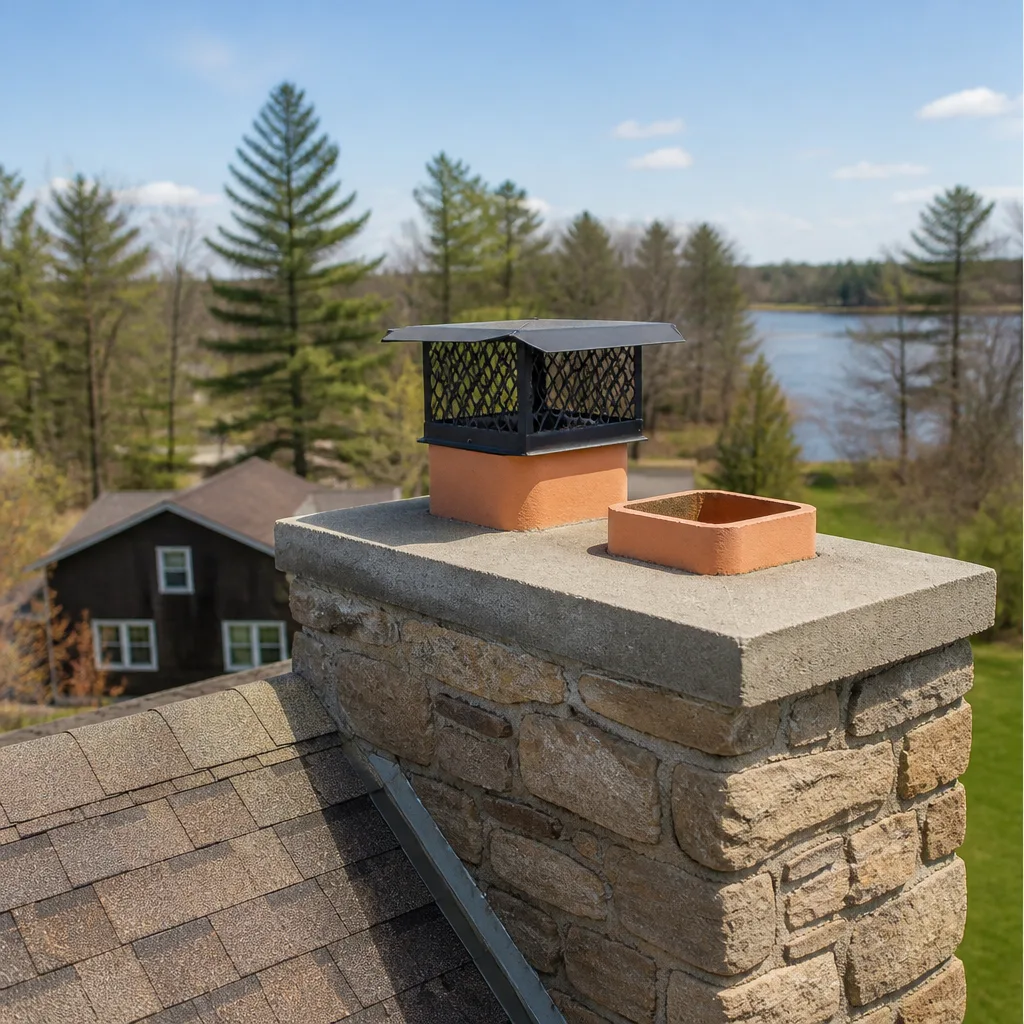 Sweep & inspection
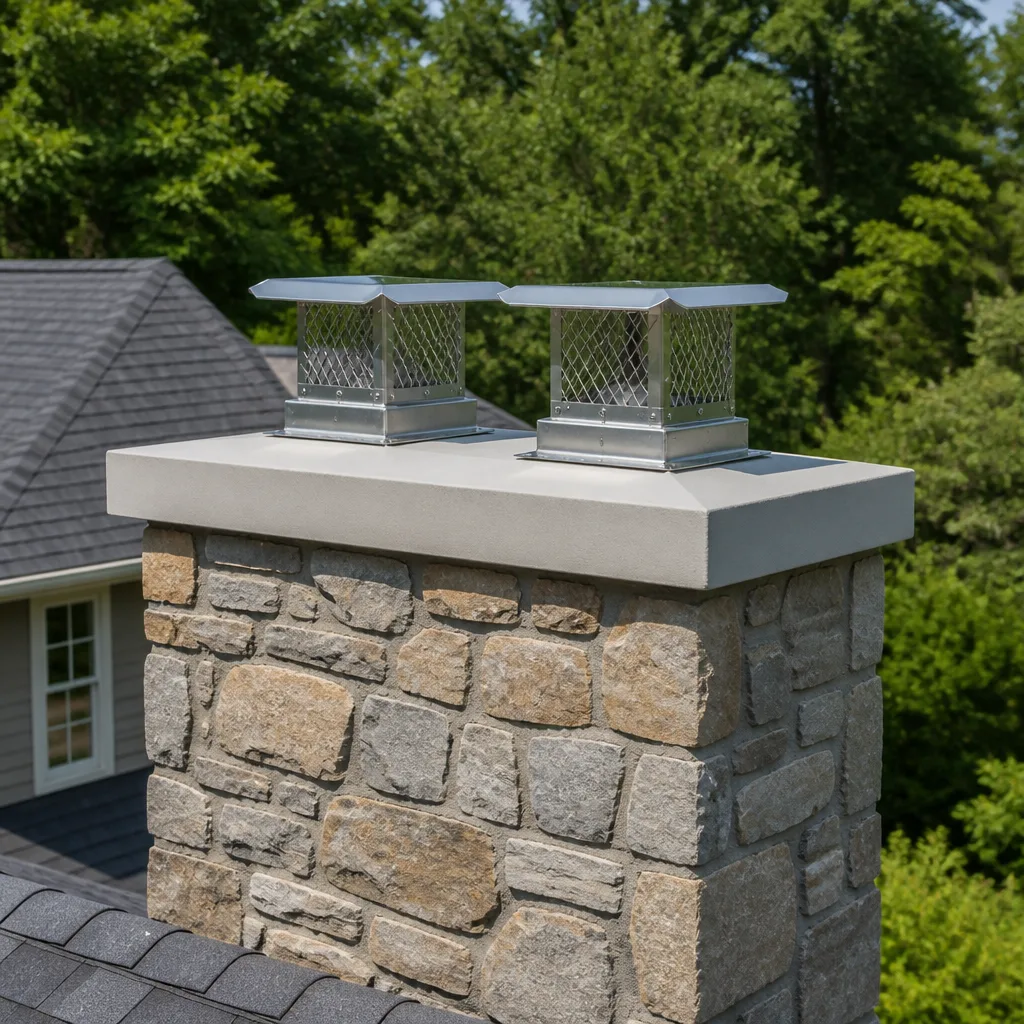 Caps & crowns
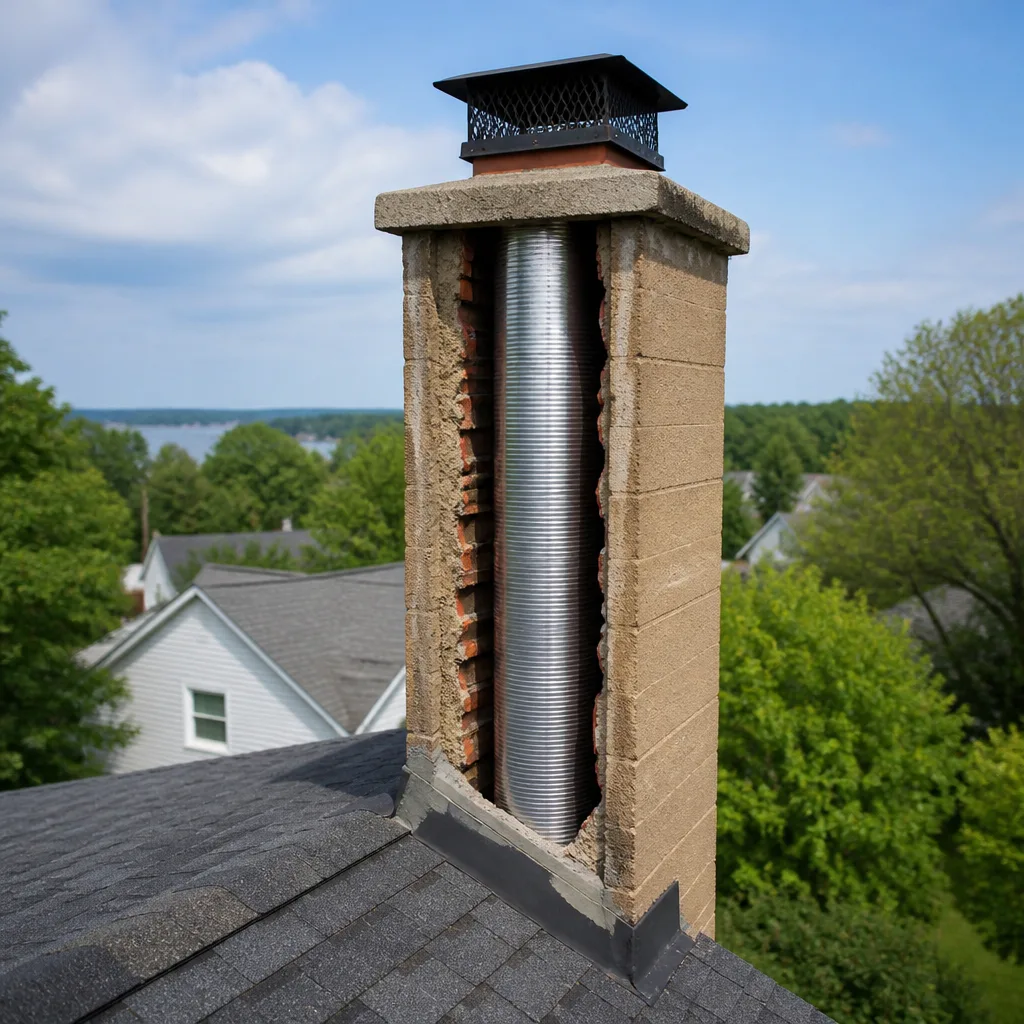 Flue relining
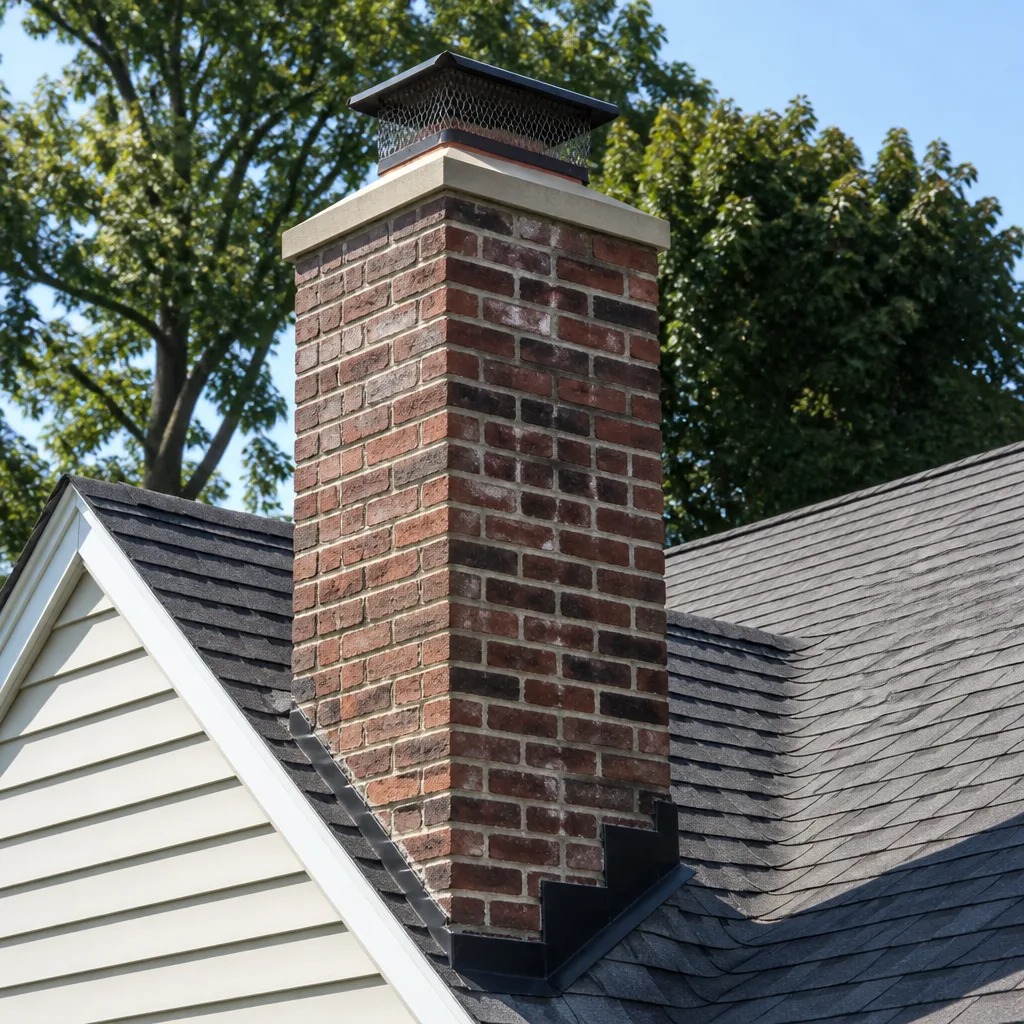 Masonry repair
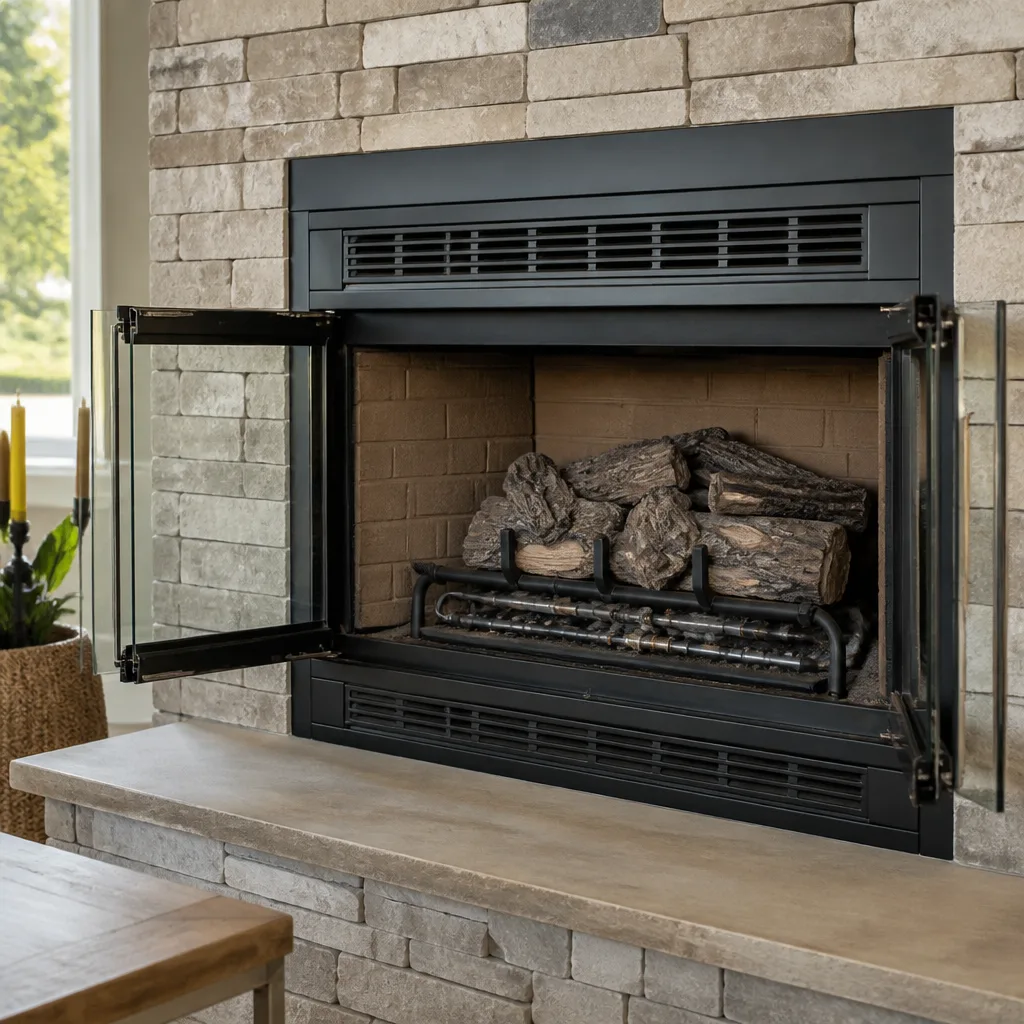 Gas fireplace service
Level 1 sweep and inspection to the NFPA 211 annual standard - flue, crown, cap, and flashing checked and photographed
Chimney sweep logs do not sweep chimneys. They loosen some creosote - which then falls where a brush and vacuum still have to collect it.
The Complete Guide to Chimney Cleaning in Houston
Most Houston homeowners light their fireplace fewer than a dozen times a year. That sounds like good news for the chimney, but it’s not. Low-use fireplaces burn cooler and shorter, which leaves more creosote behind per fire than a daily-burning fireplace in Minneapolis ever would. Add Houston’s humidity, salt air, and the critters that love an uncapped flue, and you’ve got a chimney that needs attention for reasons most national guides never mention. This guide covers what actually happens inside a Houston flue, what a proper cleaning should include, and what you should expect to pay for it here. For more guides & resources, visit our blog.
Quick Answer
Chimney cleaning in Houston typically costs between $149 and $350, depending on the fireplace type, flue condition, and whether animals or heavy creosote are involved. A proper cleaning should include a Level 1 inspection of the flue liner, damper, firebox, and cap, and it should be performed by a company that gives you a written price before starting. Houston’s climate means even light fireplace users should schedule a sweep and inspection once a year.
Styles & brands we work with
Table of Contents
- Why Houston Chimneys Get Dirty Faster Than You’d Expect
- What a Proper Chimney Cleaning in Houston Actually Includes
- How Much Chimney Cleaning Costs in Houston
- Houston Critters and What They Do to Your Flue
- How Often Should You Clean a Chimney in Houston?
- How to Read a Chimney Cleaning Invoice
- Common Mistakes to Avoid
- When to Call a Professional
- Frequently Asked Questions
Why Houston Chimneys Get Dirty Faster Than You’d Expect
The biggest misconception in chimney care is that less use means less cleaning. In Houston’s climate, the opposite is often true. Here’s why.
When you light a fire in a Houston fireplace, it rarely burns for eight hours at high temperature like it might in a colder city. Houston fires are short and decorative: a few logs on a December evening, maybe a holiday fire, then weeks of nothing. Those short, cooler fires produce Stage 1 and Stage 2 creosote, which are the soft, flaky and then tar-like deposits that cling to flue walls. In a hotter, longer fire, some of that creosote burns off. In a short Houston fire, it doesn’t. It accumulates.
Creosote stages matter because they determine how urgent the cleaning is. Stage 1 is a fine, sooty dust that brushes off easily. Stage 2 is a baked-on, glossy deposit that requires mechanical scraping or chemical treatment. Stage 3 is a hardened, glazed layer that can require special tools or replacement of the flue liner in severe cases. In our work across Houston and the surrounding areas, we regularly see Stage 2 creosote in fireplaces that were used only five or six times the entire previous winter. That surprises homeowners every time.
Then there’s humidity. Houston’s Gulf Coast air hovers around 70 to 90 percent relative humidity much of the year. That moisture finds its way into chimneys through the cap, through uncapped flues, and through brick and mortar itself. When humid air meets creosote, it can produce a mild acidic reaction that eats at clay flue liners and corrodes steel ones. Mortar joints in the chimney crown and smoke chamber absorb moisture, and during Houston’s occasional hard freezes, that trapped water expands and cracks the masonry. It’s a slow process, but after ten or fifteen Houston summers, it can leave a flue in worse shape than the fire use would suggest.
For a chimney sweep in Houston who understands the local climate, these patterns are familiar. Cleaning is only half the job; the other half is checking what the humidity and sporadic use have done to the structure.
What a Proper Chimney Cleaning in Houston Actually Includes
A legitimate chimney cleaning is not just running a brush up the flue. In Houston, a proper cleaning should include a Level 1 inspection of all accessible areas, plus physical cleaning of the components that actually affect how your fireplace performs. Here’s the step-by-step of what we do and what you should expect from any company you hire.
- Drop cloths and air protection first. The technician should seal off the fireplace opening and lay drop cloths from the front door to the hearth. Ash and soot are fine enough to hang in the air and settle on furniture. If the company starts without protecting the room, that’s a red flag.
- Damper inspection and cleaning. The damper is a metal plate just above the firebox that opens and closes the flue. Houston humidity causes dampers to rust and seize. The technician should open, close, and inspect the damper, clearing any rust or debris that keeps it from sealing properly. A damper that won’t close lets air-conditioned air escape all summer, and a damper that won’t open can push smoke back into the house.
- Firebox inspection. The firebox is where the actual fire burns, built from firebrick and refractory mortar. The technician should look for cracks in the brick, gaps in the mortar joints, and any sign that the firebox floor has shifted. Firebox cracks are dangerous because they can allow heat to reach the wooden framing behind the brick.
- Smoke chamber inspection. This is the area just above the damper, where the flue narrows and smoke funnels upward. It’s impossible to see from the ground, and it’s one of the most common places for creosote to accumulate and for missing mortar to create turbulence that pushes smoke back into the room. A proper cleaning should inspect this area with a camera or mirror.
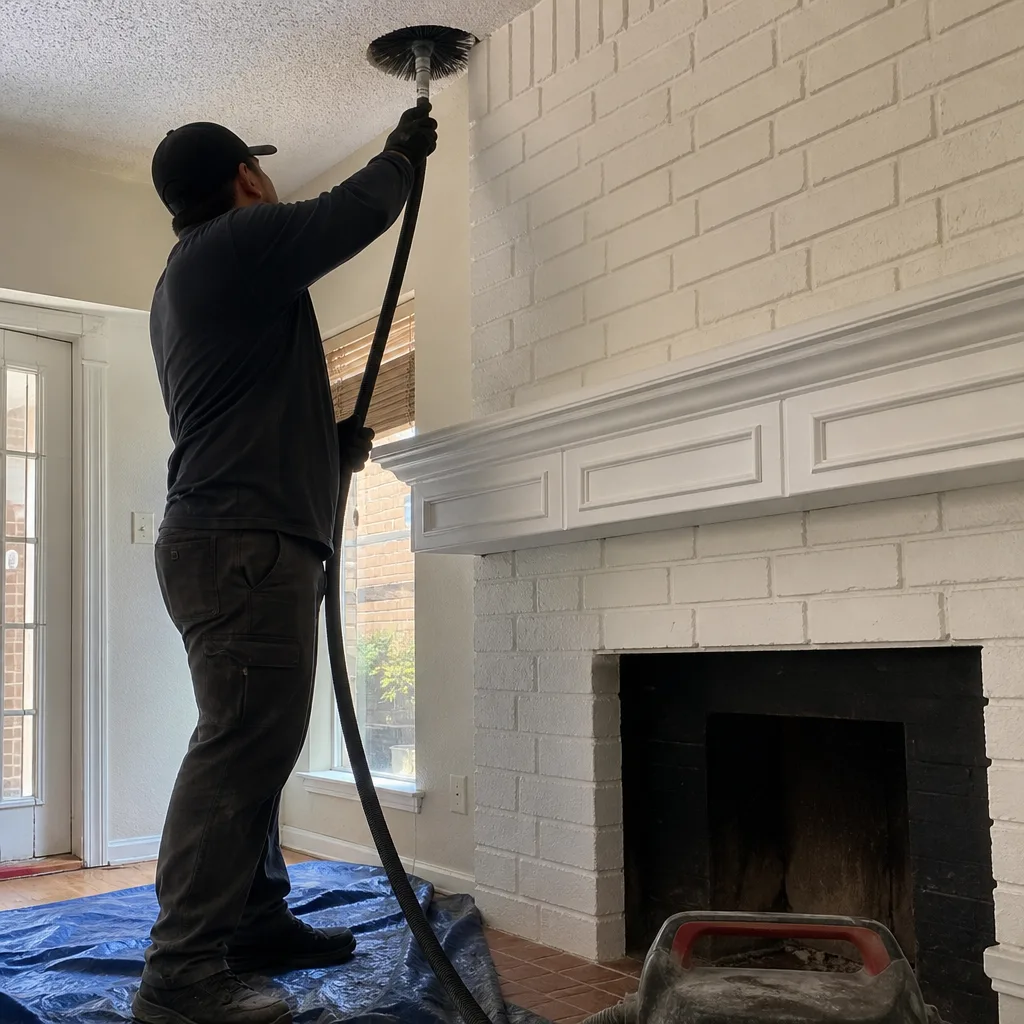
- Flue brushing and creosote removal. The flue liner, whether clay tile or stainless steel, should be brushed with a correctly sized brush from top to bottom. The goal is to remove creosote deposits down to the liner surface without gouging the liner. For Stage 2 creosote, mechanical scraping or rotary tools may be needed. For Stage 3, special chemical treatments are required, and often the flue liner needs to be evaluated for replacement.
- Smoke shelf and smoke chamber cleaning. The smoke shelf sits just below the flue, catching debris and creosote before it falls into the firebox. Houston’s roof rats and birds push nesting material and droppings onto this shelf. If it isn’t cleaned, the debris can restrict airflow or catch fire.
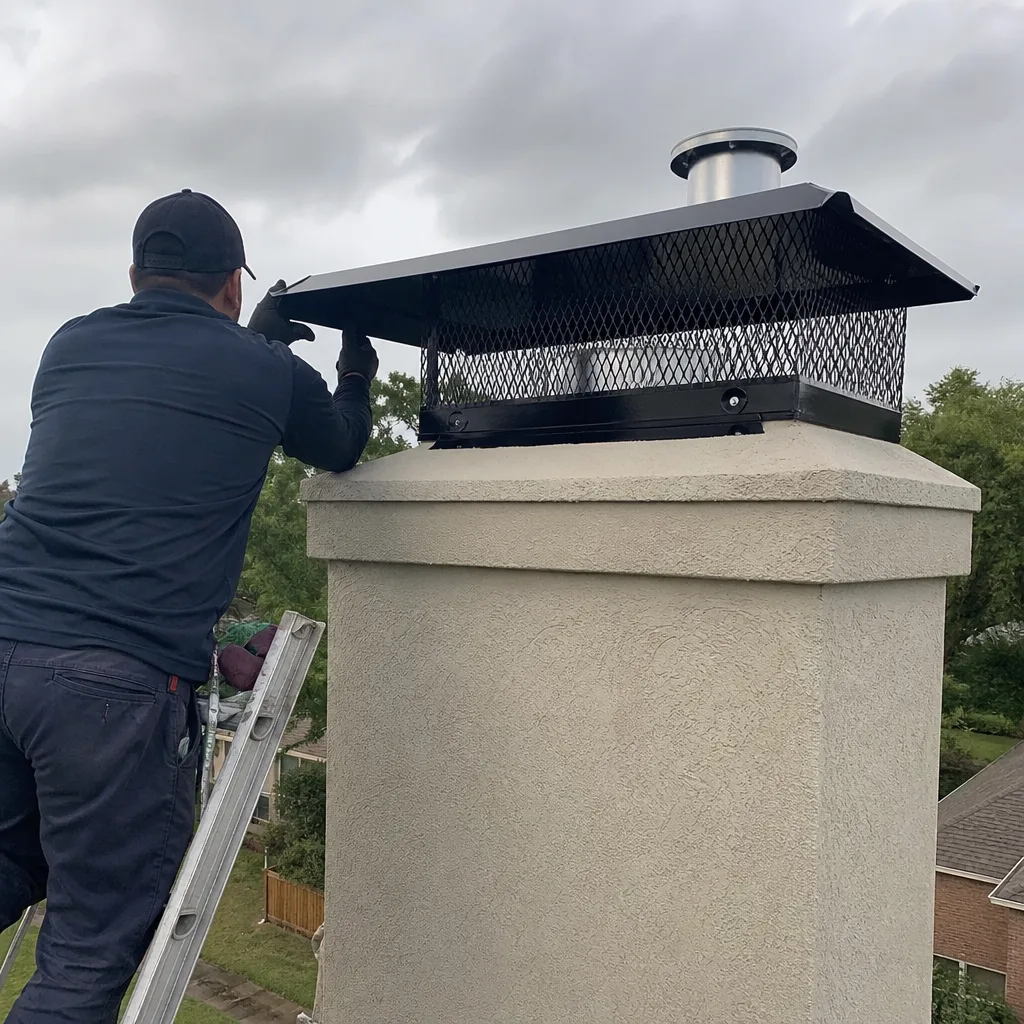
- Chimney cap and crown inspection. The chimney cap is the metal cover at the very top that keeps rain, animals, and debris out. The crown is the concrete slab that seals the top of the chimney structure. Both take a beating in Houston: UV radiation cracks crowns, and high winds from Gulf storms knock caps loose. The technician should inspect both for gaps, rust, and proper fit.
- Exterior brick and mortar check. Houston’s rain and humidity work into brick and mortar, causing spalling, which is the flaking and popping of brick faces. The technician should note any signs of water intrusion or structural shifting on the exterior chimney chase.
- Post-cleaning video or photo documentation. This is the step that separates a thorough sweep from a drive-by. Every homeowner should be able to see the flue before and after, either in person, via photo report, or through a camera scope. If a company claims your flue is damaged and needs a costly repair but won’t show you the evidence, do not sign anything.
These nine steps should take between 45 and 90 minutes for a standard open fireplace. Anything faster than 30 minutes and you should question what was skipped.
How Much Chimney Cleaning Costs in Houston
Chimney cleaning in the Houston market runs between $149 and $350 for most standard open fireplaces. Prefabricated or manufactured fireplaces sit on the higher end because their metal flues, often double-wall systems, are more labour-intensive to clean and inspect. Heavily coated flues with Stage 3 glazed creosote can push the price above $400 because of the extra equipment, chemicals, and time involved.
Here’s a plain-dollar breakdown of what we see across the Houston area, from Cypress to Clear Lake to Sugar Land:
| Service | Typical Houston Price Range | Notes |
|---|---|---|
| Standard chimney sweep, open masonry fireplace | $149 – $250 | Includes Level 1 inspection, damper check, cap check |
| Prefab / factory-built fireplace cleaning | $200 – $350 | Double-wall metal flues; more time to clean and inspect |
| Chimney sweep with heavy creosote removal (Stage 2-3) | $275 – $450 | Rotary tools or chemical treatments required |
| Chimney cap replacement or installation | $150 – $400 | Depends on flue diameter and cap type |
| Chimney crown repair or seal | $300 – $900 | Prevents water intrusion; common in Houston |
| Flue liner inspection with video camera | $75 – $150 | Often included in a standard sweep; verify before booking |
These ranges reflect what we’ve charged and what we’ve seen from other legitimate chimney companies in Houston. The cheapest quote isn’t always a bargain; a $99 sweep that takes 20 minutes and skips the smoke chamber isn’t a service at all. It’s a fire hazard with a receipt. What matters is that you receive a written price before the technician starts, and that the number on the invoice matches the number you agreed to. That’s a standard practice at Ashby Chimney Houston, and it should be standard at every company you call.
For an exact quote on your fireplace, call (903) 961-6496. Estimates are free, and the price is written down before any work begins.
Houston Critters and What They Do to Your Flue
Houston’s warm, wet, and forested environment is ideal habitat for three types of creatures that regularly find their way into chimneys: chimney swifts, raccoons, and roof rats.
Chimney swifts are small birds protected under the Migratory Bird Treaty Act. While federal law protects them during nesting season, that doesn’t change what they do to a flue. Swifts build twig nests that are glued to the flue interior with saliva. After the birds leave, those nests dry and become flaky fuel inside the flue. One swift nest is not usually enough to catch fire, but it can trap creosote and moisture, accelerating flue deterioration.
Raccoons are less common inside Houston city limits than in the wooded suburbs like The Woodlands, Kingwood, and Atascocita, but they are present. A raccoon in a chimney will tear apart the flue damper, shred insulation, leave droppings, and sometimes give birth inside the smoke chamber. Raccoon droppings can carry Baylisascaris roundworm, which is hazardous to humans, so this is a situation for professional removal and sanitization, not a DIY job.
Roof rats are the critter Houston homeowners encounter most. They climb brick, stucco, and tree limbs to enter chimneys through uncapped flues. They chew ductwork and wire insulation, deposit urine and droppings into the firebox, and drag nesting material onto the smoke shelf. When you light a fire after a roof rat infestation, the smell is unmistakable: scorched urine and burning vegetation. Roof rat debris is not a fire hazard in the same way creosote is, but it is a serious indoor air quality problem. Houston’s warm winters mean roof rats breed year-round, so the issue never really goes dormant.
The solution for all three is a correctly sized chimney cap with a mesh screen that keeps animals out while allowing combustion gases to escape. A cap also keeps rain out, which matters in a city that averages nearly 50 inches of rainfall per year. During a standard chimney inspection in Houston, the cap is one of the first things we check.
How Often Should You Clean a Chimney in Houston?
The National Fire Protection Association (NFPA) standard is the rule every legitimate company follows: chimneys, fireplaces, and vents should be inspected at least once a year and cleaned as needed. That “as needed” part is where Houston homeowners get tripped up.
In colder climates, the annual inspection happens in early autumn, before the burning season starts. In Houston, the timing doesn’t matter as much because the burning season is so short and irregular. What matters is that the inspection happens yearly, because Houston’s chimney problems are often not creosote-related at all. They’re water-related, rust-related, or animal-related, and those problems develop on a timeline that has nothing to do with how many fires you’ve burned.
A good rule of thumb for Houston: if you burn even one fire a season, schedule a sweep and inspection once a year. If you burn more than 20 fires a winter, or if you burn unseasoned wood, you should consider a mid-season check as well. And if you’ve had a roof rat or squirrel infestation, or a severe storm with wind and rain, schedule an inspection even if you haven’t burned at all.
What actually happens if you skip it? The two biggest risks are a chimney fire and carbon monoxide intrusion. A chimney fire happens when creosote deposits ignite inside the flue; it can burn hot enough to crack clay liners and spread to the house framing. Carbon monoxide intrusion is quieter and more common in Houston than people realize. A partially blocked flue, a damper that won’t open, or a smoke chamber packed with animal debris can push combustion gases back into the living room instead of up the flue. That is not a scare tactic; it is what we find on inspections of chimneys that haven’t been opened in years. A working battery-operated carbon monoxide detector in the same room as the fireplace is the minimum safety net every Houston home should have.
If you’re not sure when your chimney was last checked, the answer is simple: book a sweep now. In Houston, this is a year-round service, not a seasonal one. Ashby Chimney Houston handles cleaning and inspection calls every month of the year.
How to Read a Chimney Cleaning Invoice
After the technician leaves, you should be able to read your invoice and understand exactly what was done. A vague invoice is a warning sign. Here’s what a detailed cleaning invoice should list:
- The type of flue cleaned: clay tile, stainless steel, or factory-built metal.
- The size of the flue and the method used: wire brush, rotary whip, or chemical treatment.
- The creosote stage found before cleaning: Stage 1, Stage 2, or Stage 3.
- Condition notes for each component: damper, firebox, smoke shelf, smoke chamber, flue liner, cap, and crown.
- Any measurements taken: flue diameter, liner depth, or clearances noted during inspection.
- Photos or video references: the technician should note that imagery was captured and how you can access it.
- Materials used: if any sealant, cap, or repair part was installed, it should be named by brand. We use materials from trusted chimney-trade suppliers including HeatShield, Gelco, and Olympia Chimney.
- Recommendations for any repairs: what was found, why it matters, and when it should be addressed. A recommendation should reference the specific evidence, such as “crack visible at the 14-foot mark on the east flue wall.”
An invoice that simply says “chimney sweep” with a dollar amount tells you nothing about what was actually cleaned or inspected. At Ashby Chimney Houston, we leave every customer with a written service report that includes the details above. If you’ve had another company out and want a second opinion on the invoice, call us and we’ll walk you through what it says.
Common Mistakes to Avoid
- Hiring by price alone. A $99 sweep that takes 20 minutes is not a bargain; it’s a skipped smoke chamber and an uninspected flue. In Houston’s market, a real cleaning costs what it costs.
- Believing infrequent fires mean no cleaning is needed. Houston’s short, low-temperature fires produce more creosote per burn than hot daily fires do, and Houston’s humidity makes that creosote more corrosive.
- Ignoring the damper. A damper that won’t close properly leaks air-conditioned air all Houston summer long. A damper that won’t open sends smoke into the living room. Either way, it should be checked every visit.
- Running an uncapped flue. In Houston, an uncapped flue is an open door for roof rats, chimney swifts, and raccoons, plus 50 inches of annual rainfall. A proper cap is cheap insurance.
- Burning unseasoned or treated wood. Houston’s humid air makes firewood dry slowly. Wood with moisture content above 20 percent burns cooler and produces more creosote. Never burn pressure-treated lumber, plywood, or painted wood, which release toxic compounds.
- Skipping the chimney crown check. The concrete crown at the top of the chimney is what keeps rain from seeping into the brick and mortar. Houston’s sun and storms crack crowns over time, and the damage spreads downward.
- Not asking for photos. If a company tells you the flue needs a costly repair but won’t show you the damage, end the conversation. Legitimate companies document what they find.
When to Call a Professional
Chimney cleaning involves heights, specialized brushes, and internal flue surfaces you cannot see from the ground. The genuinely dangerous parts of chimney work are the high-tension springs and cables on some dampers, the risk of falls from ladders and steep-pitched Houston roofs, and the potential for disturbing glazed creosote that could ignite. If your chimney has not been cleaned in more than two years, if you smell a smoky odor even when the fireplace is not in use, if you see flaking creosote or animal debris in the firebox, or if water is staining the ceiling near the chimney, that’s a call to a professional, not a weekend project. This is not the place for DIY. Ashby Chimney Houston offers free estimates in Houston; call (903) 961-6496 and we’ll schedule a time that works, with a written price before we start.
Frequently Asked Questions
A standard chimney sweep in Houston typically runs between $149 and $350, depending on the fireplace type and the condition of the flue. Prefabricated fireplaces and heavily coated flues fall on the higher end. Call (903) 961-6496 for an exact written quote for your fireplace.
At least once a year, even if you rarely use your fireplace. Houston’s humidity, animal activity, and sporadic low-temperature fires create problems that develop independently of how often you burn. See our Seasonal Chimney Cleaning Care for Houston: Year-Round Homeowner’s Guide for maintenance tips across every season. The NFPA standard is an annual inspection with cleaning as needed.
We don’t recommend it. A proper cleaning involves roof access, specialized brushes, and inspection of internal components that require training to evaluate safely. Falls from roofs and ladders are a leading cause of serious homeowner injury. The risk isn’t worth the few hundred dollars saved.
The two primary risks are a chimney fire from ignited creosote deposits and carbon monoxide intrusion from a blocked or restricted flue. In Houston, water damage and animal nesting add a third risk. These failures can happen without any noticeable warning signs.
With a legitimate company, yes. A standard chimney sweep should include a Level 1 inspection of the damper, firebox, smoke chamber, flue liner, cap, and crown. If a company quotes a sweep without mentioning an inspection, ask whether it’s included and get the answer in writing.
Only if the damage can be shown to you. A proper liner recommendation comes with video or photo evidence of cracks, gaps, or severe corrosion inside the flue. If a company recommends a liner replacement without showing you the inside of the flue, get a second opinion. We use HeatShield, Gelco, and Olympia Chimney materials when a liner repair or resurfacing is genuinely needed, and we walk every homeowner through the camera footage before any recommendation.
The Bottom Line
Chimney cleaning in Houston is not a seasonal luxury; it’s an annual maintenance task shaped by the city’s humidity, critters, and sporadic fire use. A proper cleaning costs between $149 and $350 for most homes and should include a documented inspection of every accessible component, not just a brush through the flue. The company you hire should hand you a written price before starting and a detailed service report when they’re done. If you want a chimney company in Houston that works that way, call Ashby Chimney Houston at (903) 961-6496 for a free estimate. We’ve served the Houston area since 2002, and we put the guarantee in writing every time. For more on our fireplace repair in Houston service, or to see our full approach, visit the Ashby Chimney Houston home page.
Written by Nathan Corliss, Owner at Ashby Chimney Houston, serving Houston since 2002.
See the difference
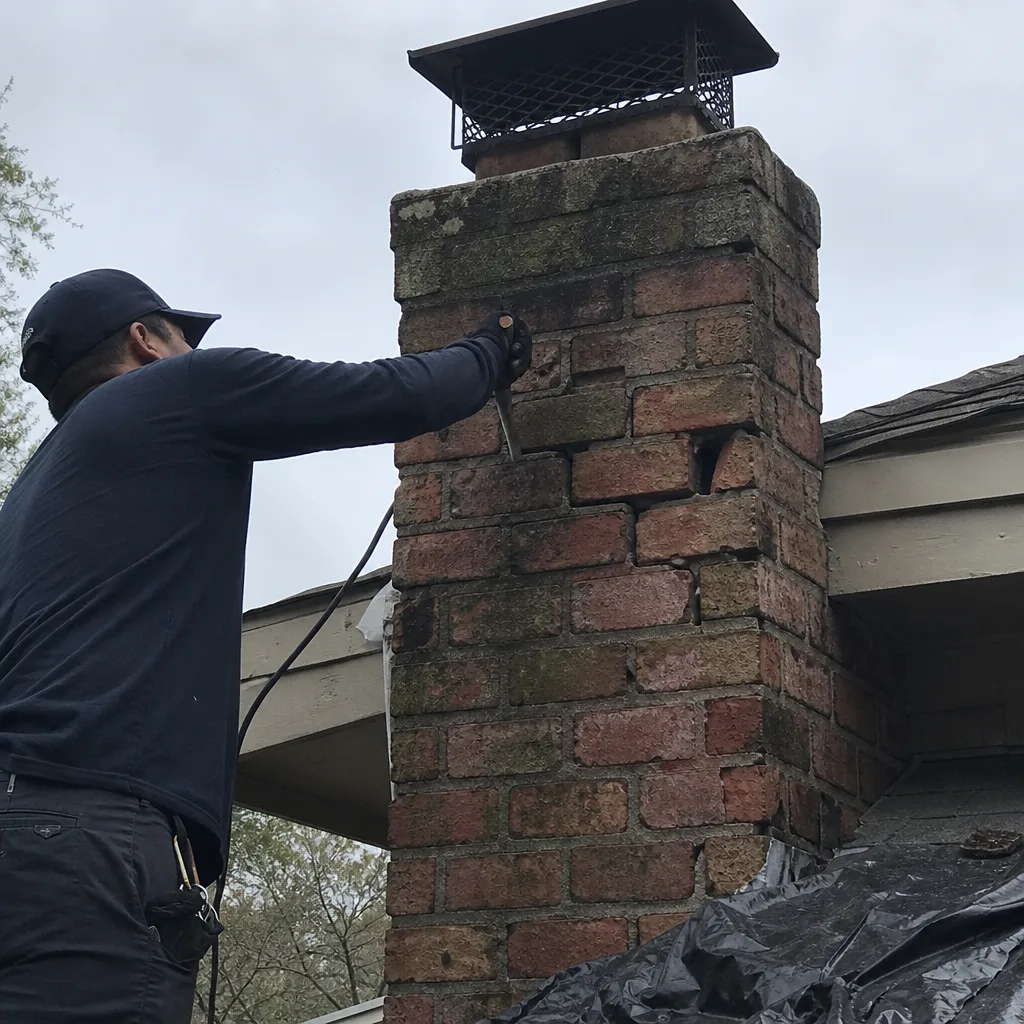 Before
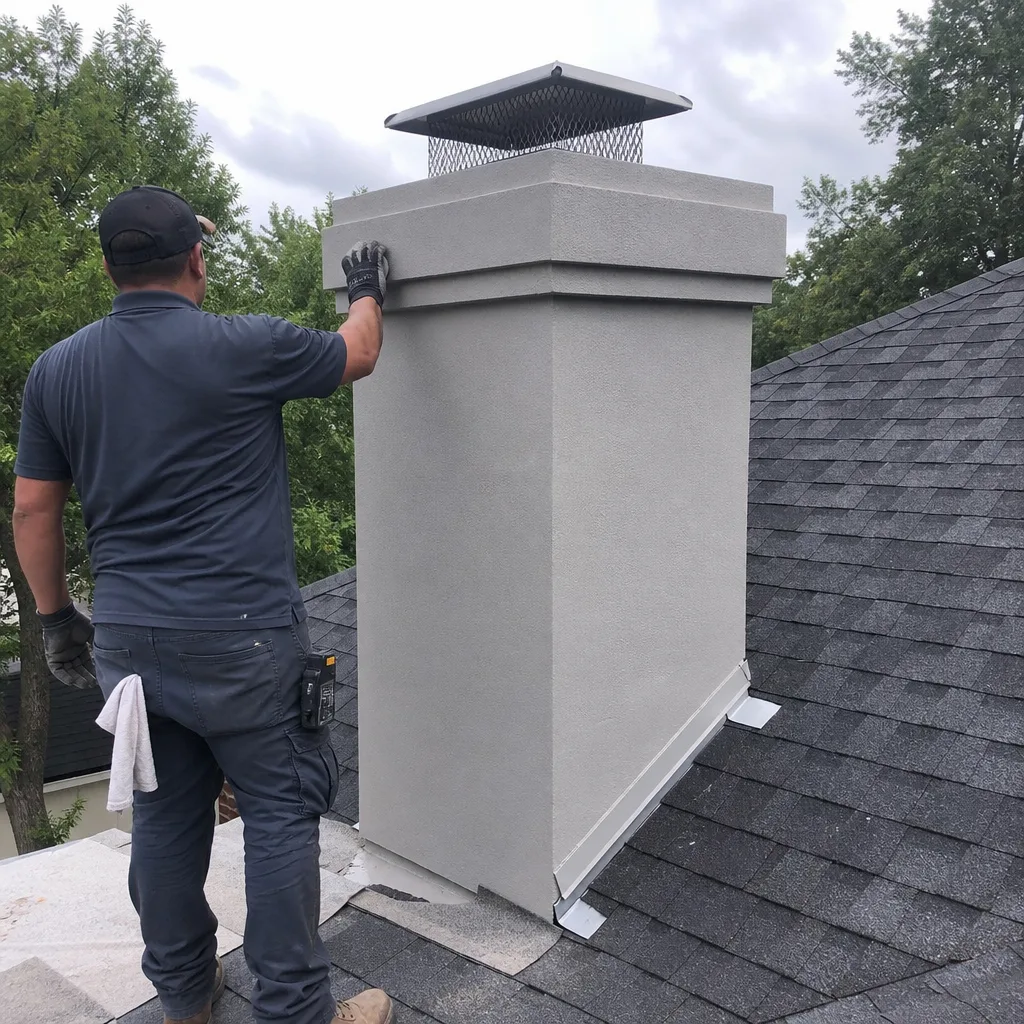 After
After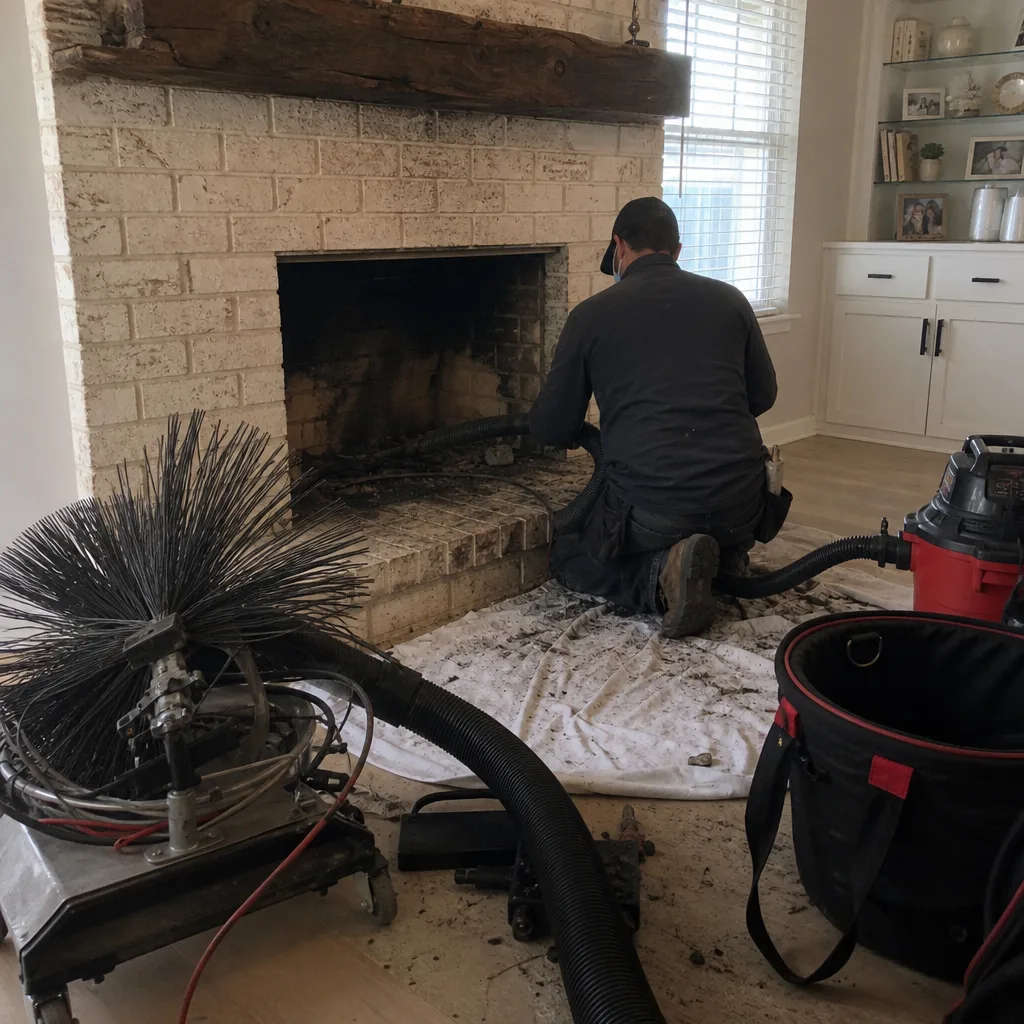 Before
 After
After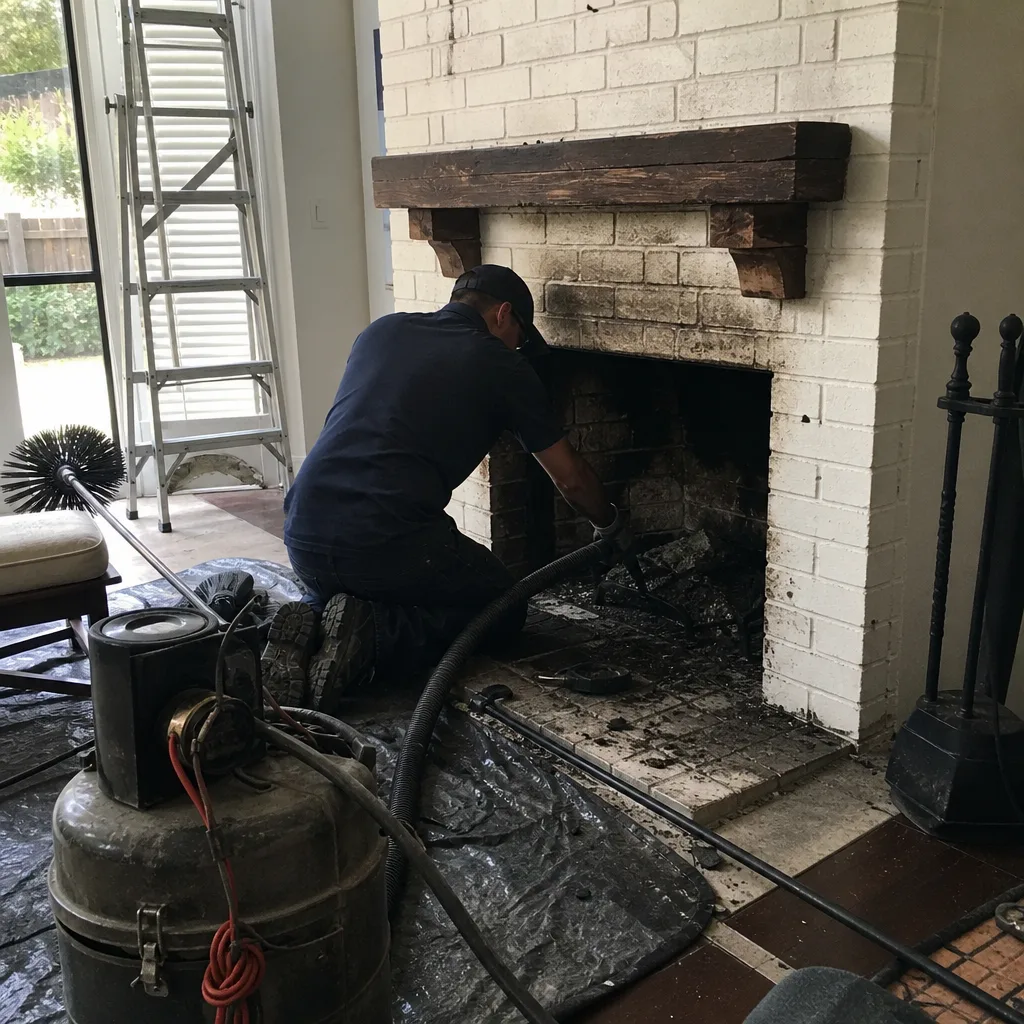 Before
 After
After